







8 Author Poses That Work Best for Book Covers, Amazon & Social Media
Grab the attention of potential readers with these author photography poses that work for book covers, social media, Amazon profiles, and more.
Learn | Posing | By Jeff Collier | Last Updated: August 15, 2026
Shotkit may earn a commission on affiliate links. Learn more.
Writing a book is one of those life goals that so many people dream of, but few ever achieve. So, if you’ve managed it, or know someone who has, you know it’s a big deal.
With that in mind, the photography that goes along with the book should also be something to celebrate.
Author poses for book jackets and Amazon profiles are usually simple headshots. But you should know that you’re not limited by what other authors have done.
Out-of-the-ordinary poses help you (or your author subjects) stand out from the crowd and, particularly with social media images, can build engagement and reach a wider audience.
Take a look at these author poses that you can use to promote yourself or your clients and gain a stronger readership.
Why the Right Author Photo Matters
Author photos are often the first visual interaction between writer and reader. While readers are always told not to judge a book by its cover, many might judge it by the quality and tone of the author photo.
A dull, unsmiling author photo is not going to give the impression that the book is a laugh-a-minute, romantic comedy, for example.
Similarly, a soft-focused shot on a beach or in a beautiful, sun-dappled woodland glade might not set the right tone for a series of riveting thrillers or a technical book.
Finding a pose and background that match or at least complement the genre of the writer’s books is vital. Otherwise, you risk alienating potential readers and attracting an audience that isn’t the one that you want for what’s between the covers.
That’s why when I work with authors, I take the time to flick through their latest book, or at least read the blurb on the back. That way, I can get a feel for what they’re trying to achieve, and the type of readers they’re trying to attract.
Speaking of books, if you’re looking for cost-free ways to improve your photography techniques, check out my list of 42 free photography books.
Let’s take a look at some of the most achievable yet impactful author poses you can use on socials, on Amazon Author Central, or on the cover (generally the back or inside flap) of a book.
1. Tucked Up With a Favorite Book

One thing readers always want to know is: what’s your favorite book and why? Photographers, pose your author with a novel or non-fiction favorite, ideally in a cozy, relatable situation.
Tucked into a comfortable chair in a quiet café is a great choice. Partly because the location is likely to be quiet and calm, but also because it’s a situation familiar to many book lovers, social media followers, or blog readers.
They see their favorite author reading with a cup of coffee, and they can envision themselves in that same setting. It’s a simple way to build engagement with the target audience.
Other locations could include the author’s home – if they’re happy to have their private space photographed – or a garden or park. Check the weather and lighting before attempting outdoor shots.
A library is another good choice, particularly if there happens to be some of the author’s previous works in the background.
Avoid posing the writer as if they’re “reading” the book but looking directly at the camera. Have them actually looking at the book, and try to catch a few natural reactions, such as a smile, laugh, or gasp.
2. Outdoor Inspiration
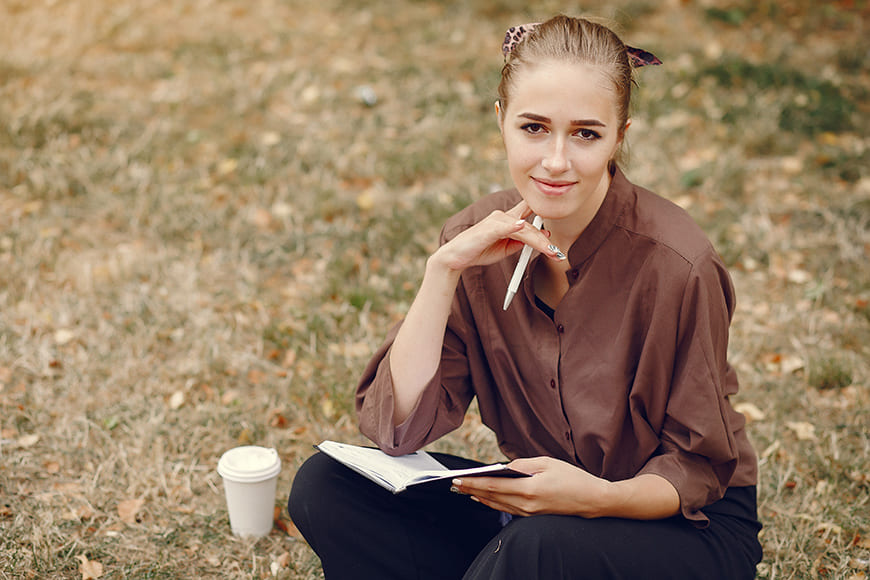
Everyone wants to know what inspires an author, and so many will say that it’s the places they go, including the great outdoors.
Taking a candid shot of an author taking notes while experiencing nature or a green space results in a shot that you can use on any social platform or as an author bio image.
If you’re planning to use this shot on the cover of a book, get the author to look at the camera. Choose their expression based on the tone of the book; smiling for lighthearted works, and serious for more tense writing styles or genres.
For social shots, you might want to pose them looking slightly to one side, or into the distance, as if pondering their latest inspiration.
Have them dress in something comfortable yet attractive. Sweats and cleaning overalls may be true to life, but a slightly smarter ensemble is more likely to draw the eye of potential readers.
3. The Writer at Work

This pose works very well for both official author cover shots and author profile images, such as those used on Amazon profiles.
The goal is to capture the author in their working space, either reading their latest edit, typing, researching, or making notes.
Have them posed at a desk, with a notebook, book, or writing tool, which might be an old-school typewriter or an up-to-date Mac. It doesn’t need to be their own desk, although this is better as you can capture some of their personality via trinkets or art that may be close by.
4. The Author Talk
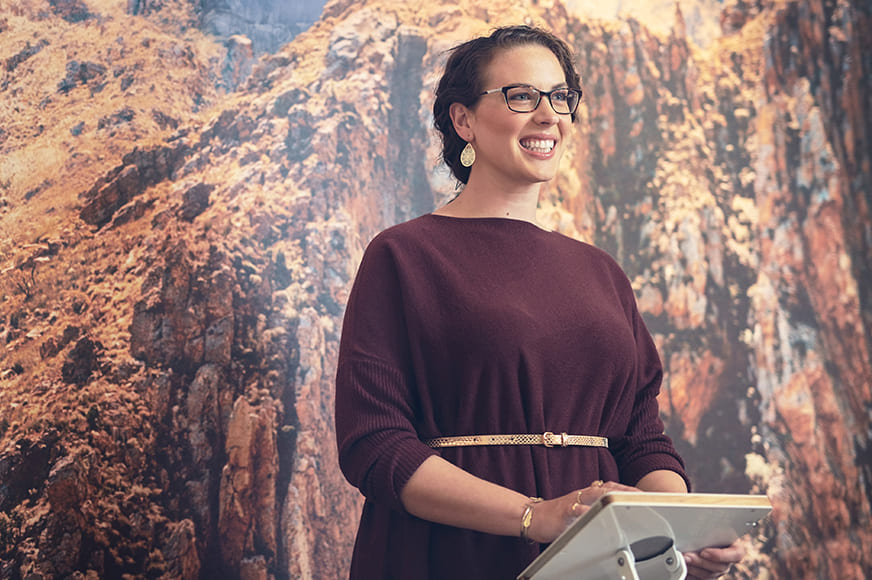
Many authors give talks about their books, either on their writing process, the story, or their own life experiences. These are wonderful opportunities to snap some candid photos that are perfect for social media platforms.
I always ask my authors what events they have coming up. Even small, local events at independent bookstores can be a treasure trove of visual content, particularly if the author’s books are already on sale there.
Try to take some contextual snaps of books on the shelves and people queuing to get in or being seated, to go alongside your main shots of the author.
Snap the writer in poses where they’re speaking directly to the audience, seemingly oblivious of the camera. These images will highlight how good the author is at interacting with their audience, which will translate into better online engagement.
Take multiple shots to try and capture a range of expressions: thoughtfulness, laughter, and sincere smiles. You should also try to capture a mixture of horizontal and vertical shots, so you have images suitable for multiple platforms.
5. Visiting the Writer’s Office

This is a variant of the “writer at work” pose, but aimed at capturing a natural gaze at the camera that doesn’t feel forced or posed.
Try to get permission to photograph the author in their own working space. They’ll feel more comfortable, and the resulting image will carry more authenticity.
Pose them at their desk, but let the writer choose their own seating position and what they want to do. The goal is to capture a natural moment in the writer’s day.
Encourage the author to do their normal work, whether that’s typing or reading, then naturally look up at the camera, as if spotting someone has just entered the room. The result will be a fairly neutral expression, which you can tailor according to guidance from the author and the genre of the book.
A slight smile is always appealing, and you can ask them to grin a little wider if the book is more of a comedy than a murder mystery.
6. Solving the Mystery
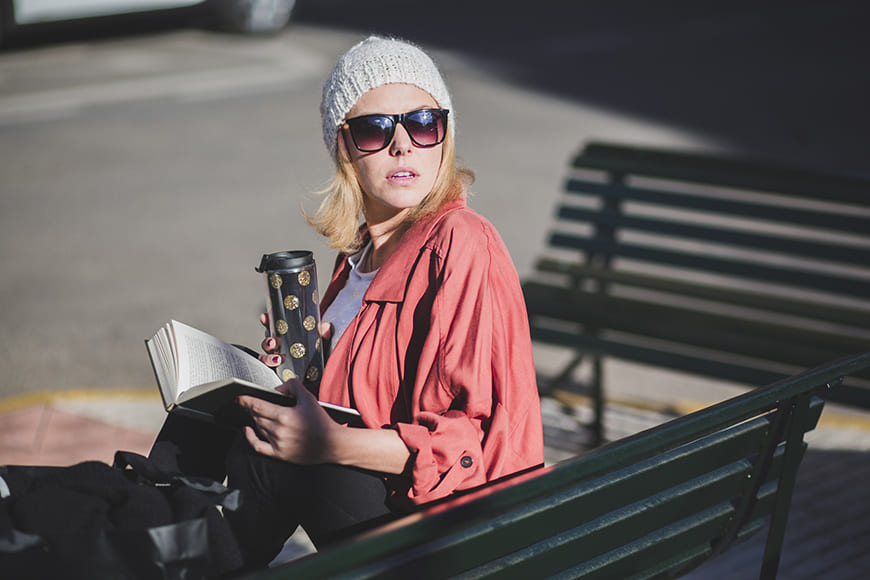
This pose is for anyone photographing a mystery writer. Readers want to know that authors are as invested in the mystery as they are, busy creating new, wonderfully convoluted puzzles for them to solve.
You can capture this vibe by photographing your author in a seemingly candid moment of surprised realization. They’re reading a mystery, or perhaps their own notes, and suddenly, they understand what has to happen next.
To achieve this goal, have your writer suddenly look up at something that’s just past the camera. Avoid them looking directly into the lens, as this will feel forced and inauthentic.
I sometimes use a prop like a bell or a clicker to create a noise that prompts them when to look up. I hold my hand way out to one side to make the noise to discourage them from looking straight at me.
This shot may take a few attempts. For a noir feel, produce some versions in black and white, as you may find that this adds to the mystery of the image.
7. At the Library

Libraries are wonderful, calm spaces for taking pictures. You may need to ask permission before you bring a camera in, but most library personnel are, in my experience, more than accommodating.
For a great headshot alternative for a book cover (jacket or back cover), consider seating your author at a library desk or table. They should have visible shelves of books behind, and perhaps some on the table with them, as if they were deep in research.
You can opt to have the writer look directly into the camera for this shot. However, I find that a slightly wistful look to one side is a very effective pose.
The author may want to rest their head on their hands, or have their hands on the desk, which can create the dynamic feeling that the writer is about to rise and do something.
8. The Book Signing Handover
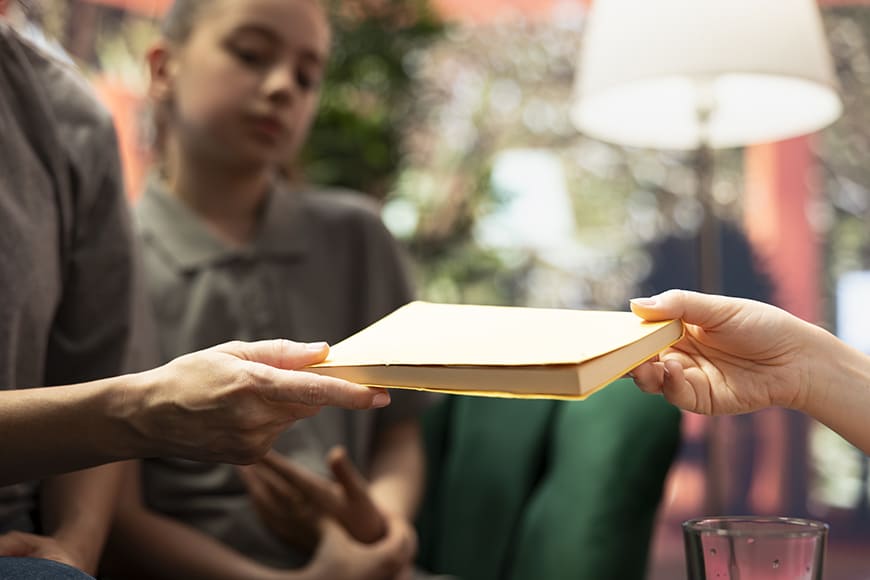
Published authors often hold book signings. If you’re lucky enough to be invited to photograph one, this is a naturally occurring pose you don’t want to miss.
As the author passes the signed book to a customer, capture that moment. The handover of knowledge from one person to another, and the appreciation of a fan for a creator; these are factors that are sure to spark inspiration and capture attention on social media.
Consider the background for the shot, and be prepared. If one angle has piles of unopened boxes or crates in the corner, while the other option offers greenery or a pleasing shot out onto the street, obviously choose the most aesthetically pleasing position.
Be ready to take a few snaps, and look out for fans who hang onto the book for a few moments while they thank the author or chat to them. These moments are likely to result in the sharpest and most well-defined images.
Top Tips for Author Poses
Authors will have some great ideas about what type of poses they want, so make sure you take their views into account. Balance your own views of their work or the genre they write in with their own goals.
Take constructive criticism as it’s intended. Authors, like all creative types (including you and me), can be very particular about what they want, but the extra time you put in will help you build long-lasting client relationships.
If you’re taking photos for your own books, get a professional photographer to look them over. When you’re very close to the subject, you might miss something that another professional will instantly pick up on.
Practical tips for author photography:
- Books and bad weather don’t mix. If you’re going to be outside, check the weather carefully, so you don’t end up with rain-soaked novels and notebooks.
- Check the lighting situation of any venue you’re visiting, such as a bookstore or conference center. While some lighting issues can be handled in editing, having well-lit subjects to start with removes some unnecessary work.
- Check what your author will be wearing on the day. Does it suit the background and framing of the shot? Will they be comfortable?
I’ve had authors turn up in full Victorian-style regalia because their books were historical thrillers, and honestly, this really works. Don’t be afraid to get creative and lean into some of the more left-field ideas your authors might have.
Final Thoughts
Writing a book is a big achievement, and whether you’re taking photos for yourself or someone else, make sure you respect the work and time that’s gone into that creation. Blurred, rushed, or otherwise poor-quality photos are not suitable for promotional purposes, including for those in the creative arts.
Take the time to work with the author to find out exactly what they want, and work hard to bring that vision to life.

Check out these 8 essential tools to help you succeed as a professional photographer.
Includes limited-time discounts.
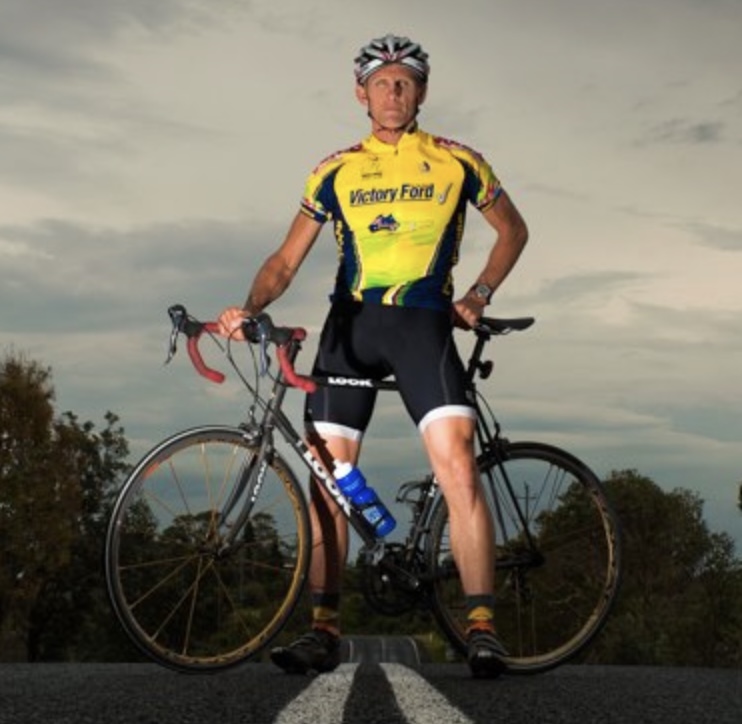
Jeff Collier is an experienced film photographer who enjoys experimenting with modern digital photography equipment, software and apps. He’s also an ex-world champion triathlete and avid cyclist, clocking hundreds of km each week in the beautiful Tweed Valley of northern NSW, Australia.
👋 WELCOME TO SHOTKIT!
🔥 Popular NOW: