






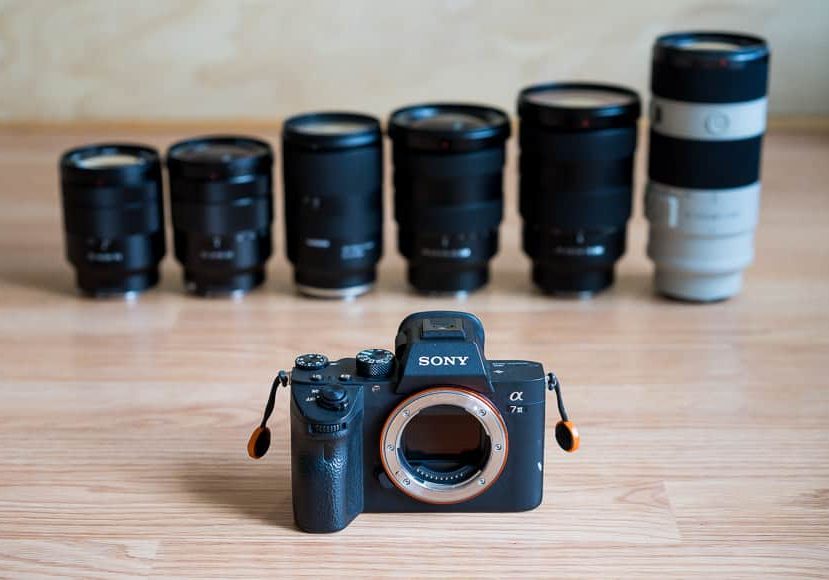
7 Best Lenses for Sony a7III (Budget to Premium)
Own or buying the Sony a7III? Don't miss our selection of the best lenses available for this amazing camera. 7 e-mount options in multiple focal lengths.
Shotkit may earn a commission on affiliate links. Learn more.
Are you choosing which lens to buy for your Sony a7III full-frame mirrorless camera? This guide includes what I consider to be the best lenses for it.
I've been shooting with the Sony a7 III (also commonly written as Sony a7III) for several years and have tried all of the native Sony FE lenses. and some 3rd party ones.
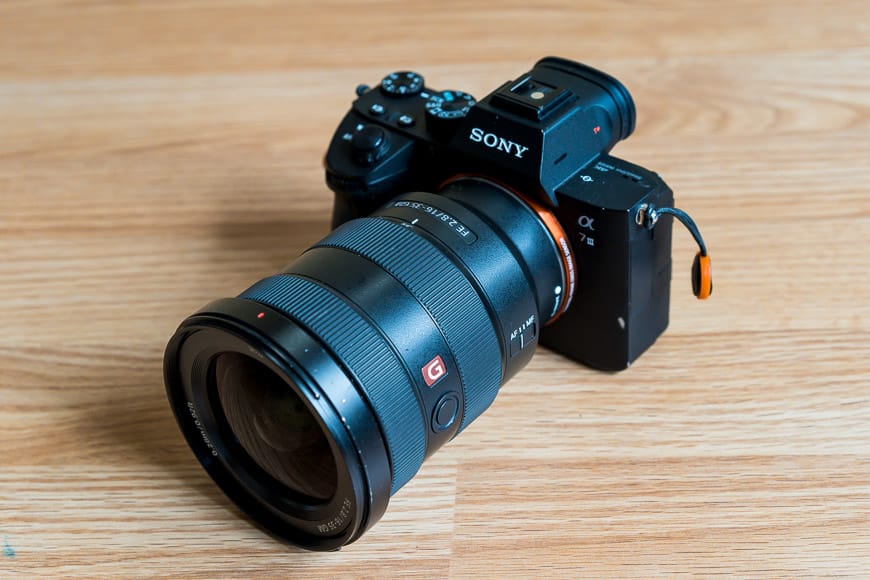

Versatile focal range with solid build, incredible image quality, and a fast constant aperture.
In the original version of this roundup, I included only original Sony FE lenses because I hadn't found anything that convinced me to switch to another manufacturer.
In this revision, though, I've included a standout third-party lens that I consider to be high-quality and more portable for photographers who face full-day photo shoots or long hikes to reach their location.
I've also updated the Sony FE choices where I considered it's worth stepping up a nudge. So, you'll find my best seven picks, including primes and zooms, to help you choose what's best for you.
- Got the newer model? Check out my guide to Sony a7 IV lenses
What are the Best Lenses for the Sony a7III?
| Image | Product | Features | ||
|---|---|---|---|---|
 | Sony 16-35mm f/2.8OUR #1 CHOICE |
| VIEW PRICE → | |
 | Sony 35mm f/1.8GREAT VALUE |
| VIEW PRICE → | |
 | Sony 28mm f/2.0TOP RATED |
| VIEW PRICE → | |
 | Sony 55mm f/1.8 |
| VIEW PRICE → | |
 | Sony 85mm f/1.8 |
| VIEW PRICE → | |
 | Sony 24-70 f/2.8 |
| VIEW PRICE → | |
 | Tamron 70-180mm f/2.8 |
| VIEW PRICE → |
1. Sony FE 16-35mm f/2.8 GM II | Best Wide Angle Lens for Sony a7III
Stabilized: No
Weight: 547 gr (19.3 oz)
Size (Diameter x Length): 3.48 x 4.39″ / 88 x 112 mm
Filter Diameter: 82mm
Minimum Focus Distance: 0.22m (8.7 in)
In the original version of this roundup, the Sony FE 16-35mm f/2.8 GM was my top pick for shooting action sports and events.
This was mostly because it allowed me to shoot in a documentary style, which gives you a semi-wide perspective without too much distortion.
Of course, these focal lengths are also ideal for landscape and cityscape photography.
Now, I'm recommending its successor, Sony FE 16-35mm f/2.8 GM II, because those characteristics still hold true, but it's 20% lighter and delivers even better edge performance.
Plus, the Sony FE 16-35mm f/2.8 GM II has a faster and quieter XD Linear AF motor for video.
I also find it has superior aberration control, refined bokeh from the 11-blade aperture, and four XD Linear Motors enabling sharper tracking across the entire frame – making it a clear step up from the original model.
The sharpness is noticeably better when shooting wide open, compared with the original GM lens on the a7III's 24MP sensor.
You can look at some example images here.
Its price tag is around US$2,200, which is not cheap. However, because it was released in 2023, you can find secondhand options at a lower price if you're on a budget.
Alternatively, stick with the original GM version, and you'll still get a high-quality lens that won't set you back as much.
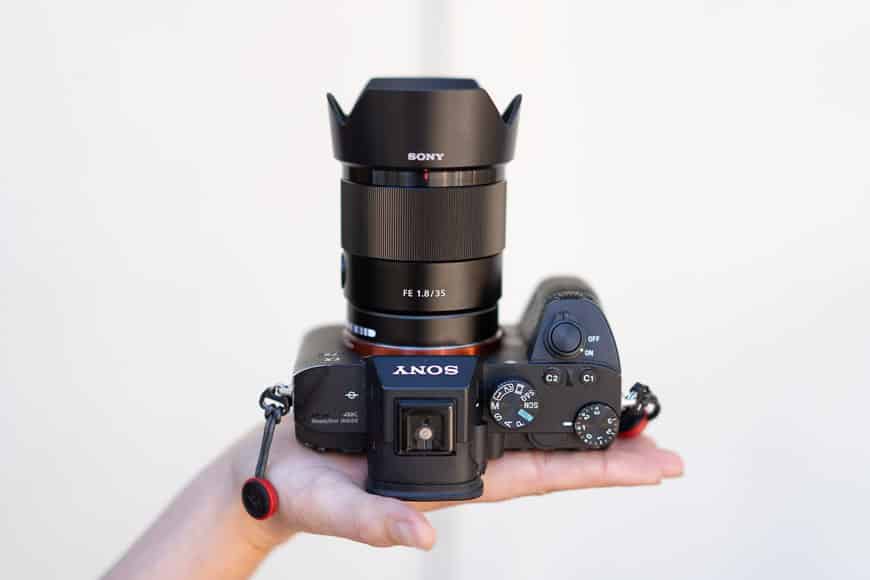
2. Sony FE 35mm f/1.8 | Best Budget Prime Lens for Sony a7III (All Around)
Stabilized: No
Weight: 281 g (9.9 oz)
Size (Diameter x Length): 2.6 x 2.9″ / 66 x 73 mm
Filter Diameter: 55mm
Minimum Focus Distance: 0.22m (8.7 in)
This lens is a much more recent addition to my camera bag, and has quickly become the best all-around lens for the Sony a7III.
When the Sony 35mm f/1.8 was released, I immediately knew it would be added to my kit.
I think this lens is the perfect combination of performance and size. You can read more about it in my Sony 35mm f/1.8 review.
With a maximum aperture of f/1.8, it's very fast and performs very well in low light. Nonetheless, it's compact enough that you don't have to worry about its size and weight when taking it on photographic adventures.
Previously, I had been using the Sony 35mm f/2.8 lens, which is incredibly compact, but I often felt limited in low light by the f/2.8 maximum aperture. It was a very sharp, high-performance lens, except in low light.
Although the Sony 35mm f/1.8 is slightly larger, it makes up for that with a big boost in low-light performance.
This lens also produces images with excellent bokeh. I really love the ability to shoot wide open and isolate subjects even with the wider 35mm focal length.
When it comes to sharpness, this is one fantastic lens! I've always heard that other 35mm lenses had some sharpness issues, but the Sony 35mm f/1.8 delivers tack-sharp images across its entire focal range.
If you happen to be shooting with the high-resolution a7RIV, you might notice a little loss of sharpness in the corners wide open, but otherwise, this lens delivers wickedly crisp image quality!
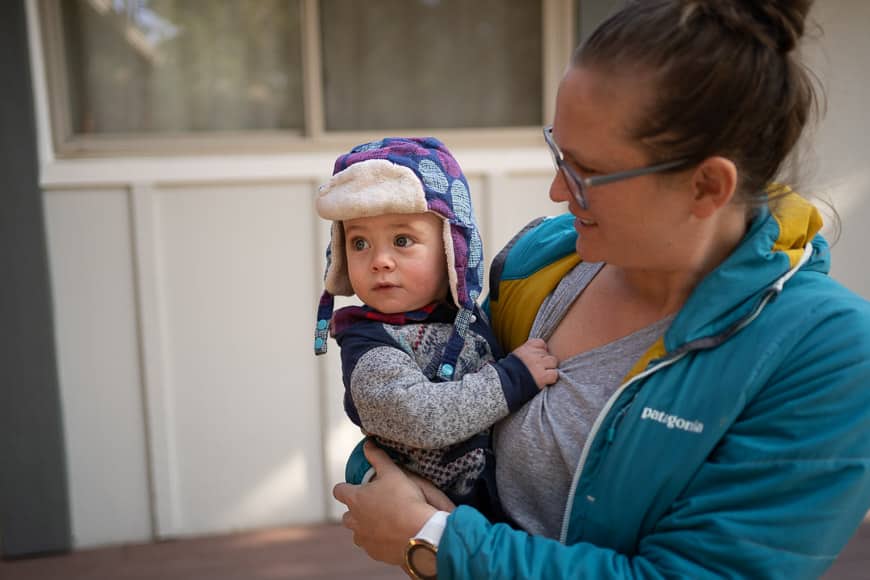
Sony a7III + Sony 35mm f/1.8 | 1/500 f/1.8 ISO 100
At 35mm, this lens delivers my favorite focal length. I've honed in on this medium-wide prime as my go-to lens for shooting a variety of subjects or taking it with me when I'm not sure what I'll encounter.
The Sony 35mm f/1.8 is also flexible enough to create a nice portrait without too much distortion and a wide scene setting shot if you step back from your subject. It makes for the perfect combination when attached to a Sony a7III.
I also really love how quickly this lens focuses, even in the darkest scenes at its f/1.8 maximum aperture! It rarely hunts for focus even with fast-moving subjects in dim scenes.
Overall, this is the most-used lens in my bag for Sony a7III cameras and the one I know I can count on to perform in almost any situation.
In general, I'd highly recommend the Sony 35mm f/1.8 prime lens if you're looking for a fast prime that can do anything well.
It may not be the best lens for a Sony a7III or most Sony cameras, but it's one of them and a key optic to keep in your collection.
3. Sony FE 28mm f/2 | Best Lens for a7III Owners on a Budget
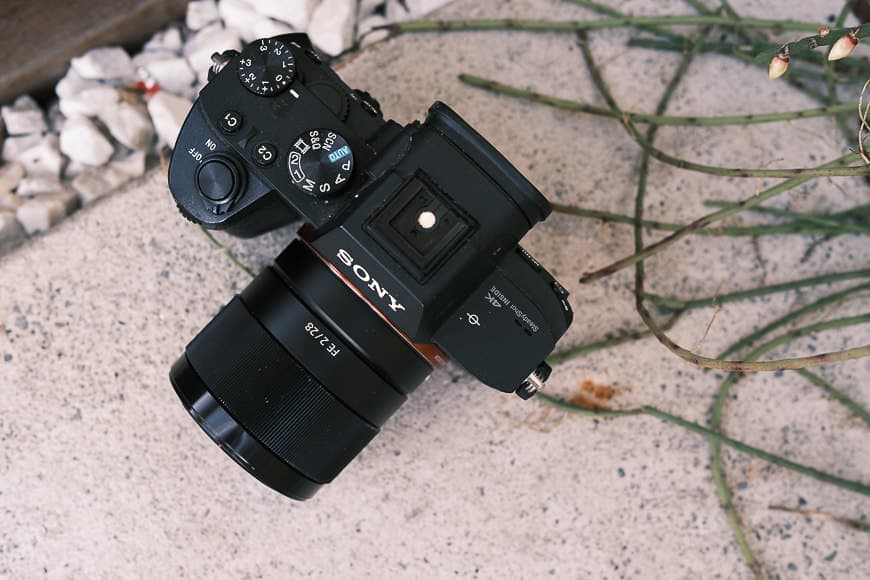
Stabilized: No
Weight: 200 g (7 oz)
Size (Diameter x Length): 2.5 x 2.4″ / 64 x 60 mm
Filter Diameter: 49mm
Minimum Focus Distance: 0.29m (11.4 in)
The Sony 28mm f/2 (full review here) is a favorite lens that has been used on the a7 series of cameras for almost 5 years. It is inexpensive, fast (max aperture f/2), and offers great performance.
I only tried it after owning several other prime lenses in similar focal lengths, but was immediately surprised by what great value it offers.
At 28mm, it offers an excellent everyday focal length (not too wide or too telephoto) and is very compact.
I appreciated the Sony 28mm f/2's small size and weight when I used it on a mountain biking photoshoot.
Despite being compact and affordable, the Sony 28mm f/2 offers excellent performance. The f/2 aperture allows you to shoot in low light and isolate close subjects from the backdrop.
The sharpness of this lens is great, and I've never had any issues. On paper, some G-Master lenses outperform the Sony 28mm f/2, but I never had any complaints!
If you're coming from an inexpensive zoom Sony lens for a7III models, this particular optic will feel like a substantial upgrade in sharpness.

Sony a7III + Sony 28mm f/2 | 1/1600 f/2 ISO 1000
Something I have come to love about the Sony alpha mirrorless cameras is how fast their autofocus system works. It's great to have a lens that can keep up with this amazing performance. Well, the Autofocus on this lens is really fast and silent!
I'm sure you can find an article that describes the detailed specs of how the Sony 28mm f/2 performs, but photographers who make great pictures rarely worry about these details.
To summarize, this lens has minimal issues and generally delivers excellent performance. It's a definite contender for being one of the best lenses for the Sony a7III.
Overall, the Sony 28mm f/2 is a great buy! I highly recommend it to anyone looking for a less expensive prime lens in the 24-35mm focal range.
It will encourage you to zoom with your feet and has a slightly wider field of view than the 35mm f/1.8 lens listed below.
Its diminutive size and weight also pair wonderfully with the Sony a7III, making it much easier for you to take your camera out more often for shooting.
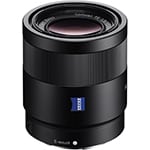
4. Sony FE 55mm f/1.8 | Best Bokeh Lens for Sony a7III
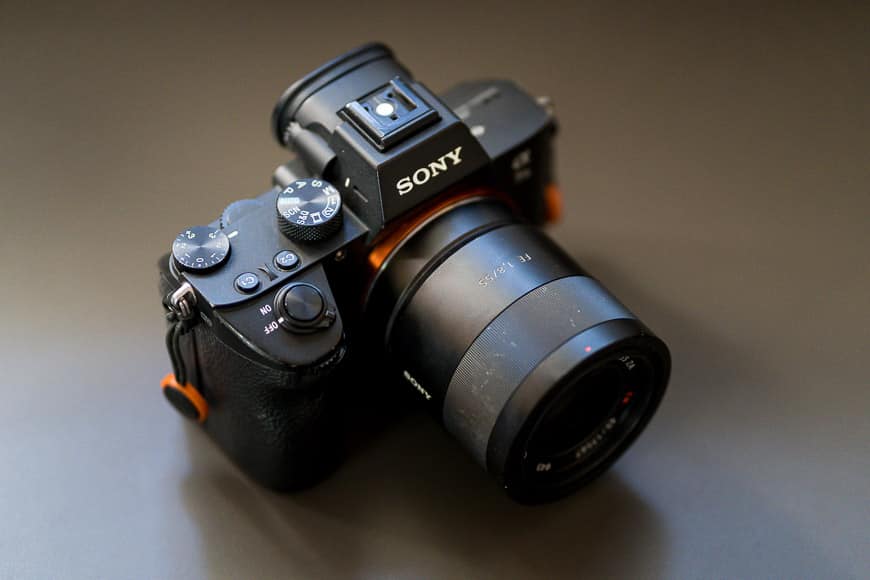
Stabilized: No
Weight: 281 g (9.9 oz)
Size (Diameter x Length): 2.5 x 2.8″ / 65 x 71 mm
Filter Diameter: 49mm
Minimum Focus Distance: 0.5m (1.64 ft)
A 50mm prime lens is a staple in almost every professional photographer's bag for many reasons. When I switched to the Sony Mirrorless system, I knew I would need a lens in this focal range.
I quickly settled on the Sony 55mm f/1.8. My three priorities of performance, size/weight, and affordability made this lens an excellent choice.
It comes in at a svelte 9.9 oz (281g) and balances superbly with the Sony a7III.
At one point, I thought I had lost this lens because I picked up my satchel and thought it wasn't in there or had fallen out, simply because it was so lightweight!
The performance of the Sony 55mm f/1.8 is excellent and pairs especially well with the Sony a7III. It has a useful focal length, offers spectacular sharpness and great contrast, and it produces smooth bokeh when shot wide open.
At f/1.8, the aperture isn't as large as on some other 50mm lenses I've used, but I've never had an issue with it.
The low-light performance and focusing of this lens are more than adequate, especially when paired with the awesomely high ISO performance of the Sony a7III.
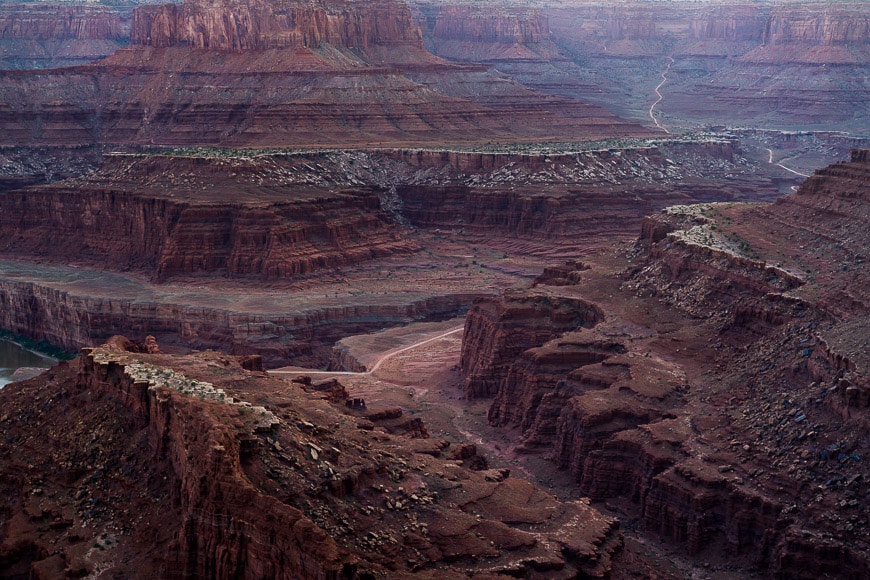
Sony a7III + Sony 55mm f/1.8 | 1/160 f/4 ISO 100
The thing I love most about my Sony 55mm f/1.8 lens is its mid-range focal length. It offers just enough field of view to capture a scene while allowing the viewer to be brought into the frame with a hint of compression.
This isn't the same type of lens compression you get with a telephoto, where the backdrop feels right behind the subjects, but the Sony 55mm f/1.8 offers a narrower field of view that encourages photographers to be selective with framing.
Because of this perspective, I find myself gravitating towards it when shooting a variety of subjects (portraits, landscapes, products, etc).
The Sony 55mm f/1.8 lets you narrow in on the important parts of an image without it being as confining as a telephoto lens.
Overall, this 55mm is a top performer and fits the bill for a fast, mid-range prime lens! If you don't have a 50mm lens, or you haven't had the chance to use one yet, definitely check it out.
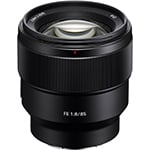
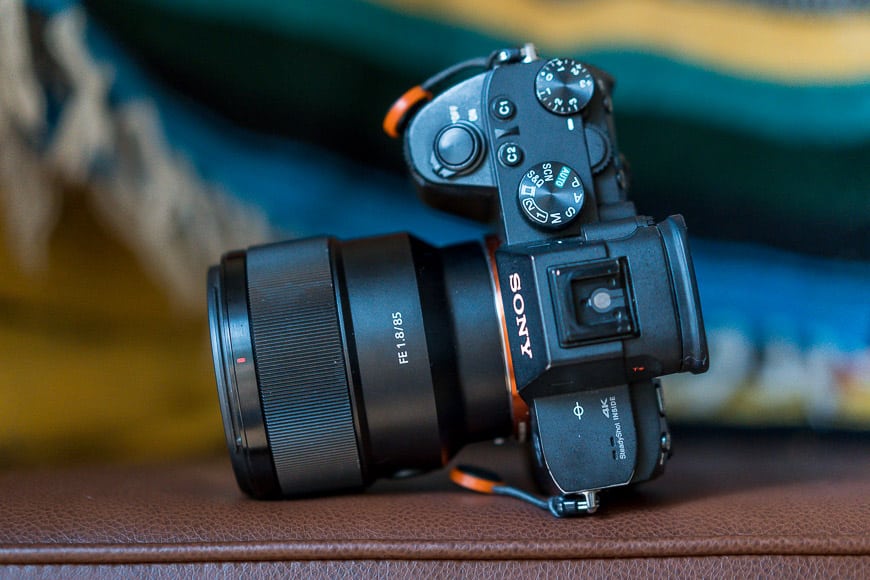
5. Sony FE 85mm f/1.8 | Best Portrait Lens for Sony a7III
Stabilized: No
Weight: 371 g (13.1 oz)
Size (Diameter x Length): 3.1 x 3.2″ / 78 x 82 mm
Filter Diameter: 67mm
Minimum Focus Distance: 0.8m (2.62 ft)
There is nothing like the 85mm focal length for shooting a nice portrait. The lightweight, sharp, and surprisingly affordable Sony 85mm f/1.8 is the ideal choice for this focal length!
Sony offers the 85mm f/1.4 GM lens if you want maximum performance, but for me, the 85mm f/1.8 is the perfect balance of performance and value!
It completes my favorite trio of prime lenses (35, 55, and 85mm) and consistently delivers excellent performance.
Many people say that 85mm is the ideal portrait lens focal length because it renders subjects with minimal distortion, but for me, the main factor is the bokeh it can create.
When shooting wide open at f/1.8 with this lens, the background falls nicely out of focus, drawing your attention to the subject.
In addition to beautiful bokeh and minimal distortion, the Sony 85mm f/1.8 offers excellent autofocus performance.
I really love using the Sony a7III's eye-tracking feature when shooting portraits with this lens.
Many people just like programming the focus hold button on this optic to “eye autofocus”, making it that much easier to get tack-sharp images. (See my full Sony 85mm f/1.8 lens review for more sample images.)

Sony a7III + Sony 85mm f/1.8 | 1/500 f/1.8 ISO 200
I also really appreciate how compact his lens is for its performance. It is lightweight and small enough that I rarely hesitate to bring it with me, even when hiking out to a shoot.
As expected, the 55mm f/1.8 offers excellent edge-to-edge sharpness throughout the aperture range. Sometimes sacrifices must be made to make a lens affordable, but I can't seem to find anything to complain about with this model!
At around 1/3 the price of the 85mm f/1.4 version, the Sony 85mm f/1.8 delivers some truly awesome value for your money!
The difference between f/1.4 and f/1.8 is about 2/3 of a stop of light – i.e. to get the same exposure as 1/60 sec at f/1.8, you would use a shutter speed of 1/95 or 1/100 sec at f/1.4.
However, with the Sony a7III's amazing high ISO, it's easy to raise your ISO a little to capture a scene in lower light at f/1.8.
Sure, the bokeh will be creamier at f/1.4, but not enough to warrant the huge price difference between the two lenses.
If you're in the market for an excellent portrait lens that won't break the bank, this should definitely be on your list among Sony A7III lenses!
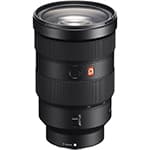
6. Sony FE 24-70mm f/2.8 GM II | Best Video Lens for Sony a7III (All Around)

Stabilized: No
Weight: 695g (24.5 oz)
Size (Diameter x Length): 3.45 x 4.9″ /87.8 x 124 mm
Filter Diameter: 82mm
Minimum Focus Distance: 0.21m (8.3 in)
Every photographer can benefit from a workhorse 24-70mm f/2.8 lens, which is why I originally chose the 24-70mm f/2.8 GM released in 2016.
Now, I have a new favourite all-around zoom lens – its successor, the 24-70mm f/2.8 GM II.
This second generation offers dramatically improved edge-to-edge resolution, three XD Linear Motors for faster, more silent tracking, and a lighter design.
The Sony 24-70mm f/2.8 GM II is lighter and smaller than its predecessor without sacrificing anything in strong build, quality, or performance.
It's also the best zoom lens for Sony a7III video shooters since it provides a range of useful focal lengths and a fast aperture for low light.
With a consistent f/2.8 aperture, it performs well in low light and offers even better real-time tracking.
This lens is a top performer, but it comes with a hefty US$2,500 price tag. If you can afford it, don't think twice! It's our pick for the best Sony 24-70mm lens, and a key addition to your collection of lenses for Sony a7III cameras.
However, you can also stick to its predecessor, which is currently going for around US$1,800.
Alternatively, if you can compromise on aperture, you can save quite a bit by getting the f/4 version of this focal length from Sony (see my review of the Sony 24-70mm f/4).
This one offers great sharpness and decent overall performance in a lighter package, but there's simply no denying it – the f/2.8 is better in every way.
7. Tamron 70-180mm f/2.8 G2| Best Telephoto Zoom for Sony a7III
Stabilized: Yes
Weight: 855g (30.2 oz)
Size (Diameter x Length): 3.27 x 6.16″ /83 x 156.5 mm
Filter Diameter: 67mm
Minimum Focus Distance: 0.3m (11.8 in)
For flattering portraits, sports, and even wildlife, a telephoto zoom like 70-200mm f/2.8 is a must-have.
The original Sony FE 70-200mm f/2.8 GM OSS was previously my top pick for the a7III. It delivered buttery bokeh and OSS stabilization that worked great.
In this update, I'm switching to the Tamron 70-180mm f/2.8 Di III VC VXD G2 because it's much lighter and more affordable without sacrificing the optical quality. Think weddings or kids' sports without back pain!
The biggest trade-off switching to the Tamron: you'll miss Sony's full 200mm reach if you shoot distant wildlife.
No native Sony teleconverters compatibility either. So, if this is your primary use, stick with the Sony FE 70-200mm f/2.8 GM OSS.
However, if you shoot portraits or not-so-distant wildlife, the Tamron is the way to go.
The VXD motor tracks moving subjects fast and accurately, and its VC rivals Sony OSS for handheld stability. When paired with the a7III built-in IBIS, they work together for 4-6 stops of stability.
The upgraded coatings kill flare for cleaner outdoor shots, and it offers extremely sharp results. Paired with a7III, it's ideal for compressing background and generates beautiful bokeh for creamy portraits.
What Mount is the Sony a7III?
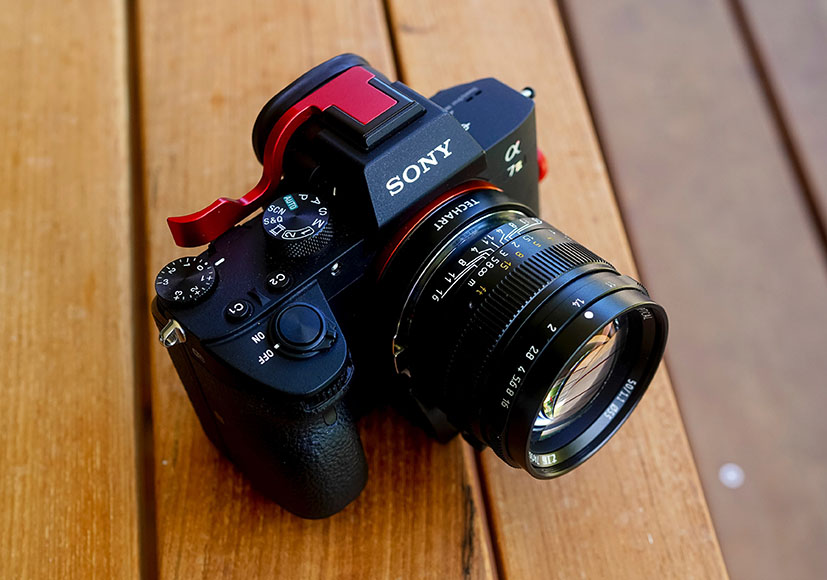
Any lens designed for the E-Mount can be used with the Sony a7III.
These are the lenses I recommend for the Sony a7III. However, there's a wide variety of choices – both original Sony and third-party ones.
The one thing that you need to make sure of is that it has a compatible lens mount.
The Sony a7 III lens mount is known as the ‘e' mount, which is specifically designed for Sony's mirrorless interchangeable lens cameras.
Sony introduced this lens mount in 2010 and has since made it the standard mount for Sony's full-frame and APS-C mirrorless cameras.
Any full-frame Sony FE lens can be used on the Sony a7III, as can any Sigma, Tamron, or Rokinon lens designed for an ‘e mount'.
This Sony a7III mount type means that you can also use any e-mount lens designed for the crop-sensor APS-C sensor Sony bodies, albeit with a crop.
The camera automatically recognizes the use of an E lens and will switch to its APS-C crop mode, reducing the effective resolution to about 10.2 megapixels. The field of view will be narrower, similar to using a telephoto lens on a full-frame camera.
FAQs
What is the Sony a7iii kit lens?
The Sony a7III kit lens is the one that comes in a bundle when you buy the camera – the most common choice is the Sony FE 28-70mm f/3.5-5.6 OSS lens.
This Sony camera lens offers a versatile zoom range for everyday shooting and features Optical SteadyShot (OSS) image stabilization, making it suitable for various scenarios from landscapes to portraits. Note that you might find other bundles with a different kit lens.
What are the best budget lenses for Sony a7III?
The Sony a7III has several budget-friendly lens options:
- Sony FE 50mm f/1.8: An affordable Sony prime lens that's great for portraits and low-light situations.
- Samyang/Rokinon AF 35mm f/2.8 FE: A compact and lightweight lens ideal for everyday photography and street shots.
- Tamron 28-75mm f/2.8 Di III RXD: A versatile zoom lens with a constant f/2.8 aperture, offering excellent performance for its price.
Final Words
In conclusion, the Sony a7III supports any ‘e-mount' lens, whether Sony or third-party. This means that you have a wide array of choices. The best pick will depend on what you plan to shoot and your budget.
Here are a few guidelines to help you navigate the market.
For wide-angle landscapes, cityscapes, events, and sports, check out the FE 16-35mm f/2.8 GM II. Are you on a budget? Stick to the original GM version for a lower price tag.
Do you prefer an everyday hero? Then choose the Sony FE 35mm f/2.8 GM II. This prime lens delivers super-sharp images even in low light, and it's so compact that you can carry it all day long.
For portraits with minimal distortion and dreamy bokeh backgrounds, go with the Sony FE 55mm f/1.8 or the FE 85mm f/1.8.
As for zoom and telephoto lenses, the FE 24-70mm f/2.8 GM II for both video and photo. If you need a longer focal length, go for the Tamron 70-180mm f/2.8 G2 or the Sony 70-200mm, if you're willing to accept the extra weight.
Versatile focal range with solid build, incredible image quality, and a fast constant aperture.
References: (1) https://digital-photography-school.com/brand-name-versus-third-party-photography-gear-which-is-better/ (2) https://www.sony.com/electronics/lenses/ (3) https://www.alphashooters.com/cameras/a7iii/lenses/ (4) https://www.techradar.com/news/best-sony-lenses

Marc and Brenda Bergreen are professional wedding photographers and adventurous storytellers based in the Rocky Mountains.
22 Comments
Leave a Comment
👋 WELCOME TO SHOTKIT!
🔥 Popular NOW:

Hi,
I hope you don’t mind me jumping on this post (i know it’s a few years old, but found this very helpful!)
I purchased a Sony a7iii (second hand) beginning of last month alongside the 85mm F1.8 lens. This is my first camera but my main want to taking nice pictures of the dog!! Sad yes i know, but i love taking photos of her and being out and about.
We walk a lot in North Wales in the mountains and i found the 85mm restrictive for trig photo, snapping shots of her in the surrounding etc. I love shots of her & my partner walking.. almost what you’d get straight out of the iPhone (which is think is more a 50mm?)
However i keep going around in circles of which would be best for my second lens.. the 35mm F1.8 or the Tamron 27-75mm (i cannot justify the Sony 24-75mm!). I’ve never used a zoom lens, but the 35mm is nearly 1/2 the price.. so is it worth buying over this? My mind it literally blow with the amount of options!
Thanks again
No problem at all, and congrats on your Sony a7III—it’s a fantastic camera, especially for capturing your adventures and your dog!
Lens Recommendations:
35mm F1.8:
Pros:
Lightweight and compact, ideal for hiking and outdoor photography.
Excellent for environmental portraits and capturing your dog with a broader view of the surroundings.
Wide aperture (F1.8) is great for low-light conditions and achieving beautiful background separation (bokeh).
Less expensive than the zoom lens.
Cons:
Fixed focal length, so you’ll need to “zoom with your feet,” which might not always be possible in rugged mountain terrain.
Tamron 28-75mm F2.8:
Pros:
Versatile zoom range for both wide-angle shots (28mm) and tighter framing (75mm).
Great for capturing a mix of landscapes, portraits, and action shots.
Constant F2.8 aperture allows good performance in low light and decent bokeh.
Cons:
Heavier and bulkier than the 35mm.
More expensive.
At the wide end, 28mm might not feel as “wide” as you’d like for landscape shots.
Considerations:
If you’re primarily capturing moments with your dog and partner and want that iPhone-style field of view, the 35mm F1.8 is closer to the natural perspective you’re looking for.
If you want the flexibility of multiple focal lengths to capture both landscapes and tighter portraits, the Tamron 28-75mm will give you more variety.
My Take:
If you’re comfortable moving closer to or farther from your subject, the 35mm F1.8 might be your best bet—it’s lightweight, affordable, and perfect for environmental shots and portraits. On the other hand, if you prefer flexibility and don’t mind carrying a heavier lens, the Tamron is worth the investment.
Since the Tamron is pricier, you might start with the 35mm and upgrade to a zoom lens later if you feel limited.
I will echo the comments above – 24-105 should be in the list too. It is a personal favourite too, very versatile and TBH can easily be the only lens you need for any degree of general photography.
With regards to wide and selfies (including small group selfies) on Sony A7c I particulalry like the 16-35 CZ due to OS and the way it renders photographs. My friend prefers the newer 16-35 however both are great options
Oh Hi Marc (sorry had to)
I was wondering if I could still pick you brain here as I’m just finding this post. I am very new to photography and still trying to learn what I can. I have the sony A7iii with the kit lens and I was looking at options for an upgrade for shooting outdoor sports (mainly my son’s soccer/baseball games) do you have any recommendations for my use case?
No worries;
When shooting outdoor sports, consider the following tips:
Use a fast shutter speed to freeze action. For sports like soccer and baseball, a shutter speed of at least 1/500s or faster is generally recommended.
Set your camera to continuous autofocus (AF-C) mode to track moving subjects.
Pay attention to the lighting conditions. If you’re shooting in low light, a lens with a wide aperture can be beneficial.
My top 3 recommendations to enhance your shooting:
Sony FE 70-200mm f/2.8 GM OSS:
This lens is known for its excellent optical quality and fast f/2.8 aperture, making it suitable for capturing action in low-light conditions. The 70-200mm focal length range is versatile for sports photography, providing the reach you need to capture distant subjects.
Sony FE 100-400mm f/4.5-5.6 GM OSS:
If you need even more reach, the 100-400mm focal length range allows you to get closer to the action. This lens is well-regarded for its image quality and is a good choice for outdoor sports where you might be shooting from a distance.
Sony FE 24-70mm f/2.8 GM:
While not as long in focal length, the 24-70mm f/2.8 GM lens is a versatile zoom lens that covers a range commonly used for sports photography. The wide aperture of f/2.8 allows for good low-light performance and the flexibility to capture a variety of scenes.
I hope that helps.
what do you think would be a perfect Lense for shooting scenery and moving targets like whales or glaciers, i have a sony a7III . I have 16-352.8 and lense that came with it.
Hi Joe
For shooting scenery and moving targets like whales or glaciers with your Sony A7III, the 16-35mm f/2.8 lens you already have is a good choice for capturing wide-angle shots of landscapes and expansive scenes. However, if you want to get closer to distant subjects like whales or details in glaciers, you might consider a telephoto lens.
A telephoto zoom lens is a versatile option that can handle both landscapes and moving subjects. The Sony FE 70-200mm f/2.8 GM OSS is an excellent choice. This lens offers a longer reach, allowing you to capture distant subjects while maintaining a wide aperture of f/2.8, which is beneficial for low-light conditions or achieving a shallow depth of field.
Another option to consider is the Sony FE 24-70mm f/2.8 GM lens. While not as long in focal length as the 70-200mm, the 24-70mm range is still quite versatile and can cover a wide variety of shooting scenarios. It’s a good option for capturing landscapes and can also be used for closer shots of moving subjects.
Hope that helps!
Hi Mark! Thank you so much for great contents as always. What are your thoughts about the 35mm f/1.8 vs the 28mm f/2. I’m looking for a small lens to carry around, travel with. I mostly like to take pictures of urban landscape, architecture, not so much of street photography of people. Your input is greatly appreciated!
you could easily take the Tamrons (28-75 2.8 VXD and 70-180 2.8 VXD) instead of the much more expensive Sony. Picture quality is pretty much the same neck on neck and AF is on point super fast.
Thank you for this review, really useful !
I’m on a Sony Alpha 7II and looking to complement my 85 mm with a “long”er telephoto lens.
I’m torn between a 135mm (love those prime lenses, sharpness and bokeh !) or the 70-200 mm.
The 135mm Sony is amazing but really pricey for me, as I am only an amateur and not professional…
Same applies to the 70-200mm Sony f/2.8 V2, which has better AF and is lighter (which I prefer) but goes way high on the price tag…
Which lens should I turn to ? I’ve seen the Sigma 135mm but people have advised against for the slow Auto Focus.
The Samyang 135mm f/2 looks like a nice compromise between the price, the quality and the f/2.
On the zoom lens, there’s the Tamron 70-180 f/2.8, great for bokeh and AF apparently or the Sony 70-200m f/4 but I’m afraid I’ll feel the f/4 in the bokeh, sharpness and AF.
Could you please help me ?
I’d get the Samyang 135 f/2, Elisa! The quality is excellent and it’s great value for money. The zooms you mentioned are great too, but you’ll miss that bokeh of the primes :-) Hope that helps!
Sony FE 85mm f/1.4 GM Lens is great for any kind of portrait. I am using this lens to capture bride & groom’s portraits and get super sharp images.
Yes, it’s a fantastic lens Gita! A little heavy and bulky, but that’s the case for any f/1.4 lens.
Thank you for this post, very useful. Sony lens is the 85mm f1.8! It’s super sharp and very fast.This model camera I am also using this model. It’s great to feature and a good feature. I have got this model another website this website different model camera and user friendly camera.
Thank you for this post, very useful. My favourite Sony lens is the 85mm f1.8! thanks for this list
Besides portraits what else do you shoot with the 85mm 1.8?
Going for sony 24-70 2.8
for wide – I Samyang 18 mm 2.8 is a good choice ???
Sure, if you need super-wide angle!
Thank you for this post, very useful. My favourite Sony lens is the 85mm f1.8! It’s super sharp and very fast.
Yep it’s a favourite of mine too, Gary!
What are your thoughts on the Sony G-Master 24mm F1.4 and the Sony G 24-105mm F4?
These are two of my favorites coupled with the Tamron 17-28mm F2.8.
24-105 should be on this list imho!!