






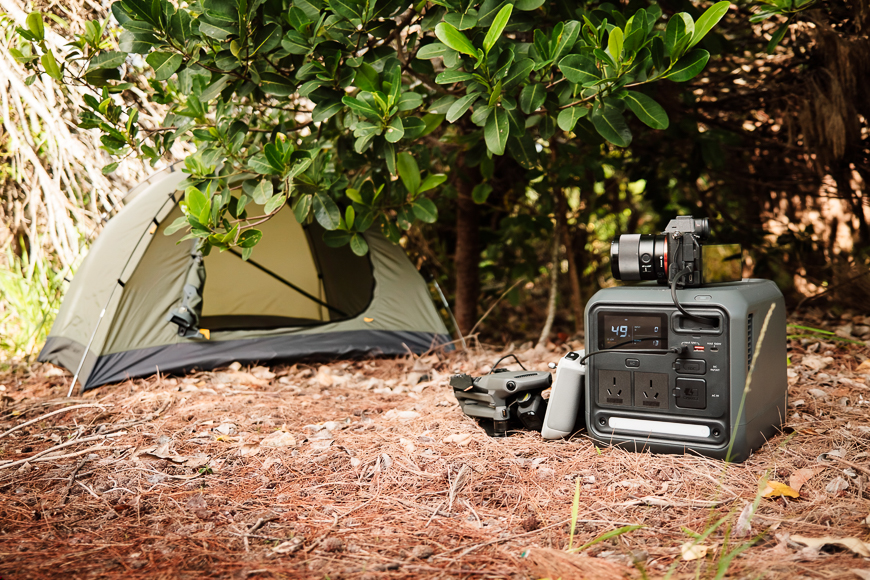
DJI Power 1000 Mini Review: Portable Power Station for Creatives
Looking for a reliable and robust way to keep your devices charged when going off-grid? The DJI Power 1000 Mini might be just the solution.
Photography Gear Reviews | By Jeff Collier | Last Updated: July 3, 2026
Shotkit may earn a commission on affiliate links. Learn more.
When you’re heading off-grid with camera gear, power quickly becomes the limiting factor.
Modern cameras, drones, laptops, phones and accessories all rely on rechargeable batteries, and portable power is often an afterthought until you’re halfway through a weekend away and your gear starts running flat.
I recently took the DJI Power 1000 Mini on a camping trip in Northern NSW to see how it handled my hobbyist photographer setup, including a phone, camera, drone, laptop and fridge.
After a weekend of use, I came away impressed.
Let’s take a closer look at the details of the DJI Power 1000 Mini and whether I think it’s worth your money.
Specs
- 1,024Wh LiFePO4 battery
- Compact 11.5kg design
- 800W continuous AC output
- Charges from 0–100% in around 78 minutes
- Built-in retractable 100W USB-C cable
- Dedicated DJI SDC port for drone accessories
- Supports up to 400W solar charging
- Optional vehicle charging via DJI car charging cable
- Built-in LED light
- UPS functionality for desktop setups
- DJI Home app connectivity
DJI Power 1000 Mini: First Impressions

I’ve never owned a portable power station before, so I don’t have the benefit of experience comparing brands or models.
That said, what immediately stood out was just how compact the DJI Power 1000 Mini feels considering it packs over 1kWh of capacity.
At 11.3kg it’s not something you’d want to hike long distances with, but it’s small enough to fit comfortably in the back of a vehicle without feeling like you’re sacrificing valuable cargo space.
The design also feels unmistakably DJI. The screen is bright and easy to read, the controls are simple, and the overall build quality feels more refined than many of the rugged camping products I’ve used over the years.
For those who own a DJI drone, you’ll also be familiar with the chirp that comes when powering on/off the unit.
Real-World Camping Performance
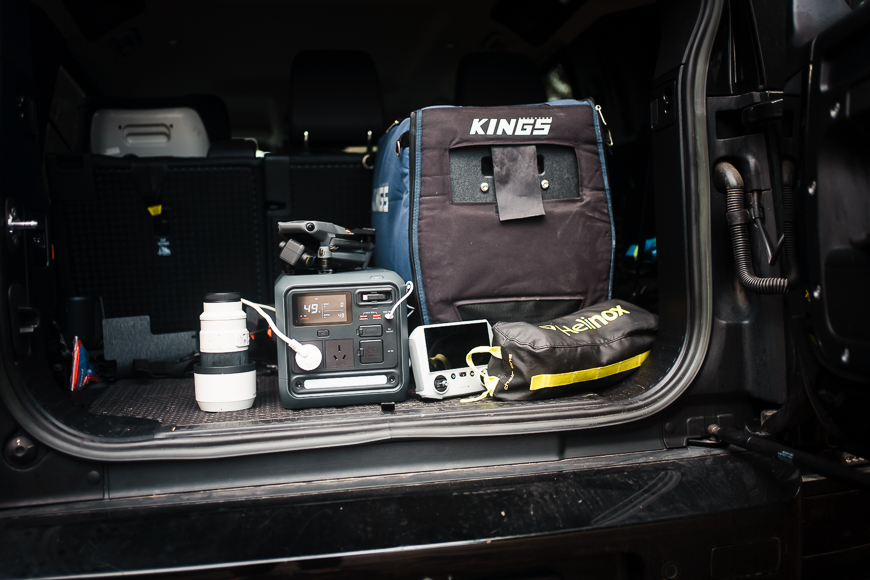
For my short overnight camp trip, the Power 1000 Mini became the central charging hub for everything.
Over the weekend, it powered:
- Kings Escape 40 fridge (running continuously)
- Sony A7 IV
- DJI Mavic 3 Classic batteries
- iPhone 17
- MacBook Pro 14”
The fridge was by far the biggest power draw and remained connected the entire time – after all, what’s a camping trip without a few cold beers?!
I charged my Sony camera battery via USB-C, topped up the drone battery, charged my phone a couple of times, and used the MacBook Pro for photo management and general Internet browsing (using my phone as the hotspot).
Despite all of this, the Power 1000 Mini never felt stressed – there was simply more power than I needed, which reduced any anxiety I might have had, had I been more remote.
The combination of a large battery and DJI’s impressive efficiency meant I rarely found myself checking the remaining capacity.
I don’t have the tools or know-how to provide a proper scientific report of every watt-hour that went in and out of this thing, but take it from me – in real-world use, this thing’s a beast.
Features Photographers & Creators Will Appreciate
Solar Charging
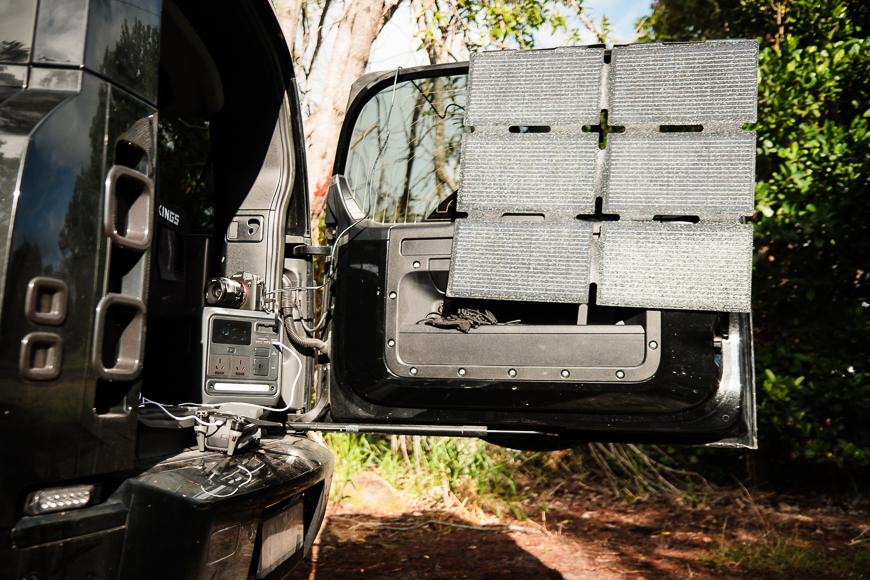
One feature I was particularly interested in was solar charging.
Using the 100W portable solar setup during the day allowed me to put energy back into the unit while continuing to run devices, helping offset much of the fridge’s consumption.
For creators spending multiple days away from mains power, solar charging transforms the Power 1000 Mini from a large battery into a genuinely sustainable off-grid solution.
You won’t completely refill the battery from solar as quickly as you can from AC power, but being able to harvest energy throughout the day significantly extends your time away from civilisation.
There’s also a 200W solution for those needing more power.
Built-In Retractable USB-C Cable
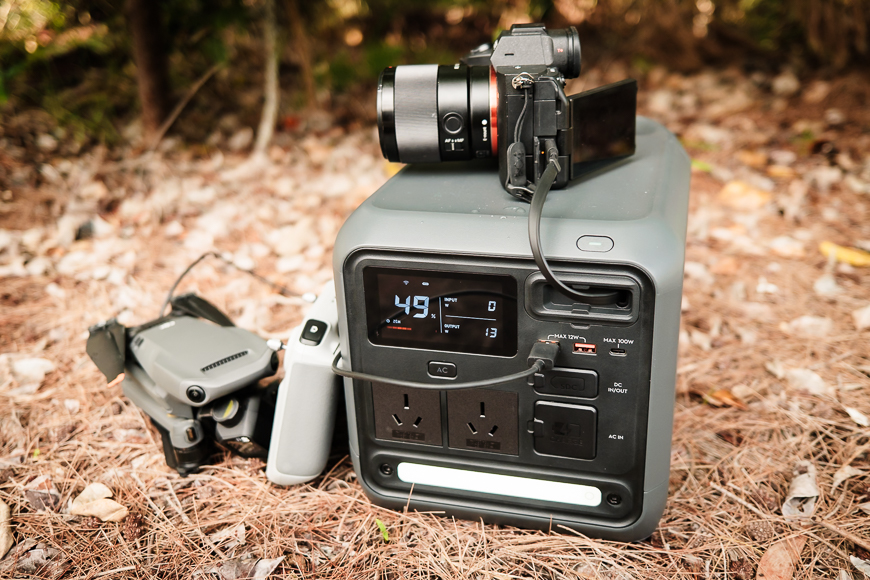
This initially sounded like a gimmick, but after a weekend using it, I changed my mind.
The integrated 100W USB-C cable became one of my favourite features because it eliminated the constant hunt for charging cables.
Need to charge your phone? Pull out the cable. Need to top up your laptop? Pull out the cable.
It sounds simple, but it’s surprisingly useful in practice… as long as your phone and laptop are compatible with USB-C, of course.
Built-In Light
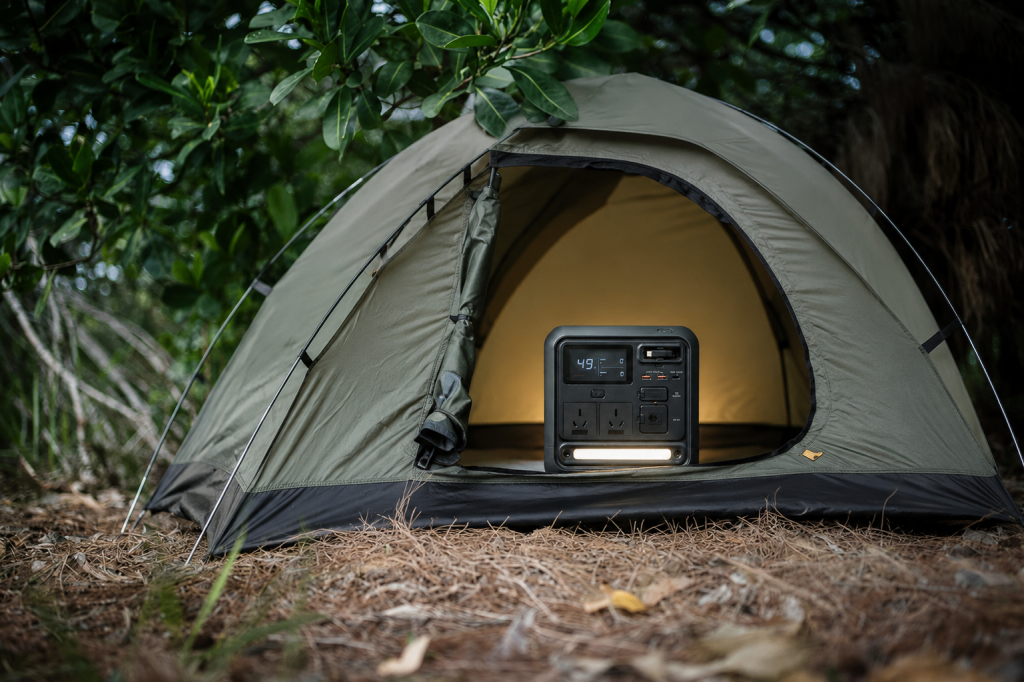
Another feature I expected to ignore was the built-in light, but I actually found myself using it a lot around camp after dark.
Whether connecting cables, checking gear or simply finding items in the vehicle, having a light built into the power station proved genuinely practical.
For those wanting to keep the Power 1000 Mini at home as a backup option for power cuts, I can see the light being useful in those situations, too.
Outdoor-Friendly Design
Camping gear inevitably gets exposed to dust, moisture and unpredictable weather, especially here in northern NSW during the winter where it can get pretty damp to say the least.
One of the reassuring aspects of the Power 1000 Mini is DJI’s focus on durability and weather resistance.
While I wouldn’t leave it sitting in heavy rain, it can handle the odd shower for those times you’re caught outside with no other option, or simply forget to bring it back inside your tent after dark… which I may or may not have done after one too many cold drinks.
Charging From Your Vehicle

One accessory worth mentioning is DJI’s optional car charging cable, which allows you to recharge the Power 1000 Mini directly from your vehicle while driving.
I packed the cable for my trip in the Defender but didn’t actually need to use it thanks to the combination of solar charging and the Power 1000 Mini’s generous capacity.
Still, for photographers covering road trips, overlanding adventures or multi-day shoots, it’s easy to see the appeal.
Being able to recover power while travelling between locations means you can arrive at camp or your next shooting spot with a partially replenished battery without needing access to mains power.
Alternatives to the DJI Power 1000 Mini
As I mentioned at the start of this review, I haven’t had hands-on experience with any other powerbank, so I can’t provide subjective commentary on how the Power 1000 Mini compares to competitors.
However, I did use ChatGPT to fish out the main features of some similar products for you, so you can see for yourself any differences:
DJI Power 1000
- 1024Wh capacity
- 2200W output
- Expandable battery system
- Larger and heavier
- Better suited to higher-powered appliances
DJI Power 500
- 512Wh capacity
- 1000W output
- Smaller and lighter
- Better for shorter trips and lighter gear loads
EcoFlow River 3 Plus
- Around 286Wh capacity
- Compact and lightweight
- Better for day trips than extended off-grid use
Anker Solix C1000
- Approximately 1056Wh capacity
- 1800W output
- Expandable ecosystem
- Larger and heavier than the DJI Power 1000 Mini
How Much Does the DJI Power 1000 Mini Cost?

The DJI Power 1000 Mini itself is competitively priced for a 1kWh portable power station, but it’s worth remembering that you’ll need to buy most of the accessories separately:
DJI Power 1000 Mini: US$499
DJI Power Car Power Outlet to SDC Charging Cable: US$69
DJI Power Solar Panel Adapter Module (MPPT): US$59
DJI Power 100W Solar Panel: US$249
DJI Power 200W Solar Panel: US$449
You can check full pricing details here.
For photographers and filmmakers who want the complete off-grid setup, it’s easy to spend well over US$1,000 once you add solar charging and vehicle charging accessories.
That said, the modular approach means you can start with the Power 1000 Mini itself and add accessories later as your needs grow.
Personally, I can see the vehicle charging cable being one of the most useful additions for road trips and multi-day shoots, while solar panels make the most sense for extended stays away from mains power.
Is the DJI Power 1000 Mini Worth It for Photographers & Creatives?
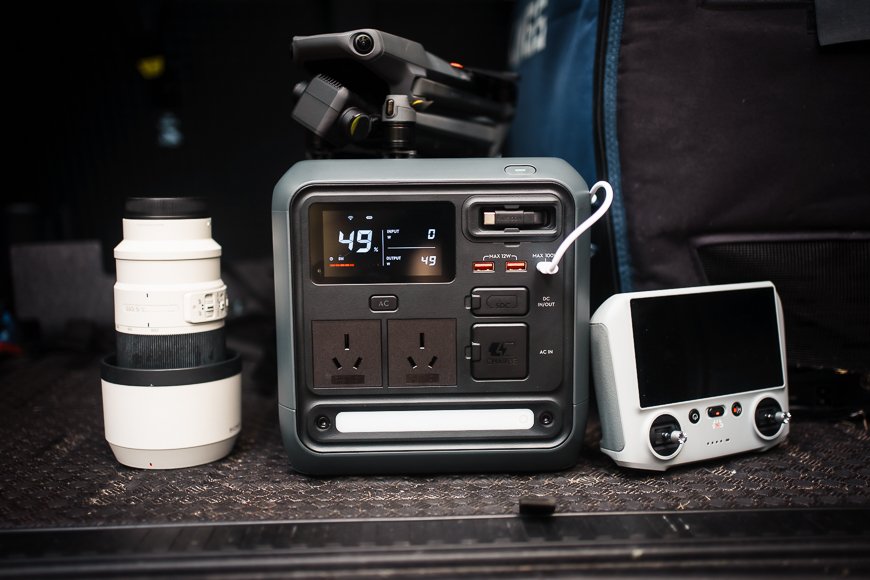
The DJI Power 1000 Mini sits in an interesting space.
It’s significantly more capable than a traditional power bank, yet more portable than full-size power stations.
For photographers, videographers, drone enthusiasts and content creators who regularly work outdoors or travel off-grid, it strikes an excellent balance between capacity, size and convenience.
The built-in USB-C cable, integrated light, app control and strong real-world battery life all contribute to a product that feels thoughtfully designed rather than simply engineered around specifications.
The cramped AC outlets are frustrating, but not enough to outweigh the positives.
If your typical weekend involves power-hungry gadgets and a few days away from mains power, the DJI Power 1000 Mini is one of the most exciting portable power solutions currently available.

Jeff Collier is an experienced film photographer who enjoys experimenting with modern digital photography equipment, software and apps. He’s also an ex-world champion triathlete and avid cyclist, clocking hundreds of km each week in the beautiful Tweed Valley of northern NSW, Australia.
👋 WELCOME TO SHOTKIT!
🔥 Popular NOW: