





Insta360 Luna Ultra Review: Portable 8K Gimbal Camera
Our hands-on Insta360 Luna Ultra review covers image quality, stabilisation, dual lenses, detachable screen, accessories, drawbacks and verdict.
Camera Reviews | Photography Gear Reviews | By Jeff Collier | Last Updated: October 27, 2026
Shotkit may earn a commission on affiliate links. Learn more.
The Insta360 Luna Ultra combines two lenses, excellent stabilisation and a detachable remote screen in a compact camera that’s remarkably easy to use.
After testing it for two months, I think it’s one of the most capable pocket cameras currently available.

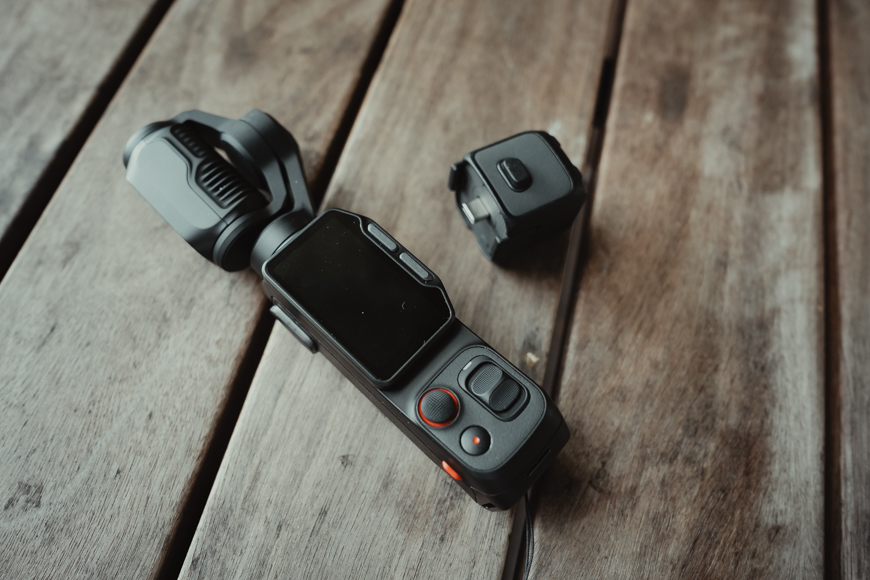
Pocket-sized gimbal camera with dual lenses, 8K video and a detachable touchscreen for flexible solo shooting.
I’ll be honest with you – my skills as a video creator are limited, so I won’t be sharing any of the footage that I shot on the Luna Ultra with you here. There are plenty of talented YouTubers who’ve done that already.
What I will do, however, is break down my thoughts on why you should or shouldn’t buy this innovative pocket gimbal camera, so let’s dive right into the review.
What Is the Insta360 Luna Ultra?
- Excellent video quality
- Compact and lightweight
- Starts quickly
- Very easy to use
- Wide and telephoto cameras
- Effective three-axis stabilisation
- Useful detachable OLED screen
- Strong subject tracking
- Good low-light performance
- Fast charging
- Expensive
- Can get hot when recording at demanding settings
- Autofocus can occasionally hesitate
- Larger than some competing pocket cameras
- Not waterproof or dustproof
- Extreme digital zoom reduces image quality
The Luna Ultra is Insta360’s flagship pocket-sized gimbal camera.
It pairs a one-inch sensor and 20mm-equivalent f/1.8 wide lens with a second 1/1.3-inch sensor and 60mm-equivalent f/2 telephoto lens.
That gives you a natural wide perspective for vlogging, travel and environmental footage, plus a much tighter 3x view for portraits, details and distant subjects.
The main camera can record 8K video at up to 30fps, while 4K recording is available at up to 120fps. There’s also 10-bit I-Log for colour grading, Dolby Vision HDR and a PureVideo mode intended for low-light recording.
A three-axis mechanical gimbal stabilises the camera, assisted by electronic stabilisation when required.
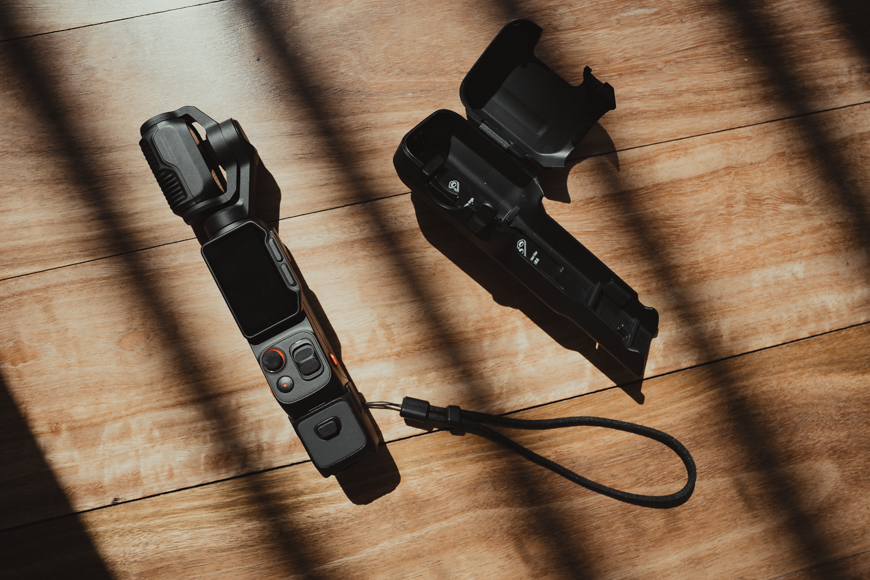
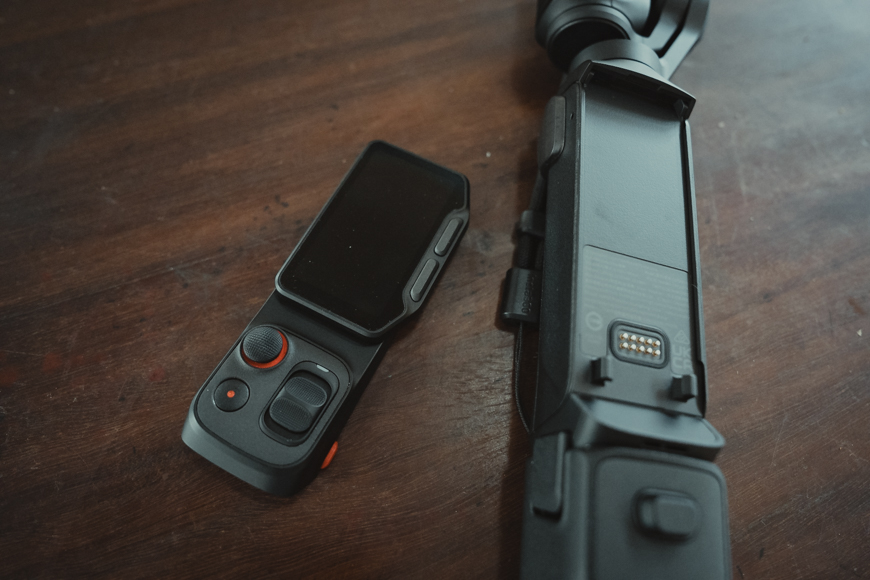
Its most distinctive feature is the two-inch OLED touchscreen. The screen can be rotated while attached to the camera or removed entirely and used as a wireless remote with a live view.
That combination makes the Luna Ultra particularly appealing to solo creators, but it’s equally useful for filming family activities and everyday life.
Design and Build Quality
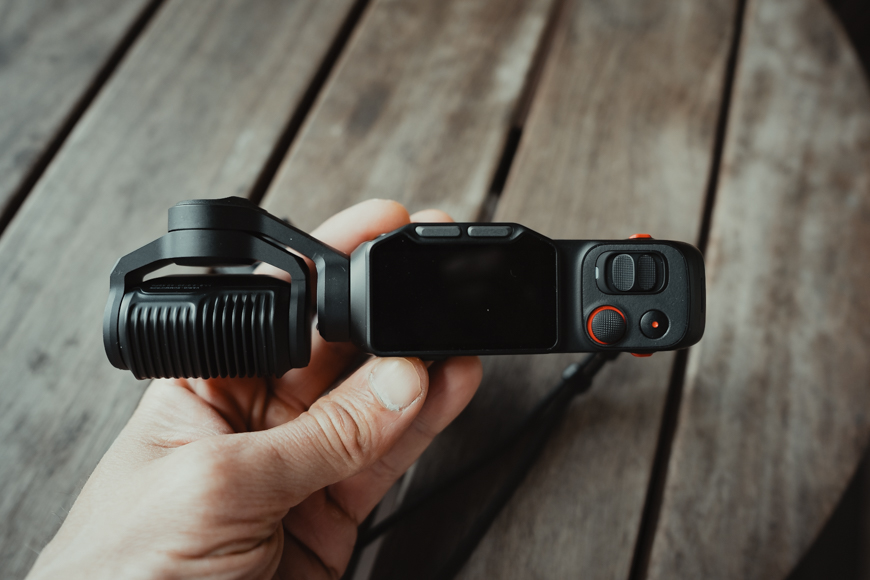
The Luna Ultra is compact and light enough to carry comfortably for an entire day.
At approximately 233g, it’s substantially smaller and lighter than a mirrorless camera and gimbal combination. You can slip it into a jacket pocket or a small compartment in a camera bag without thinking too much about it.
It isn’t the smallest camera in its category, though. Its dual-camera module and detachable screen make it slightly bulkier than some other single-lens pocket cameras. I’d describe it as genuinely portable rather than literally unnoticeable in a pocket.
The body feels well put together, and the controls are sensibly arranged. The two-inch OLED screen is bright, responsive and large enough to navigate the menus without constantly reaching for a phone.
It also rotates between horizontal and vertical shooting, which is handy if you produce a mixture of conventional video and social media content.
One important limitation is that the Luna Ultra isn’t waterproof, splashproof or dustproof – unlike most of the other Insta360 cameras. That matters if you’re planning to use it around water, rain, sand or particularly dusty locations.
This isn’t an action camera that you can casually throw into any environment. The gimbal and lenses need a little more care.
Setup and Ease of Use
Ease of use is one of the Luna Ultra’s strongest qualities.
A camera might have outstanding technical specifications, but none of that matters if it takes so long to prepare that the moment has already passed.
The Luna Ultra starts quickly, and I found its touchscreen interface easy to understand. Switching recording modes, changing resolution and adjusting the gimbal requires very little digging through menus.
This was particularly important when I took it to the skate park to film my grandkids.
Children don’t wait while you work through a complicated setup. They move unpredictably, repeat a trick without warning and disappear out of frame just when you think you’re ready.
Being able to take out the Luna Ultra, power it on and begin filming within moments helped me capture clips I might otherwise have missed.
It also made the experience more enjoyable. I could concentrate on what my grandkids were doing rather than spend the afternoon thinking about camera settings.
There are plenty of advanced controls available if you want them, but the Luna Ultra doesn’t force you to use them before you can get a good result.
Image Quality
Image quality is excellent for a camera of this size.
The one-inch main sensor produces sharp, detailed video with pleasing colour and enough dynamic range to handle the changing light you’ll often encounter outdoors.
At the skate park, the camera had to deal with bright concrete, shaded areas and quickly moving subjects. The footage still looked clean and polished without requiring a complicated setup.
Although 8K is the headline specification, I think 4K will be the better everyday choice for most people.
Eight-kilobyte footage gives you more room to crop or reframe during editing, but it also creates larger files, places more strain on the camera and is unnecessary for many final outputs.
The Luna Ultra’s 4K footage already looks extremely good, and the option to shoot up to 120fps is more useful when you want smooth slow-motion footage of fast action.
The Leica-tuned colour options give you attractive results straight from the camera. If you prefer to edit your footage more heavily, 10-bit I-Log provides greater flexibility for colour grading.
The PureVideo mode is another useful inclusion. It reduces visible noise in low light and can produce cleaner footage than you might expect from such a small camera.
It won’t replace a large-sensor interchangeable-lens camera in extremely dark conditions, but it performs well for evening streets, indoor events and casual night filming.
Two Lenses Are Better Than One
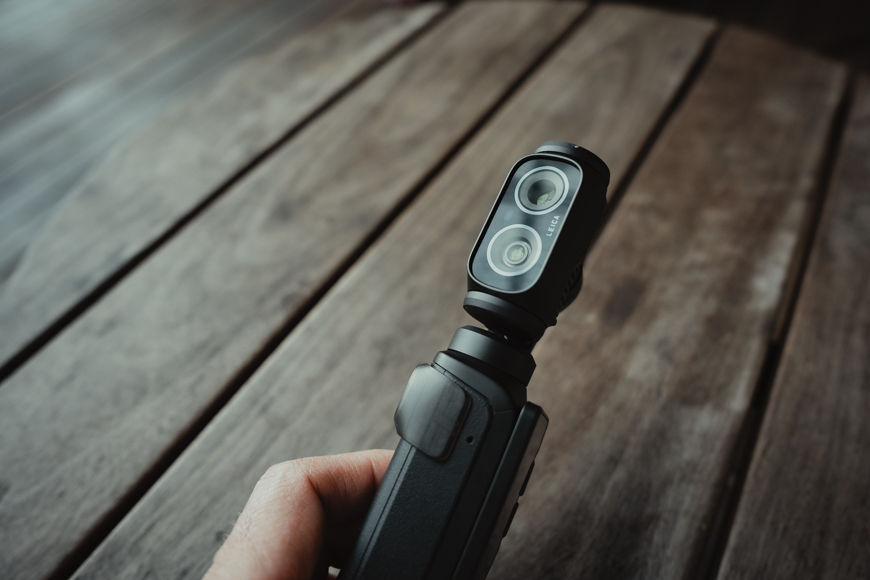
The second camera is one of the best reasons to choose the Luna Ultra over a cheaper single-lens model.
The 20mm-equivalent main lens provides a wide field of view that works well for vlogging, family groups, landscapes and filming in tight spaces.
The 60mm-equivalent telephoto camera offers a 3x perspective that’s far more flattering for faces and useful when you can’t move physically closer to your subject.
At the skate park, the telephoto view allowed me to capture tighter shots of my grandkids without standing in their way or placing myself too close to the action.
It also made the finished footage more interesting. Cutting between wide views of the skate park and tighter shots gave the sequence more variety than I’d have achieved with a single fixed lens.
The camera supports zooming beyond the native views, but the best quality comes from staying within the optical and lossless range. At the most extreme digital zoom settings, detail inevitably begins to deteriorate.
You may also notice a brief change in colour or perspective when the camera switches between its two lenses during recording. Whenever possible, I’d select the focal length before starting an important shot rather than zooming through the transition.
Stabilisation and Subject Tracking
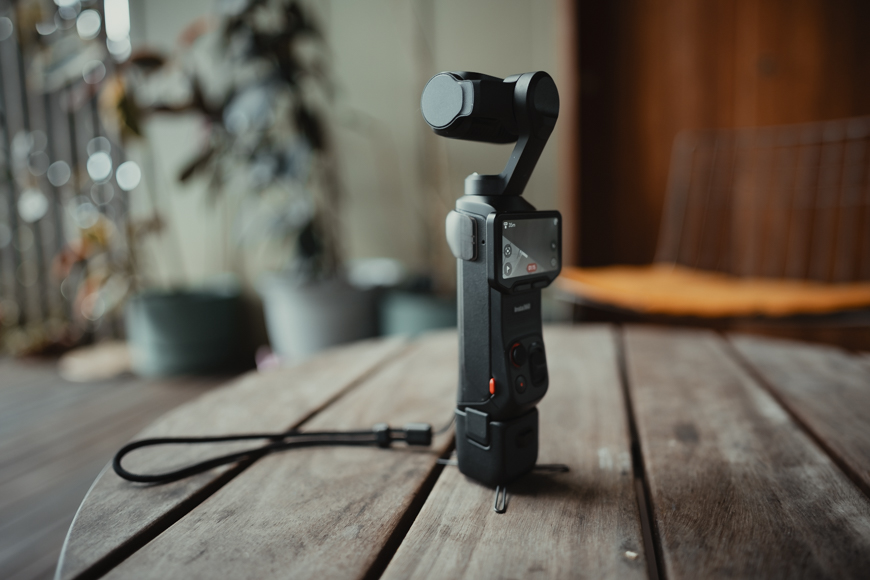
The three-axis gimbal does an excellent job of smoothing out handheld movement.
Walking footage looks fluid, and small hand movements disappear without making the result look unnaturally locked in place.
This is what makes a pocket gimbal camera so convenient. You get smooth footage without carrying a separate stabiliser or building a larger camera rig.
The stabilisation also performed well while following my grandkids around the skate park. I could move quickly, alter my position and keep up with the action without every step being transferred into the footage.
Insta360’s Deep Track subject tracking is another strong feature. Once you select a person or object, the camera can pan and tilt to keep it in frame.
Tracking isn’t infallible, particularly when a subject is briefly obscured or moving rapidly across a complicated background, but it’s reliable enough to be genuinely helpful.
Manually controlling the gimbal can feel less fluid than letting the tracking system handle the movement. For slower, carefully planned pans, it’s worth adjusting the gimbal response settings and practising before an important shoot.
The Detachable Screen
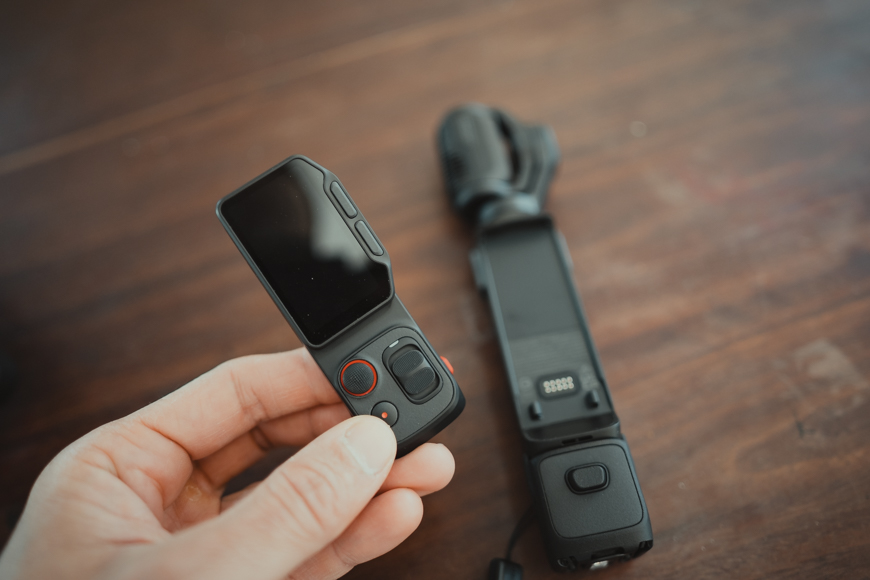
The removable OLED screen is the Luna Ultra’s standout design feature, and it’s much more useful than I expected.
Pressing the release controls allows you to lift the screen away from the body and use it as a wireless remote. It continues to show a live view while giving you access to framing, zoom, camera movement, settings and recording controls.
For solo filming, this solves a familiar problem. You can position the camera several metres away, stand where you intend to record and check the composition without running backwards and forwards.
It’s also useful when the camera is placed at an unusual height or angle where the attached display would be difficult to see.
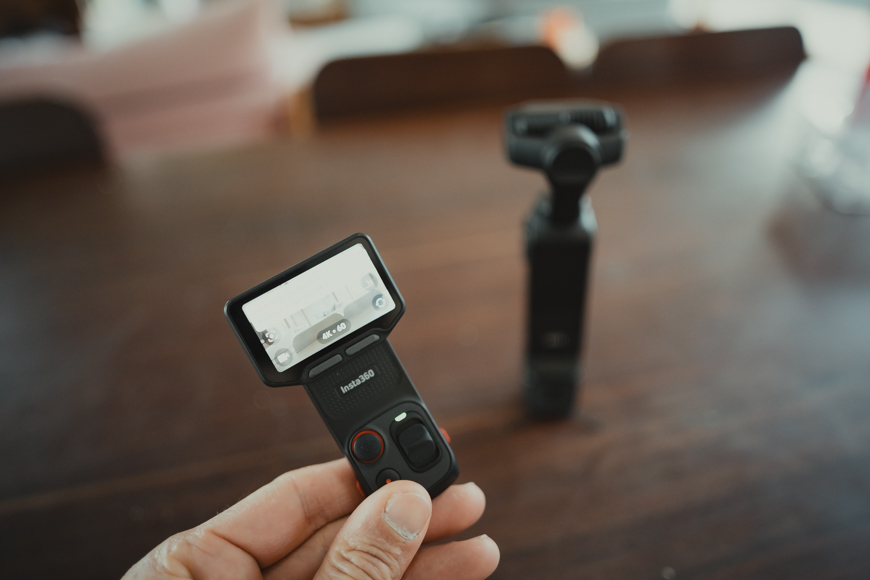
At the skate park, the remote screen made it easier to monitor the frame without staying directly behind the camera. I could pay attention to my grandkids while still confirming that the camera was capturing what I wanted.
The screen contains its own microphone, too, so removing it doesn’t leave you entirely disconnected from the camera’s audio system.
A smartphone and the Insta360 app can perform some of the same functions, but the dedicated remote is faster and more convenient. There’s no need to unlock your phone, connect it and interrupt whatever else you’re doing.
It feels like an integral part of the camera rather than an accessory added as an afterthought.
Audio Quality
The Luna Ultra contains four microphones: three in the main camera and one in the detachable screen.
Built-in audio is perfectly usable for casual family videos and simple pieces to camera, especially indoors or in calm conditions.
Like most small cameras, however, the internal microphones are more vulnerable to wind when shooting outside. At a skate park or another open location, a dedicated wireless microphone with a proper windshield will produce noticeably cleaner speech.
The optional Insta360 Mic Pro integrates neatly with the camera and is the better choice for interviews, professional vlogging or any recording where dialogue matters.
For informal clips where carrying extra equipment defeats the purpose, I’d be comfortable relying on the internal microphones.
Battery Life and Storage
Insta360 rates the main battery for up to four hours under highly economical recording conditions, although real-world endurance depends heavily on resolution, frame rate, tracking, screen use and wireless features.
Expect less when recording 4K or 8K, particularly if the screen is bright and subject tracking is active.
The good news is that charging is fast. With a compatible charger, the camera can reach approximately 80% in about 23 minutes and a full charge in around 38 minutes.
The Luna Ultra also includes 47GB of internal storage, which is useful if you forget to insert a memory card or need to begin filming immediately.
There’s a microSD slot for longer shoots, and I’d consider a fast, high-capacity card essential if you plan to record much 8K or high-frame-rate 4K footage.
What Could Be Improved?

The Luna Ultra’s biggest practical weakness is heat.
High-resolution and high-frame-rate video demand considerable processing power. During extended 8K recording, or demanding 4K recording in warm weather, the camera can become noticeably hot and may eventually need to stop and cool down.
That’s unlikely to matter when recording short family, travel or social media clips. It could become an issue if you want to record long interviews, performances or events without interruption.
Autofocus can also occasionally hesitate or shift to the background, particularly while zooming or tracking a subject moving through a busy scene. It wasn’t enough to spoil my overall experience, but it’s worth checking focus during important takes rather than assuming the camera has always made the right choice.
Then there’s the price. The Luna Ultra is a premium pocket camera, and you’re paying for the second lens, large sensors, 8K recording and detachable remote.
If you only want a simple camera for occasional holiday clips, a less expensive single-lens model (or your phone) may be sufficient.
Finally, the lack of weather protection limits where you can use it confidently. Given how portable the camera is, it’s tempting to take it everywhere, but rain and dust require caution.
Who Should Buy the Insta360 Luna Ultra?

The Luna Ultra makes the most sense for:
- Solo creators who need to frame and monitor themselves
- Parents and grandparents filming fast-moving family activities
- Travel filmmakers who want excellent quality without a heavy camera kit
- Vloggers who value a wide lens and a genuine telephoto option
- Social media creators working in both horizontal and vertical formats
- Anyone who wants smooth footage without carrying a separate gimbal
It’s less suitable for:
- People who regularly film in rain, around water or in dusty environments
- Anyone needing uninterrupted long-form 8K recording
- Buyers who want the smallest and least expensive pocket camera
- Users who don’t need a telephoto lens or detachable remote
- Filmmakers who require interchangeable lenses and extensive physical controls
Is the Insta360 Luna Ultra Worth It?
Yes, provided you’ll use the features that make it expensive.
The Luna Ultra succeeds because its main selling points aren’t confined to a specifications sheet.
The quick startup helps you capture fleeting moments. The dual lenses give you meaningful creative flexibility. The mechanical stabilisation improves footage immediately, and the detachable screen makes framing easier in situations where a conventional fixed display becomes awkward.
After two months, those are the features I continued to appreciate rather than novelties I forgot about after the first week.
My frequent trips to the skate park summed up the Luna Ultra rather well. It was light enough to carry without becoming a burden, quick enough to capture spontaneous action and simple enough that I could remain involved in the day rather than retreat behind a complicated camera setup.
Most importantly, the resulting footage looked excellent.
Overall, the Insta360 Luna Ultra earns a strong recommendation from me. It’s not the cheapest pocket camera, nor is it completely free from first-generation quirks, but it’s one of the most versatile and enjoyable compact video cameras I’ve used.
Pocket-sized gimbal camera with dual lenses, 8K video and a detachable touchscreen for flexible solo shooting.
Jeff Collier is an experienced film photographer who enjoys experimenting with modern digital photography equipment, software and apps. He’s also an ex-world champion triathlete and avid cyclist, clocking hundreds of km each week in the beautiful Tweed Valley of northern NSW, Australia.
👋 WELCOME TO SHOTKIT!
🔥 Popular NOW: