





Nicolas Joly
Sports | Last Updated: September 16, 2026





Shotkit may earn a commission on affiliate links. Learn more.
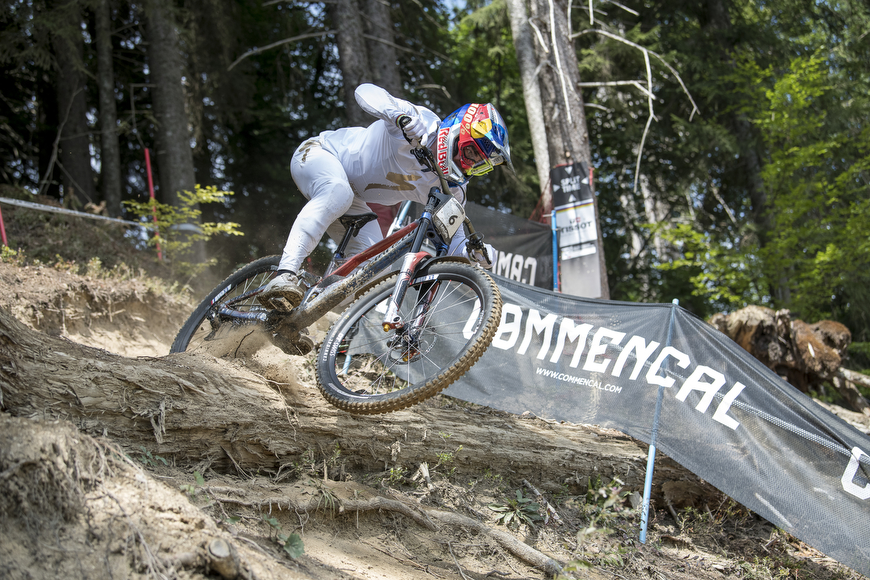
I have been a professional photographer for twenty-three years, and I would describe my work as capturing the thrill of bicycle racing and bicycle culture.
I shoot mostly for brands, teams, and magazines.
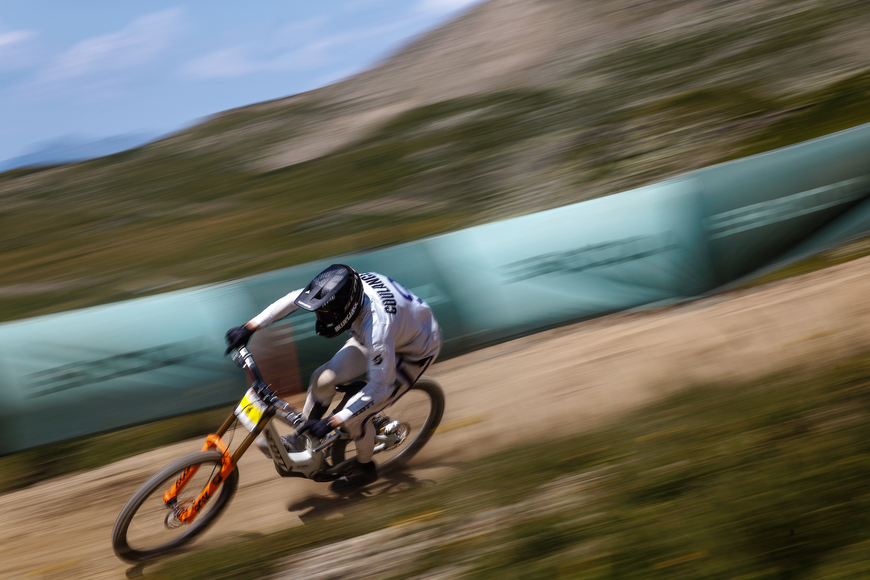
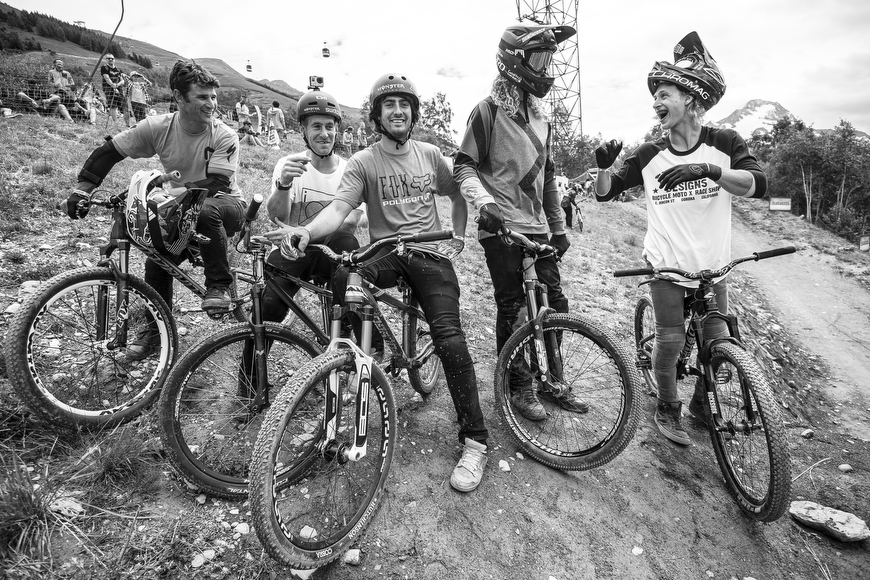
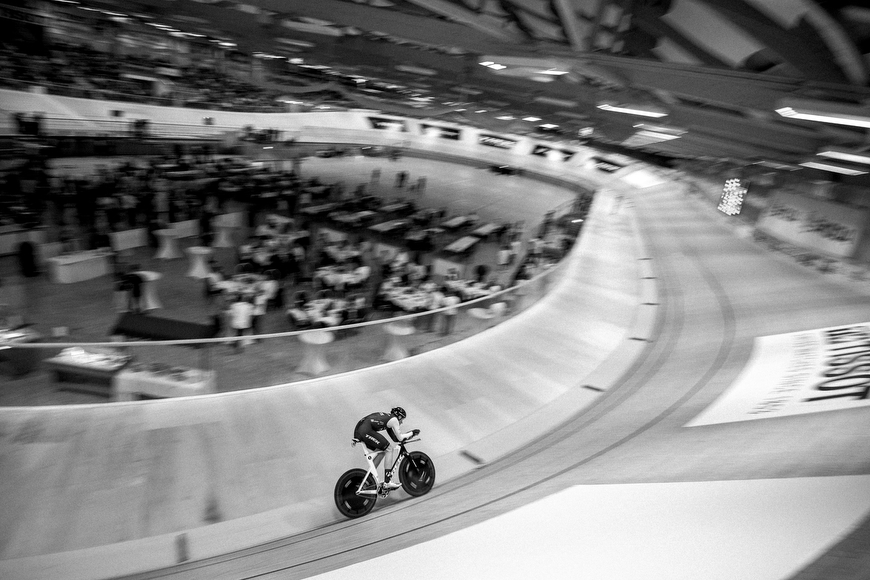
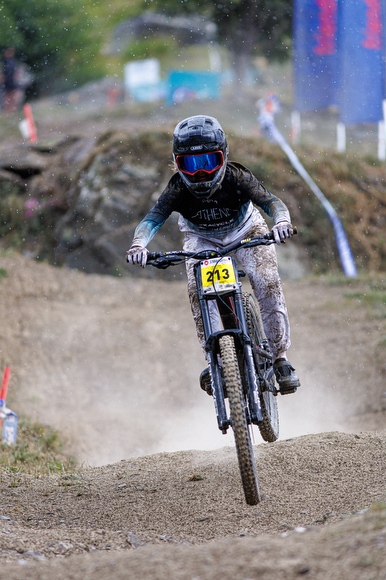
I have shot the Tour de France, Track, BMX, World Cup Downhill, Crankworks-Red Bull Slopestyle, and countless MTB, road, and gravel trips around the world, as well as events, workshops, collectors, vintage and cutting-edge bikes, and factories that produce them.
While the process of waking up early, being there, and delivering the shoots has not changed that much, technology has totally shifted.
The time of a heavy pack filled with three f/2.8 zooms seems really a thing of the past for me.
I began with Canon film cameras.
The Canon EOS 5, EOS 3, Canon EOS 1V, then transitioned to digital in 2004-5 with the Canon 1D, without any nostalgia about the laborious and polluting process.
Soon after the start of digital, I was more convinced by Nikon with the D3 and D4, and ultimately the Nikon D6.
To my own surprise, the price and goofy aspect of the Nikon Z9 left me feeling cold.
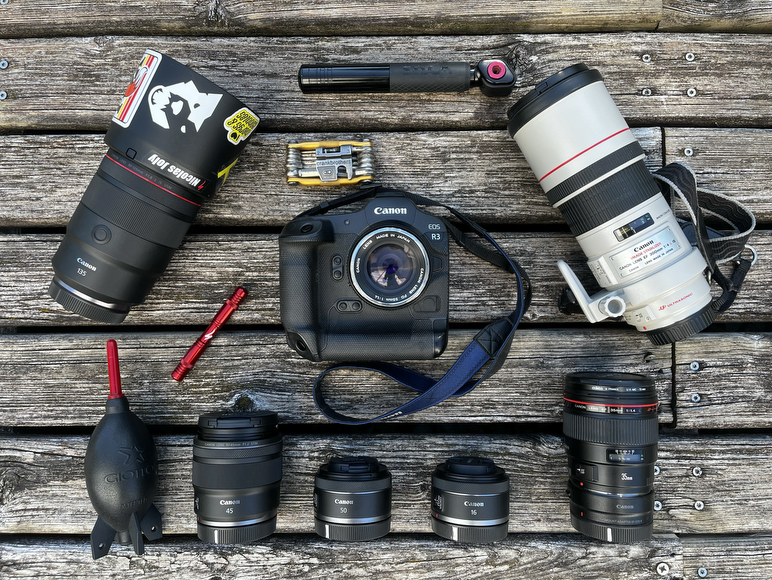
I finally came back to Canon in 2025 to rediscover the extraordinary performance of the EOS R3 and the magic of Canon fixed focal lenses.
The Canon R3 is compact, light, silent, super-fast, but moreover produces extraordinarily sharp and colour-rich files and allows focusing in any corner of the frame.
In addition, despite having tried all types of cameras, when working, I really do prefer full-size pro bodies for their battery life and superior qualities that are not apparent on paper, like visor size, clarity, mechanical balance, ergonomics, and stability.
The RF system also allows an infinite choice of Canon lenses. From super-light and cheap lenses to traditional L zooms to cutting-edge fixed L lenses, as well as the ability to use vintage (EF) and very vintage (FD) lenses.
I personally use a mix of fixed lenses from various eras, which allowed me to transition to mirrorless within a tight budget, in fact lower than the resell value of my extensive Nikon kit.
I create a very low-profile kit to be carried in a small backpack when portability is key, and strictly aimed at what and how I shoot now, rather than to be ready for anything.
I generally skip the usual L zooms in favour of lightness and character, and after some trials, I now rely on three main action lenses that are the underrated RF 16mm f/2.8, the extraordinary RF 135mm f/1.8 L, and the EF 300mm f/4 IS, which is a bit frustrating by being so brilliant and, at the same time, not able to do what the big 2.8 is made for.
Then, following the mood and the subject, I carry one or two environmental-lifestyle portrait lenses:
EF 35mm f/1.4 – This magical lens which was never in focus at 1.4 with EF cameras is now a far better lens than it was brand new twenty five years ago.
RF 50mm f/1.8 – This lens can’t be beaten when weight and compactness are key.
RF 45mm f/1.2 – This is a new lens which I am just beginning to try as an in-between 35mm and 50 mm.
FD 50mm f/1.4 – And finally an older lens, the vintage chrome nose which was manufactured in my birth year, 1974, and it can still be stunning once in a while.
It can seem strange to have four lenses in the 35-50mm range, but first it’s really the focal lengths that work for me. I can’t miss something outside the range, simply because I am not looking for it anymore.
My kit is dialled, I don’t really need or want something more, save for a second R3 that would ease event and race shooting.
Thanks.

Check out these 8 essential tools to help you succeed as a professional photographer.
Includes limited-time discounts.

WELCOME TO SHOTKIT
🔥 Popular Now: