





Best Lenses for Reels, TikToks & Shorts: A Focal-Length Guide for Creators
Discover the best lenses to use when filming Facebook Reels, TikToks, and YouTube Shorts, and get a better understanding of focal lengths in my detailed guide.
Camera Gear Guides | Lens Guides | By India Mantle | Last Updated: September 2, 2026
Shotkit may earn a commission on affiliate links. Learn more.
The modern social media landscape is dominated by short-form video content, like Facebook Reels, TikToks, and YouTube Shorts. Audiences around the globe love to consume these quick snippets of footage, and if you can master the art of short-form videography, you can quickly build a big following.
In order to do that, however, it helps to have the right gear for the job. That’s where this guide comes in.
Below, I’ll take a look at some of my personal favorite lenses to use for short-form social media videos, and I’ll also explain what focal lengths are generally best to use for this kind of content.
Understanding Focal Lengths
Before I introduce you to some of my favorite lenses, it’s important to first explain what focal length is, why it matters, and which focal lengths you might want to focus on when shopping for your next short-form video lens.
What Is Focal Length?
Put simply, focal length tells you how much of a scene a lens can see. It’s measured in millimeters, and shorter focal lengths (like 10 to 16mm) generally provide a wider field of view, while longer focal lengths provide a narrower, more magnified view.
Common lens options include:
10-16mm (Ultra-Wide)
Ultra-wide lenses capture the largest and widest possible area, so even if you hold the camera quite close to your face, you’ll still be able to capture your head, shoulders, and surroundings quite comfortably.
These lenses are very well-suited to the likes of handheld TikToks or Reels, travel vlogs, and showing off the world around you. On the other hand, the very wide field of view can produce a slightly distorted and unnatural perspective, which viewers may find distracting in certain settings.
18-24mm (Wide)
If you asked 100 vloggers and content creators for their favorite focal lengths, most would probably say that 18mm to 24mm is the sweet spot. Lenses in this focal-length range are wide enough, but don’t produce that “unnatural” effect you often get with ultra-wide lenses.
They’re ideal for filming the likes of “talking head” videos, B-roll footage, or simply for holding up and filming yourself while walking around outside. You may still notice some slight visual distortion around the edges of your frame when using these lenses, however.
28-35mm (Standard)
Moving into the 28mm to 35mm range, these focal lengths produce quite a natural, balanced aesthetic that is neither overly wide nor notably narrow. They can produce quite harmonious aesthetics, with subjects and background scenes void of any noticeable distortion.
Thanks to this, lenses with these lengths are often regarded as being some of the best all-rounders, suitable for a wide range of video styles, like interviews, product demos, and even two-person talking head shots. However, you may need to move your camera a little further away to capture a full scene.
50mm (Portraits)
50mm lenses can produce a tighter view of a subject, making them well-suited to close-ups, portraits, and more dramatic interview setups. Background elements are often less visible with these kinds of lenses, which helps to keep the viewer’s attention on the subject themselves.
A lens like this can produce a more intimate and professional vibe when used correctly. However, because the field of view is relatively narrow, you will generally need to create more space between your camera and your subject(s), and you will struggle to use a lens like this for handheld self-shoots or close-up filming.
85mm+ (Close-ups)
The highest focal lengths have relatively niche uses and may be very helpful for certain users but relatively worthless for others. They can create the appearance of compressed distance between the foreground and background to produce very impressive, detailed portraits and strong bokeh (blurred background) effects.
This makes them useful if you’re filming certain kinds of fashion or beauty content, like close-up makeup tutorials, for instance, and they can be great for cinematic B-roll footage, too. However, they’re unlikely to be your go-to lens for typical social media filming.
The Ideal Focal Length for Shorts and Reels
Before I go any further, I have to clearly state that there’s no single “best focal length” for filming the likes of Reels and TikToks. As explained above, each focal length has its advantages and ideal use cases, and some may do a better job of meeting your needs than others.
It’s not because your favorite creator uses a certain lens that you should automatically use the same one. It all depends on what kind of content you intend to film and what sort of vibe or aesthetic you’re aiming to capture.
As a general rule, focal lengths between 20mm and 24mm are often voted the most versatile choices for short-form social videos and work equally well in quite a broad range of settings. However, that doesn’t mean you should ignore the other options.
If you do a lot of self-filming from a handheld perspective, a wider lens might be a better fit for your needs. Alternatively, if you regularly create cinematic talking head content in a large studio space, a higher focal length will probably be a better fit.
It’s worth noting that there are both fixed and variable focal length lenses. Fixed lenses have a single focal length that can’t be changed, but variable lenses can transition between different focal lengths on-demand.
Remember, too, that focal length isn’t the only factor that matters when picking a lens. You also need to consider factors such as weight, stabilization, focus, sensor size, compatibility, and price when selecting a lens that suits your budget and needs.
The Best Lenses to Use for Reels, TikToks, and Shorts
Now that you know the basics of focal lengths, let’s take a look at five highly-rated lenses to use when creating short-form content for YouTube, TikTok, and other social media sites.
In order to help as many people as possible find the right lens, I’ve included a mixture of options here, with different features, focal lengths, and price points.
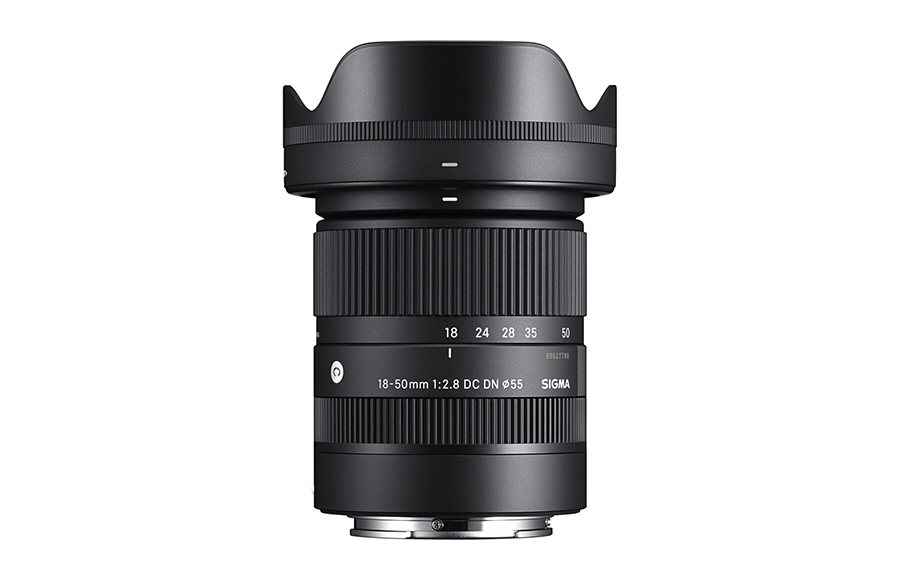
1. Sigma 18-50mm F2.8 DC DN Contemporary Lens (Best Overall)
- Variable focal length from 18 to 50mm
- Compatible with many APS-C mirrorless cameras
- f/2.8 maximum aperture for low-light shooting
- Doesn’t always produce the sharpest images
I’ll begin with what is without doubt the most versatile product on my list: the Sigma 18-50mm F2.8 DC DN Contemporary Lens. As the name states, this is a variable focal length lens that can switch from 18mm all the way up to 50mm, as needed.
Thanks to that, you can comfortably use this lens for almost any kind of short-form social media video content, including handheld selfie-style videos, bedroom vlogs, travel footage, interviews, and more. You can start at 18mm when shooting yourself and ramp up to 50mm for portraits or B-roll.
This means that instead of needing to buy several separate lenses, you can rely on this one to do almost everything, which might help you save quite a lot of money in the long run. The f/2.8 aperture also ensures that this lens won’t let you down when shooting indoors or in low-light settings.
The Sigma 18-50mm is also widely compatible with most APS-C mirrorless camera models from popular brands, such as Sony and Canon. One downside worth mentioning, however, is that, as with most variable focal length models, this lens isn’t the sharpest and can produce pictures with quite soft edges.
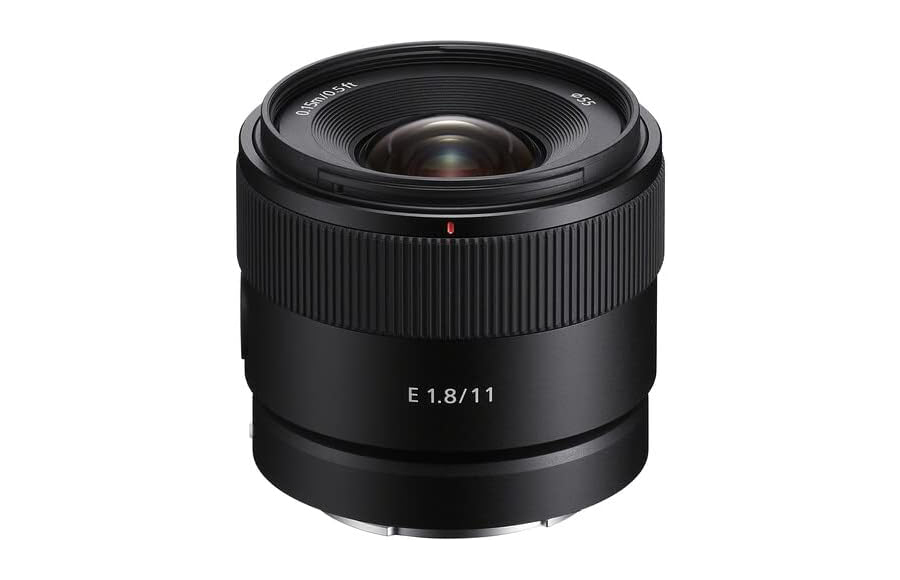
2. Sony E 11mm f/1.8 Lens (Best for Handheld Vlogs)
- Low focal length for wide field of view
- Ideal when holding the camera close to you
- Dust- and moisture-resistant design
- Not as well-suited to interviews or portraits
Next is a lens that’s impossible to leave off a list like this: the ever-popular Sony E 11mm. This E-mount lens stands out from the crowd for its compact and lightweight design. It’s easy to slot into your camera bag without weighing you down and is very simple to shoot with, on the whole.
Its low focal length means that this lens is well-suited for situations when you need to hold your camera quite close to yourself or your subject. It’s a good fit for selfie-style vlogging when you’re out and about, for example, and aren’t able to use a tripod or ask someone else to film you.
With its dust- and moisture-resistant design, the Sony E 11mm can last for years of satisfying use. Its f/1.8 maximum aperture allows more light in and can help produce a shallow depth of field.
The internal focusing system is responsive and reliable, and Sony’s Smooth Motion Optics (SMO) technology helps minimize focus breathing when shifting focus. All in all, it’s an excellent product but, like any wide-angle lens, it won’t work as well when shooting certain kinds of content, like interviews.
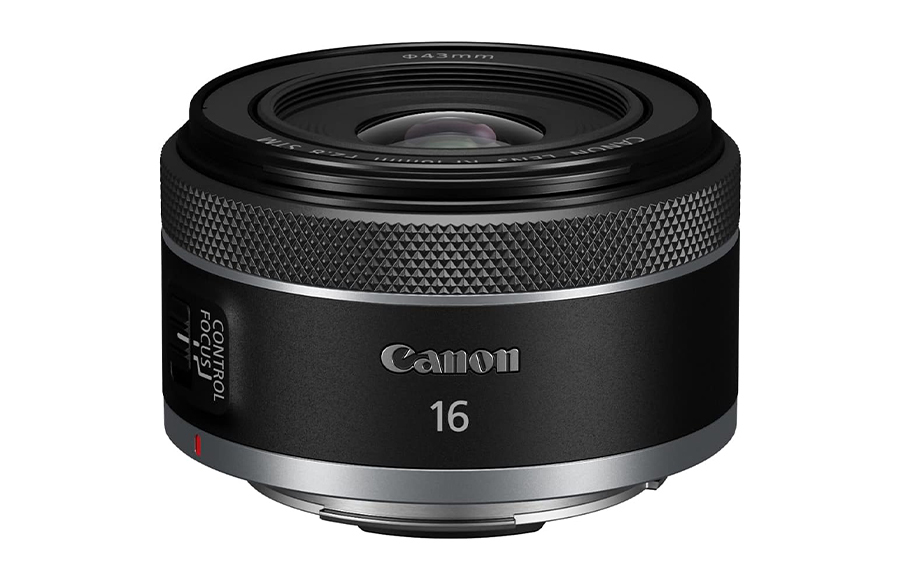
3. Canon RF 16mm f/2.8 STM Lens (Best Value for Money)
- Relatively affordable compared to other lenses
- A good fit for vlogging
- Lightweight and compact design
- Takes time to focus
If you don’t want to spend a small fortune on your next camera lens for capturing fun Reels and viral-worthy TikToks, you might be interested in the Canon RF 16mm f/2.8 STM Lens, as it’s one of the most affordable options on the market.
With its relatively wide 16mm focal length, this lens is another strong option if you intend to spend most of your time filming yourself or positioning your camera very close to your subject. As such, it’s a fine fit for vlogs and indoor, close-quarters shoots.
Since this is a Canon lens, it’s a sensible choice for those who are already invested in the Canon ecosystem. It also stands out for its compact, lightweight design and Super Spectra coating, which helps reduce flare and ghosting.
Boasting an immensely broad aperture range of f/2.8 to f/22, the f/2.8 maximum aperture makes this lens well-suited to indoor and other low-light environments. The only downside of note is that the focus is quite slow.
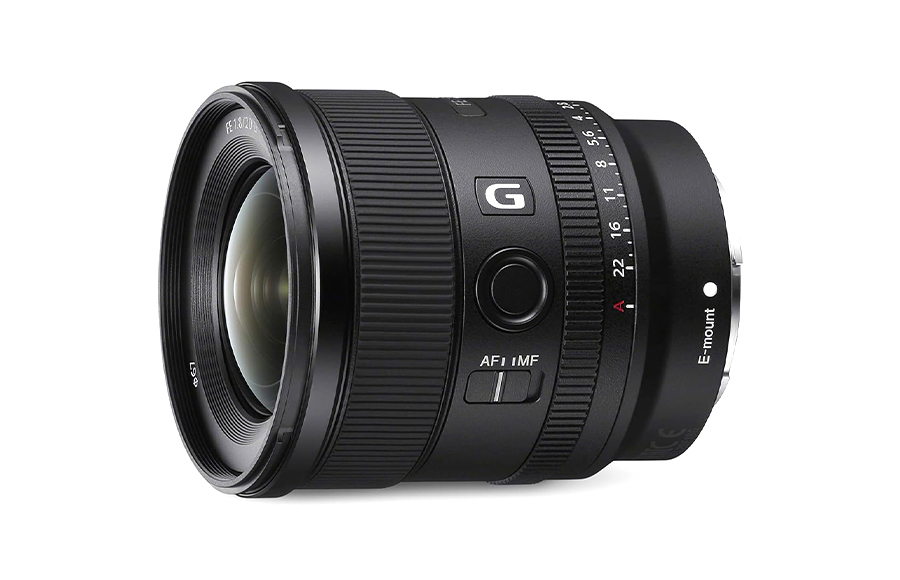
4. Sony FE 20mm F1.8 G Full-Frame Ultra-Wide Prime Lens (Best Quality)
- Great focal length for general-purpose filming
- Produces balanced, natural aesthetics
- Incredibly sharp details
- No optical stabilization
Next, one of the best quality full-frame Sony lenses I’ve worked with in recent years: the Sony FE 20mm F1.8 G Full-Frame Ultra-Wide Prime Lens.
The balanced 20mm focal length of this lens means that it’s neither excessively wide nor too narrow. Thanks to that, it can work well for the likes of vlogs, talking head content, and certain kinds of B-roll to intersperse among your short-form clips.
Like similar Sony lenses, it’s extremely well-made and clearly built to last from only the finest materials. It has an excellent aperture range to suit both day and night-time shooting with different levels of light, and it’s reasonably sleek and portable for such a high-powered lens.
Having used this lens myself, I can also report that it produces remarkably sharp, detailed images, without frustrating distortion or unsightly soft edges. At the same time, the lack of optical stabilization can be an issue when shooting dynamic, fast-moving scenes.
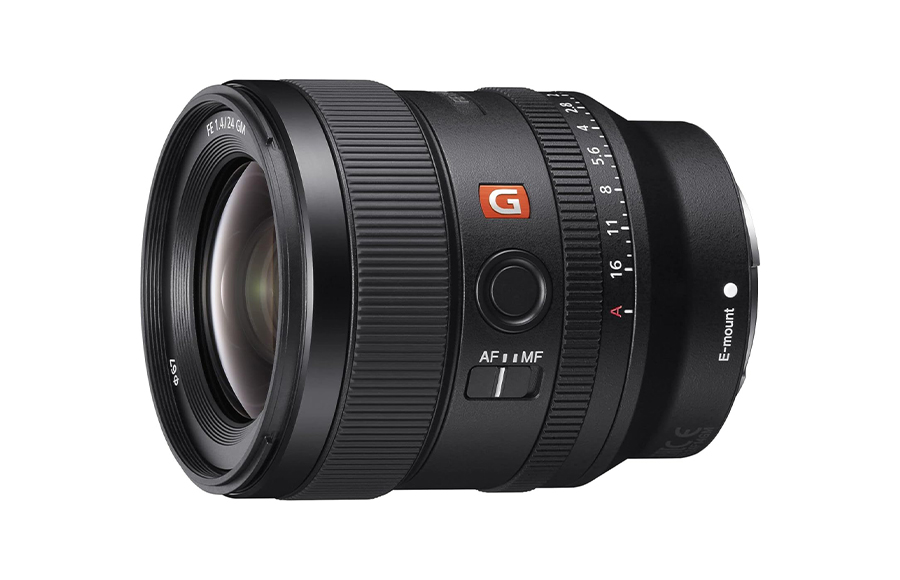
5. Sony FE 24mm f/1.4 GM Lens (Most Versatile)
- Terrific low-light performance
- Ideal focal length for most video styles
- Captures cinematic images and videos
- One of the most expensive lenses
Last but certainly not least, here’s the most expensive entry in my list today: the Sony FE 24mm f/1.4 GM Lens. The high price tag might be too much for some people, but if you’re happy to spend a four-figure sum on a lens, this one is easy to recommend.
It’s capable of capturing some of the cleanest, sharpest, and most detailed photographs and videos to a cinematic, professional-level standard. Again, this might be overkill for casual TikTokers, but if you’re serious about your social media content, the Sony FE won’t let you down.
The 24mm focal length suits a wide range of creator setups and content styles, and the f/1.4 aperture should be perfectly sufficient for low-light shooting.
I also appreciate the little extras included with this lens, like its tactile focus hold button, physical aperture ring, and fluorine-coated front element that helps to keep dust and dirt at bay. The Direct Drive Super Sonic wave autofocus system is also impressively quick, quiet, and reliable.
Quick Recommendations
If you want a flexible lens for different kinds of short-form social videos, consider the Sigma 18-50mm.
To capture the most amazing up-close vlogs, try the Sony E 11mm.
For cinema-grade interviews and B-roll, consider the Sony FE 24mm.
FAQs
What aperture is best for social media videos?
There’s no best aperture for filming social media content, as it all depends on the type of content you want to capture and the sort of settings you’ll be filming in. As a general rule, however, apertures between f/1.8 and f/2.8 should suffice.
Which focal length should I get?
It depends on the kind of content you want to film. If you tend to film yourself, selfie-style, you’ll want to opt for a shorter focal length of between 10mm and 16mm. For portraits, close-ups, and cinematic-style footage, consider 50mm or higher. For everything else, 18mm to 24mm is the sweet spot.
How much should I spend on a social media lens?
That depends on how much you actually have to spend, how often you intend to use your lens, and whether you plan on using it professionally or casually. Expensive lenses aren’t always better, so experts often recommend looking past the price tag and focusing on other important factors, such as aperture, focal length, and features.
Final Thoughts
Whether you’re a TikTok enthusiast, an aspiring influencer, or want to make a career creating short-form social media videos for growing brands, the lenses above can help you achieve your objectives. Don’t forget to consider different focal length options and think carefully about how and where you’ll use your lens to find a product that perfectly aligns with your expectations and requirements.

As the General Manager of Shotkit, India Mantle brings with her a lifelong love for photography that she developed during her childhood, watching her father document their family moments with his Nikon EM. In her free time, you find her enjoying the awe-inspiring natural beauty of her home, Northern Rivers, Australia.
👋 WELCOME TO SHOTKIT!
🔥 Popular NOW: