






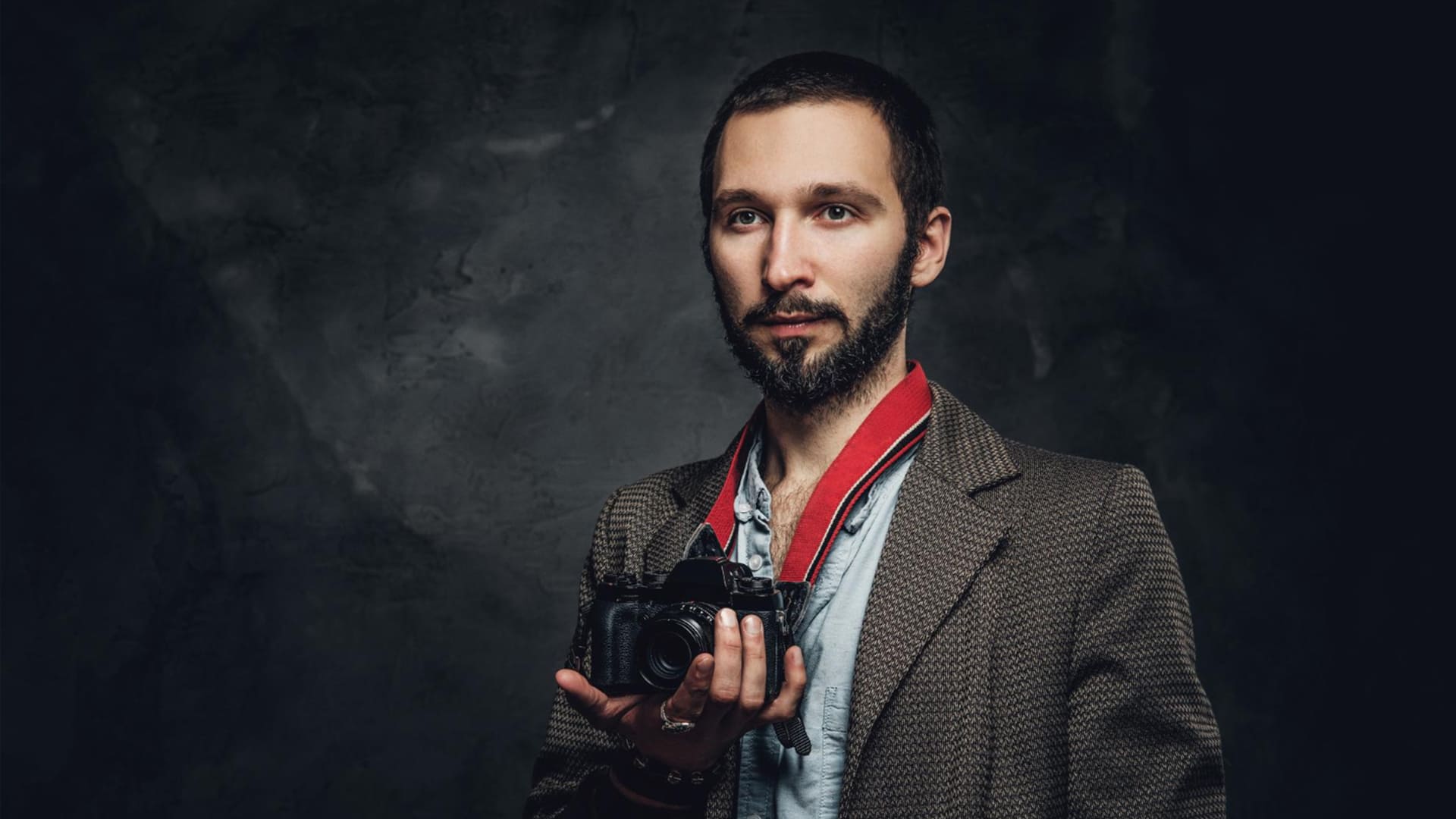
6 Dark Mystery Portrait Poses for Authors, Musicians & Creators
Make portraits more mysterious with these moody, dramatic, or noir poses for authors, musicians, and other creators.
Learn | Posing | By Jeff Collier | Last Updated: August 27, 2026
Shotkit may earn a commission on affiliate links. Learn more.
Working with other creative types? Not only do you have to bring your A-game, but you might find that run-of-the-mill techniques don’t impress.
Portrait photography is a great example. If you’re hired to take an artist or musician’s portrait, it has to do more than simply show who they are.
You have to find ways to capture their personality, the genre of their creativity, and make it attention-grabbing for websites and socials.
Many artists and creators love the edgier side of life. With that in mind, you might want to lean into shadowy, monochrome, mysterious shots that add drama and individuality to portraits.
These poses and tips will help you produce darker portraits that stand out, helping your creative clients get more traction online.
The Importance of an Eye-Catching Portrait
Authors, artists, and musicians need portrait photos for any number of reasons. Writers may need them for the back of their book, their Amazon author profile, or for their website or blog.
Musicians can use them on sites where they seek out other musicians, either for session work or if they’re looking for band members. Artists can use them in their portfolios and online galleries, or printed out for exhibition labels.
All types of creators will need some sort of headshot to use on social media platforms. They may use this as their profile picture, or upload it to attract attention to a particular event, launch, or product.
Your job, as their photographer, is to make sure that portrait does what they want it to do: make them stand out to their target audience.
I find that the best way to do this is to get to know exactly what it is they’re creating. If an artist is into gentle, rolling landscapes, a dark, moody portrait isn’t a very good match.
But if they paint dark woods, gothic churches, or alien creatures, it’s a perfect match.
It’s the same principle for musicians. Bright, cheesy pop singers won’t love the mysterious look.
But metal bands, rock artists, and most indie musicians will love it, depending on how edgy and dark their music and ethos are.
Listen to the band, read a bit of the book, or check out the artist’s work. It gives you the background you need to create the right environment and vibe for their portrait.
For more tips on snapping perfect headshots, check out my guide to portrait lighting, with examples and setup techniques.
1. Looking Soulfully Upward
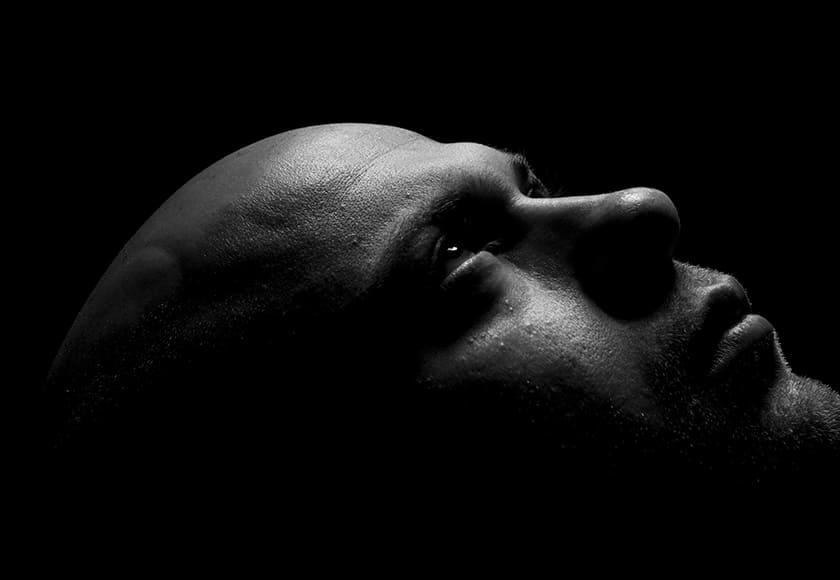
This type of shot works well for pretty much all creative types, but it’s very reminiscent of darker pop or rock music album covers.
It’s a very close-up shot, so check that your client is okay with having their face show that much detail. They may decide they want to shave or wear makeup or concealer, as the parts of their face that will be visible will show every blemish.
The pose itself is quite simple. Get your subject to sit comfortably and look up.
They can think about something serious or sad, if it helps, but the desired expression is actually quite neutral. It’s all about the lighting in this shot.
Overhead lights need to be switched off. You will get too much ambient light, which will diffuse the effect you’re aiming for.
Instead, try a softbox on a stand, angled down at the person’s face. The result should be that the lower part of their face is in shadow, with the darkest areas becoming virtually invisible.
For the background, try a plain black sheet, or you could edit the background out afterward, but that’s not as simple.
If the person isn’t comfortable with their head tipped back, get them to sit facing forward and change the angle of the shot to make it look like they’re looking up instead.
2. Dark on Light
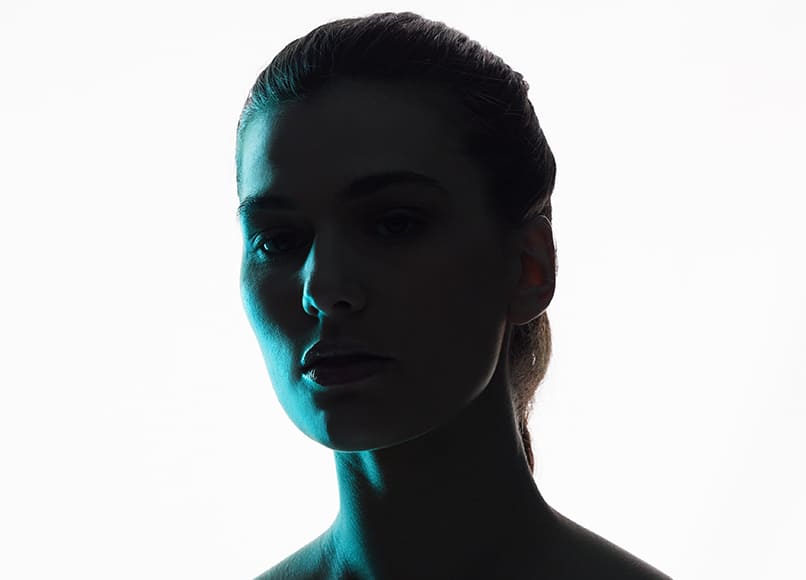
If you have sci-fi authors or electronic musicians as clients, they may be interested in this type of portrait, thanks to its ultra-futuristic look.
The goal is to have the face in shadow, but against a bright or white background. That brightness enhances the dark, moody cast on their face, adding intense mystery and drama.
For the background, consider a taut yet translucent sheet or board that you can shine a light through, creating a combination of a bright backdrop and a slight silhouetting of your subject.
Remove any ambient light, and try different light boxes to get the shadows on the face just right. The goal is to highlight the facial features but keep the shadowy, darker look that makes it mysterious.
I find a combination of very low levels of natural, white light, combined with a blue light off to one side, gives a two-tone look that’s almost metallic in nature.
It’s a type of split lighting technique, but with light levels dim enough that the shadows are actually what defines the face.
3. Against the Moon
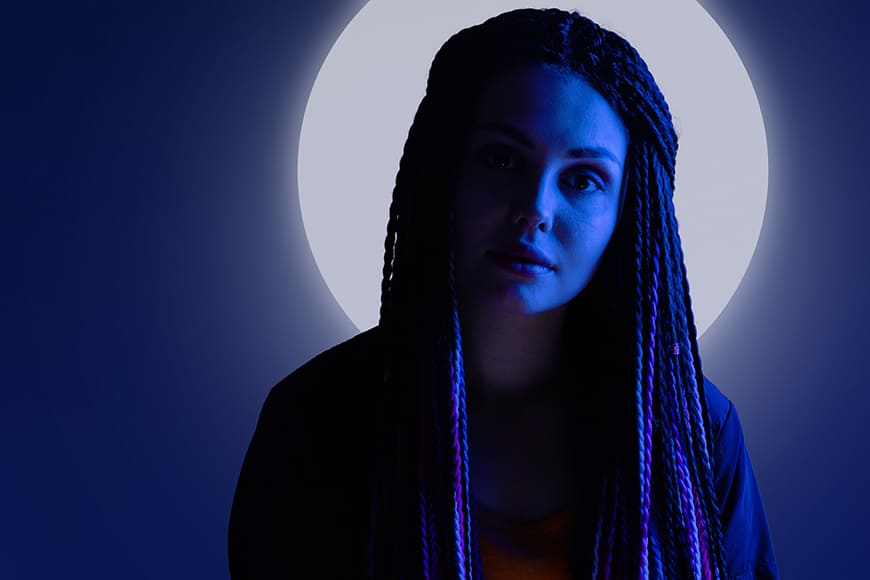
The moon is a constant source of mystery, and a reliable well of inspiration for creatives of all types. Whether you’re working with gothic musicians, pagan artists, or mystery writers, there are plenty of reasons you might want to create the impression of the moon in a portrait shot.
To do this, you need a round, white light that’s not going to overexpose your shot. In most cases, a lamp or a disc of paper with a light behind it is the way forward.
Bare bulbs are no good, as they will totally silhouette your subject or be too dim to create the right effect. Also, the light can be uneven unless you have a secondary screen or surface to diffuse it.
If you can get one, there are actual moon lamps available that look like the surface of our planet’s natural satellite, but they can be expensive.
My go-to for this is a piece of white cloth on a wire frame. With the light behind it, you can’t see the wire at all, and the wire is tough enough that it doesn’t bend or kink.
Position your subject in front of the “moon” at a distance that makes it bigger than their head. Making the moon look like a halo is a nice touch, especially if your client has dark hair, as this will really stand out.
Lighting at the front of your subject should be blue-tinted and sufficient to illuminate their face. You don’t want too many shadows for this shot, as it’s meant to emulate a bright, moonlit night.
Experiment with different facial expressions and take a variety of shots. Small smiles may add to the mystery, as can a raised eyebrow. A neutral, thoughtful expression will add an air of reflection.
4. The Musician and Instrument
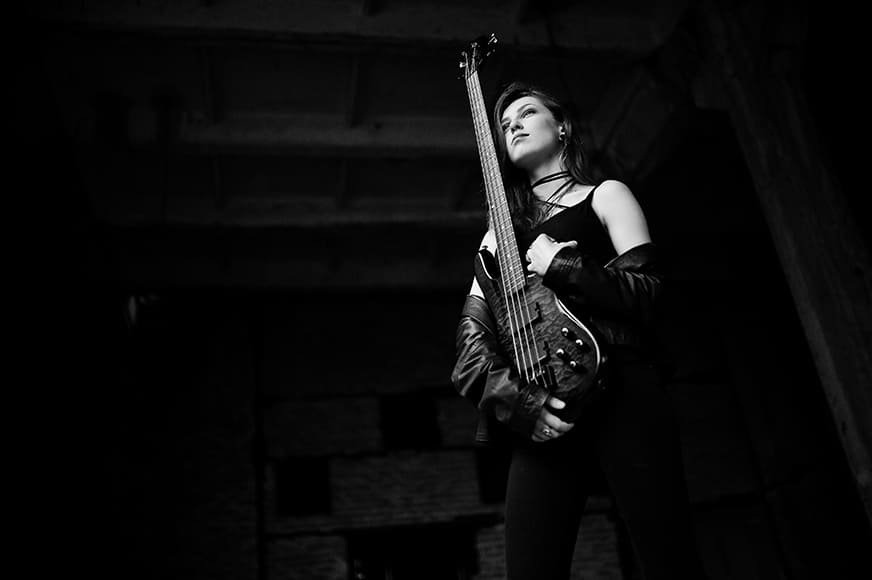
This one is specifically for musicians, and veers away from the traditional headshot-style portrait into a partial- or full-body shot.
The desired result is a dark yet confident shot of the musician holding their instrument, showing off their instrument of expertise, as well as themselves. To achieve this, you need a pose where the instrument is fully visible, and their face isn’t hidden by hair, hats, or accessories.
Guitarists and bassists will probably find this easy, as they can simply sling their instrument upright and hold it. Consider a shot from below, as you can accent the face and instrument with shadows without losing any definition.
If you’re photographing a pianist or keyboardist, they can be playing, but try to avoid having them hang or lean over the keys. Their face will disappear and, while the picture may be dramatic and moody, it will be useless as a portrait.
For backgrounds, you can try a range of options. Practice and recording studios can be a good choice, as these spaces are often lined in grey acoustic foam, which is a neutral, fairly dark backdrop.
You could also lean into urban environs, such as a graffitied wall, an empty tunnel, or an abandoned skatepark for an edgier look.
5. Lost in the Mystery
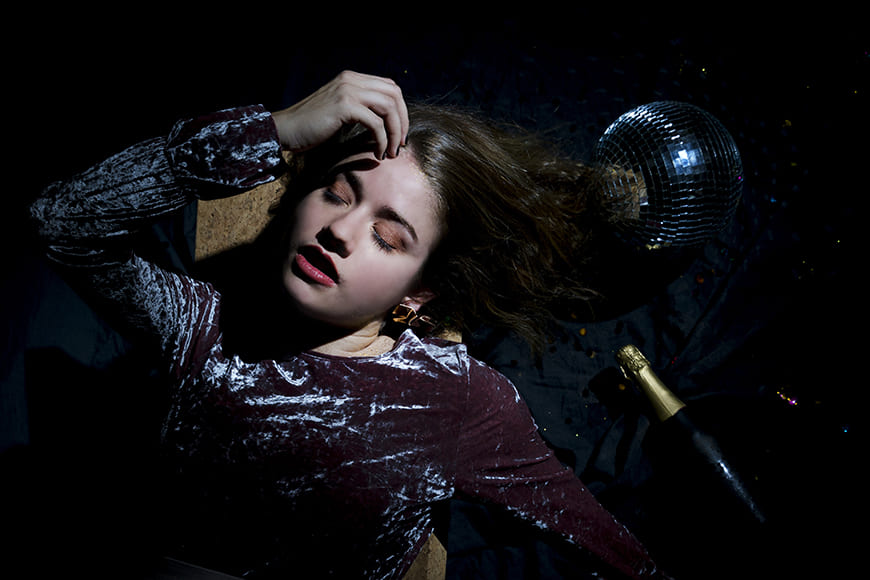
Mystery writers or dramatic musicians may love this one. It’s all about capturing a moment where there’s no clear answer as to what the person is doing, but there’s drama, intrigue, and just enough balance between shadow and light to catch the eye of the casual scroller.
Try posing your subject with some props relating to their craft. This could be a microphone if they’re a singer, or a different musical instrument.
Or you might choose some items that relate to a recent book. If it was a murder mystery set in a club, for example, bottles and a disco ball might set the scene.
Pose the subject so they appear almost sprawled in the chaos. Closed eyes and a hand to the head can indicate confusion, unease, and a range of emotions that the viewer will simply have to decide for themselves.
A colorful outfit can be a great contrast to a dark background and some shadowy lighting. Make sure the set isn’t so dark that you can’t see their face and the props you’ve used.
6. A Big Hat
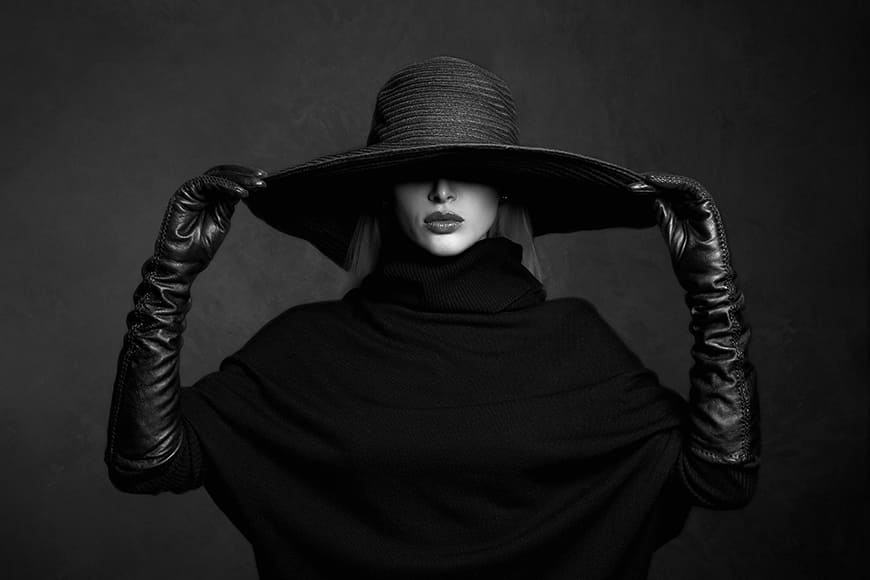
The right hat can lend more drama than you might imagine to a shot. Oversized brims can completely shadow a face, while an offset beret can hide an eye or accentuate a raised eyebrow.
One of my favorites is the simple, wide-brimmed straw hat, but in a dark shade, like black or gray. Pair this with an elegant outfit, or simply use a black shawl or cloak covering the person’s upper body.
Ambient lighting should be low, and I find that avoiding uplights is critical to get the right amount of shadow on the face. A lightbox set right in front of and slightly above the person’s face should provide a shadow that hides the eyes, for a genuine sense of mystery.
Recommend that your clients use these types of shots for socials and profile pics, or album photos in the case of musicians. With these shots, there’s not enough of the face shown to make it a truly useful headshot for bios or back covers.
Considerations for Mysterious Portrait Photography
To get the right result, I find that these are the top three considerations when snapping moody, dark portraits:
- Lighting: Don’t rely solely on uncontrolled ambient lighting; dedicated photography lights can give you greater control over those all-important shadows. Discover what gear other professional portrait photographers are using.
- Outfit: Discuss beforehand what your client is going to wear on the day. If you’re planning a gothic-style, moody shoot and they turn up in neon colors, you’re going to struggle.
- Pose: While there are plenty of poses here to choose from, make sure your client is comfortable with the one you pick before you get started. Ideally, get them to choose, because the more at ease they feel, the better the end results will be.
Don’t be afraid to have fun with the shots. Dark doesn’t have to mean serious, and if you have creative clients with a sense of humor, you can overplay the edginess for laughs.
Use props like giant toy snakes or inflatable musical instruments, or get them to make some over-the-top expressions that take the edginess a little too far, but only in jest.
Even if you don’t use the “fun” photos for marketing materials, your client will enjoy having them as happy memories of the shoot.
More: Portrait Photography Tips, Techniques, Settings & Ideas
Final Thoughts
The edgier side of creativity is always popular. People like escapism and something different from the norm, and heavy music, thrillers, and gothic art all lean into that ethos.
As a photographer, it’s easier than you might think to capture that mood, using shadows as accents and experimenting with different lighting and posing techniques.
Remember to listen to your clients, and if they feel that the look doesn’t match their creative vibe, be ready to pivot to another pose idea. The more inspiration you have under your belt, the easier it is to keep your clients happy and your portfolio full of impressive shots.

Check out these 8 essential tools to help you succeed as a professional photographer.
Includes limited-time discounts.
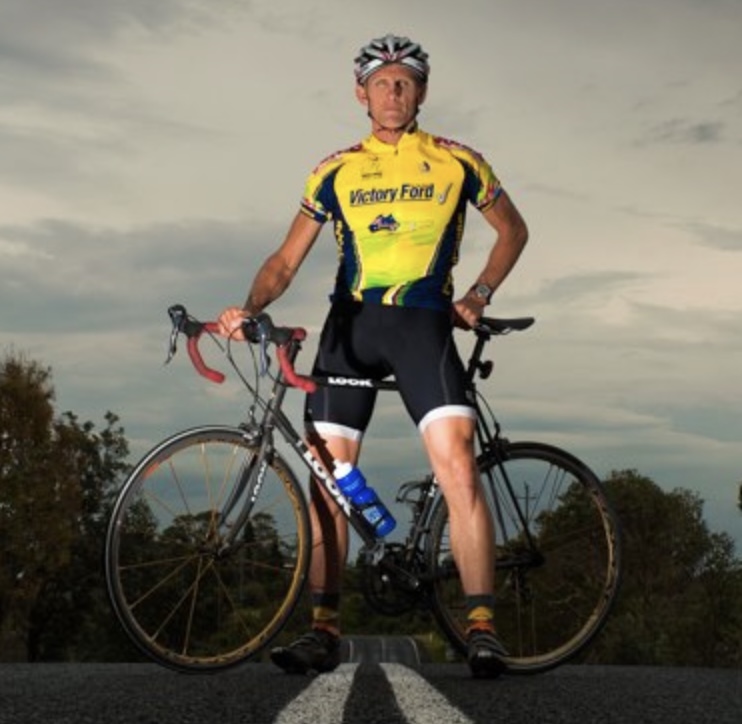
Jeff Collier is an experienced film photographer who enjoys experimenting with modern digital photography equipment, software and apps. He’s also an ex-world champion triathlete and avid cyclist, clocking hundreds of km each week in the beautiful Tweed Valley of northern NSW, Australia.
👋 WELCOME TO SHOTKIT!
🔥 Popular NOW: