






How To Create Web Galleries in Lightroom To Share Photos
Lightroom web galleries are a simple and fast way to display and share a selection of photos online, either privately or publicly. Here's how to do it.
Lightroom | Software | By Ana Mireles
Shotkit may earn a commission on affiliate links. Learn more.
Do you know that you can create web galleries in Lightroom to share with your friends, families, or clients?
Lightroom web galleries are easy to create and customize to suit your branding or preferences.
Popular course reveals the simple tricks to getting incredible results with Lightroom in record time. Give Your Photos The Look They Deserve!

I like to use Lightroom galleries when I want to show clients a selection of photos so they can pick the ones they want.
In this article, I'll give you a step-by-step guide and answer some questions about sharing your Lightroom galleries and other uses.
And if you're a complete beginner, check out our guide on how to use Lightroom Classic.
What are Web Galleries in Lightroom?
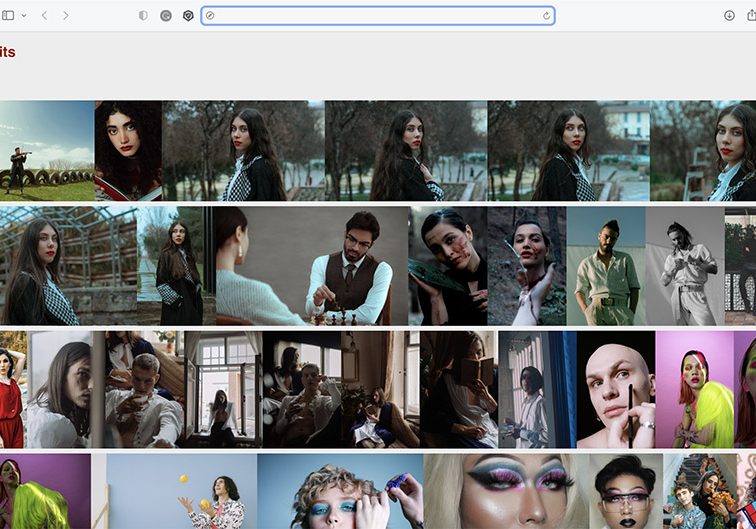
A Lightroom web gallery is a website where you can display your photography. The web gallery is made with thumbnails of your photos.
Whenever you click on a thumbnail, it will link to a larger image size.
Web galleries are used to share photos with friends, family and even your clients, giving them the ability to leave comments and download the pictures.
You'll need to download the latest version of Lightroom (if you don't own it already) to start using galleries.
It's also worth highlighting that the recent Adobe MAX Update 2024 further enhances Lightroom's impressive editing and workflow management toolkit.
The 2024 MAX update adds the new Quick Actions feature and significantly improves the Generative Remove function.
Quick Actions automatically creates masks to suit an image's subject matter best and recommends ways to optimize workflow.
Generative Remove makes it simpler than ever to identify an unwanted distraction, circle it, and Generate Remove cleanly remove the item and correctly render the vacant space.
How Do You Create a Lightroom Web Gallery?
It's very easy to create web galleries in Lightroom; just follow these steps.
Step 1

Start by selecting which images you want to include in your web gallery. You can do this in the Library module using the Grid or the Filmstrip.
If you've already selected and compiled a collection or separated the desired photos in a folder, you can choose that on the left panel.
Step 2

Now you need to switch to the Web module. The images you selected in the Library module will be in the Web module.
Here, you can re-arrange them in the order you want. To do this, you can click and drag them on the Filmstrip.
Step 3

Now you can choose a template. This will determine how your web gallery looks. To change the template, simply click on it, and the content will update automatically.
It's also possible to use a third-party web gallery. To find them, you can visit the Adobe Exchange marketplace.
Otherwise, you can click on the button ‘Find More Galleries Online' you'll find in the Layout Style panel. This will open your browser window directly in Adobe Exchange.
Step 4

You can further customize your web gallery using the panels on the right side of the Web module. The available choices are different depending on the template you chose.
In the Color Palette panel, you can select different colors for the template's background, texts, icons, and other elements. Some of them will limit your color choices. If you can't find the color that matches your brand or what you're looking for, consider changing the layout.
You can change the settings for the Grid Pages and Image pages in the Appearance panel. Next, you can choose whether or not you want a title and caption displayed.
After that, you can control the Output settings. Here, you can control the quality of the larger images, the metadata, copyright information, and the watermark.
Step 5

Once you're happy with how your web gallery looks, you need to input the website information. You can do this in the Site Info panel on the right side.
Here you can enter the title of the website and the gallery, and the description. You can then add your contact information.
Step 6
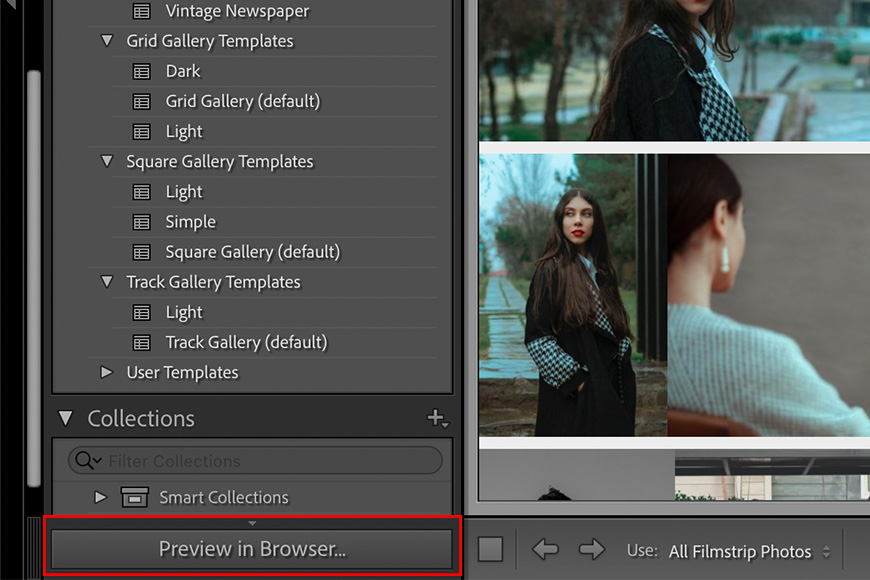
Before you export or upload your gallery, checking how it looks on your browser is always a good idea. To do this, click the ‘Preview in Browser' button in the bottom left corner.
How do I share a web gallery from Lightroom?
To share your web gallery with anyone, you need to export it. To do so, click the Export button on the bottom right corner of the module.
This will open the saving dialogue box. Input the name and choose the destination folder. Then, click save. You can share this folder when you want someone to see your web gallery.
When you open the folder, look for the file called index.html. Double-click on it, and it will launch the web gallery on your browser.
Can I make a website using the web gallery in Lightroom?
It's possible, yes – but not advisable. The web gallery in Lightroom uses basic HTML. While creating a website with it is possible, you need to know how to use HTML and own a website. It won't make for the most eye-catching website, either. Instead, try using Lightroom collections and Adobe Portfolio.
Can I share a web gallery with a client on the web?
Yes. The client doesn't need to have Lightroom to see your web gallery created in your Lightroom. Simply download the web gallery to your computer. Then, send your client the folder and ask them to click on the index.html file. This will launch the web gallery on their browser.
Why should I do a web gallery in Lightroom?
Web galleries in Lightroom are an easy way to share your work remotely without needing a website. You can create a quick portfolio to apply for a specific job or send it to the client so that they can choose their favorite photos from a photoshoot.

Ana Mireles is a Mexican researcher that specializes in photography and communications for the arts and culture sector.
4 Comments
Leave a Comment
👋 WELCOME TO SHOTKIT!
🔥 Popular NOW:

I can not seem to find any other web galleries online for Lightroom Classic. When I go to “find more galleries online” I do not see any web galleries that I can purchase.
Are there any more??
Lightroom Classic’s Web module includes a selection of built-in templates for creating web galleries.
If you’re seeking additional templates beyond these defaults, several third-party options are available:
The Turning Gate (TTG): TTG offers a comprehensive suite of plugins for Lightroom Classic’s Web module, enabling the creation of standalone galleries or complete websites. Their tools support features like e-commerce, client proofing, password-protected galleries, and customizable designs.
ADOBE HELP CENTER
LRB Portfolio and LRB Exhibition: These plugins facilitate website creation directly from Lightroom Classic, featuring multiple galleries, about and contact pages, and support for large images.
ADOBE HELP CENTER
Photographer’s Toolbox: This resource provides various Lightroom plugins and web gallery options, including LRB Showcase, designed for displaying images in a scrolling gallery format.
PHOTOGRAPHERS TOOLBOX
To integrate these templates or plugins into Lightroom Classic, download them from the respective providers and follow their installation instructions. Typically, this involves placing the downloaded templates into Lightroom’s designated templates folder and restarting the application.
Additionally, Lightroom Classic allows you to create and save custom web gallery templates by modifying existing ones to suit your preferences. This customization can be done within the Web module, and the templates can be saved for future use.
ADOBE HELP CENTER
For a visual guide on utilizing Lightroom Classic’s built-in web galleries, you might find the following video helpful:
https://www.youtube.com/watch?v=Hr97ktqFK9I&t=6s
By exploring these third-party options and customization features, you can enhance your web gallery offerings beyond the default templates provided in Lightroom Classic.
What do you do if the client steals your photos after you’ve shared a selection for them to choose from?
Dealing with copyright infringement can be complex and time-consuming, so it’s essential to approach the situation calmly and professionally while seeking appropriate legal advice.
Document Evidence: Make sure you have evidence that you shared the photos with the client. This could include email correspondence, contracts, or any other forms of communication where you provided the photos.
Contact the Client: Reach out to the client and express your concern about the unauthorized use of your photos. Sometimes, it could be a misunderstanding or an oversight on their part. Politely ask them to remove the photos or to properly license them if they intend to use them.
Cease and Desist Letter: If the client refuses to cooperate or ignores your request, consider sending a formal cease and desist letter. This letter should outline the unauthorized use of your photos and demand that they cease using them immediately.
Take Legal Action: If the client continues to use your photos without permission, you may need to pursue legal action. Consult with a lawyer who specializes in intellectual property or copyright law to understand your options and to take appropriate legal steps.
Watermarking and Copyright Protection: In the future, consider watermarking your photos or using other copyright protection measures to prevent unauthorized use. While this won’t necessarily stop determined individuals from stealing your photos, it can serve as a deterrent.
Review Contracts and Terms of Service: Ensure that your contracts and terms of service clearly outline the usage rights and restrictions for your photos. This can help clarify expectations and provide a legal basis for pursuing action against clients who violate these terms.
Educate Clients: Consider educating your clients about the importance of respecting intellectual property rights and the potential consequences of unauthorized use of copyrighted materials. This may help prevent similar incidents in the future.