






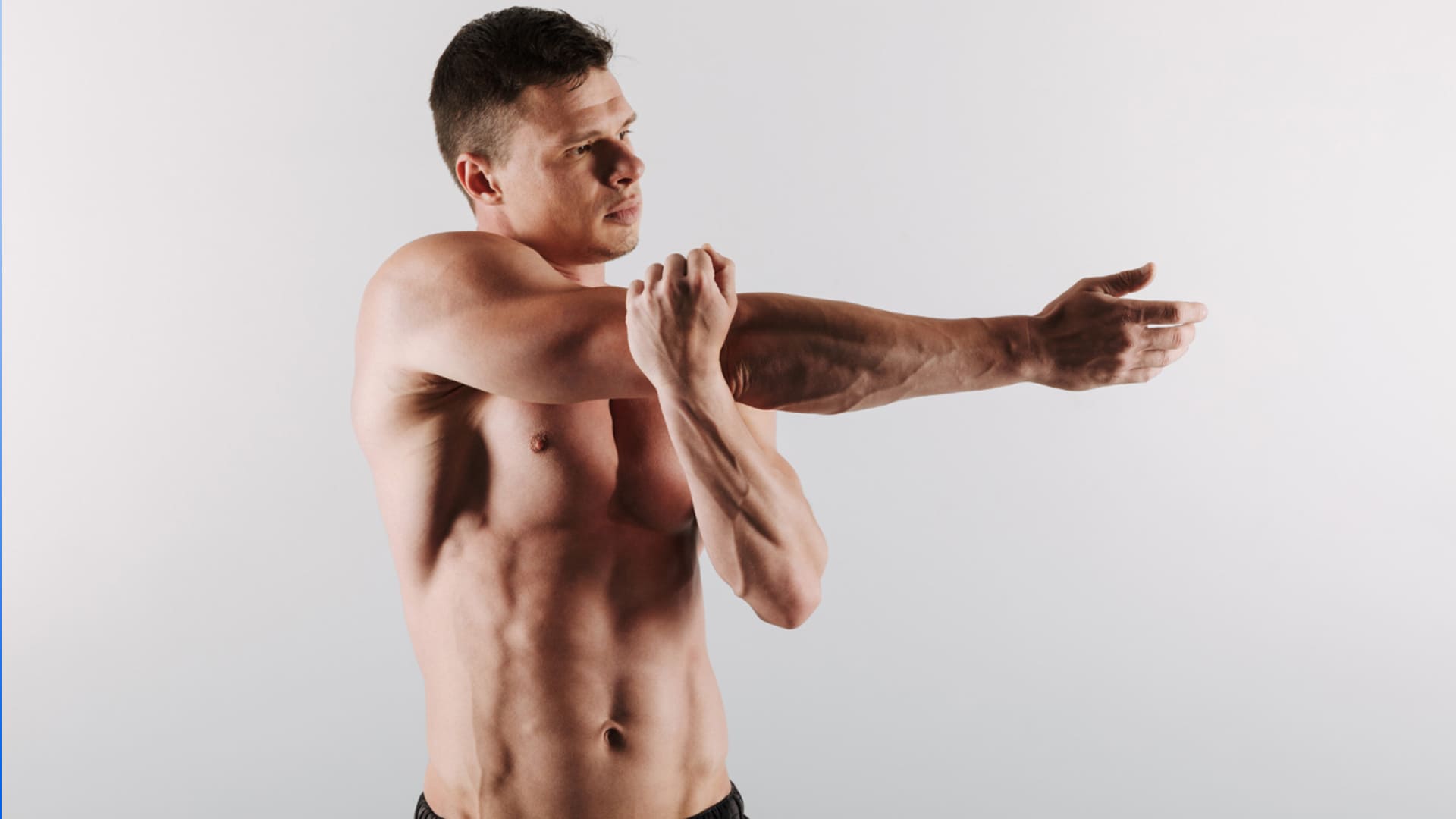
How to Pose Muscular Athletes Without Making Them Look Stiff or Cartoonish
Pose muscular athletes in ways that highlight their power and fitness without making them look like caricatures.
Learn | Posing | By Jeff Collier | Last Updated: September 22, 2026
Shotkit may earn a commission on affiliate links. Learn more.
Fitness is big business, which is why many people are using their image as athletes or gym fanatics to boost their profile online. Shots of muscular people working out and looking healthy are almost guaranteed to garner attention online.
Of course, not every bodybuilder wants photographs to grow their online profile. Some athletes just want a record of their achievements, while some want to document their pathway from one milestone to the next.
I’ve worked with plenty of fit, healthy individuals who fall into both camps. And one of the things that I’ve found is that it’s all too easy to fall into stereotyped poses that make muscular folks look oversized, stiff, or cartoonish.
With experience, I’ve learned to avoid those clichés, and I’ve listed some of my alternative poses here to help you create striking, meaningful shots that your athletic clients will love.
Why the Right Pose Is Important for Photos of Athletes
Think about any pictures you’ve seen of bodybuilders, strongmen and strongwomen, or muscular athletes taking on challenges like the javelin or the hammer. They tend to be in very similar poses, often looking stiff and uncomfortable, like they’re trying to hold positions that might hurt after a while.
The fact is, your subjects don’t need to tense every muscle in their body to look good on camera. Nor do they need to get into odd positions just to accentuate particular muscles.
In my experience, some of the most powerful athletic shots are ones captured in the moment of action, or in pure relaxation. An athlete on an off day, for example, in a vest and shorts that show off muscles without any drama, can be a striking image indeed.
These types of shots highlight that athletes are also just regular people. Intersperse these with photos of your subjects lifting weights, doing pull-ups, or playing sports to create a diverse collection that they can use for their website, socials, or simply as mementos of their fitness journey.
After the shoot, it’s important to make sure you carefully edit the shots so they look their best. Check out my recommended photo editing software for sports photography, which will help you choose the best apps and programs to polish your images.
1. Capturing Satisfaction
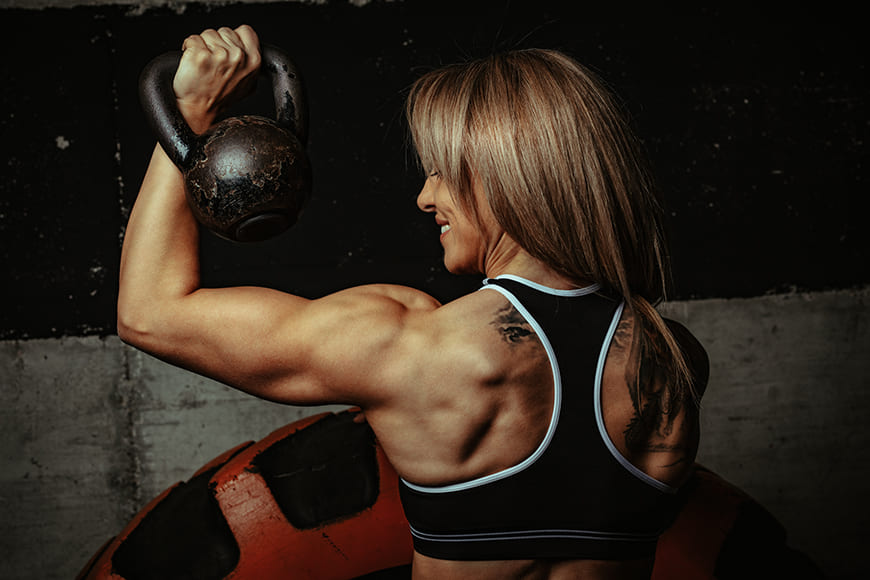
One of the most impactful shots you can capture is your subject in the middle of doing what they love, and clearly enjoying it.
Maybe they’re at the gym, and you’ve adjusted the ambient lighting to create just enough shadow to highlight the definition in their muscles. They might be using a machine, lifting weights, or even in the middle of a warm-up.
What you’re looking for is the moment they start to really enjoy themselves. An organic, natural smile breaks through the sweat and suggests to the viewer that this is something they’re passionate about.
Don’t force the grin. You don’t want a fake smile; if it doesn’t happen, don’t worry about it, and look for other spontaneous moments to capture.
Shots like these are ideal for social media, marketing photos, and website content, but also as memories and keepsakes for athletes journaling their fitness milestones.
2. Soaking Up Adventure
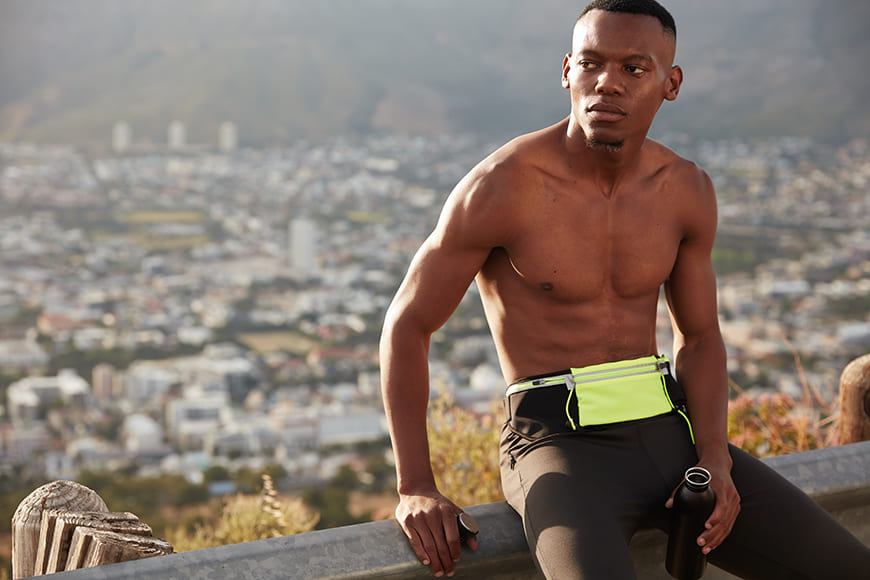
Not every athlete has to be photographed at the gym. But if you’re still looking for shots that show your subjects in action, consider going with them on some outdoor training sessions.
Heading into the hills or mountains for hiking, climbing, or running can offer some great opportunities for shots. There are some practical considerations, of course, such as the weather, the time of day, and how those will affect lighting.
If it’s likely to be overcast and gloomy, consider taking some portable lights with you to give you more control over how your subject is lit.
I’ve always found that a nice moment to capture is a rest break. It’s a snapshot of stillness, plus your athlete will appreciate that you’re not trying to catch them in faked action poses.
They can stand or sit on a wall or tree stump. Let them relax, take a drink, and look to the side.
They should look rested but poised for adventure, ready to spring back into action at a moment’s notice. With most dedicated athletes, you won’t need to try too hard to capture this expression at all.
3. Natural Takes on Bodybuilder Poses
Bodybuilder poses are popular, widely accepted poses that are used to highlight muscle tone and definition and, in competition, present the physique for judging.
However, they can be some of the stiffest and most cartoonish of all the poses out there, especially for huge or particularly muscular athletes. There are ways that you can pose your highly muscular fitness clients that still highlight their strength without making them uncomfortable.
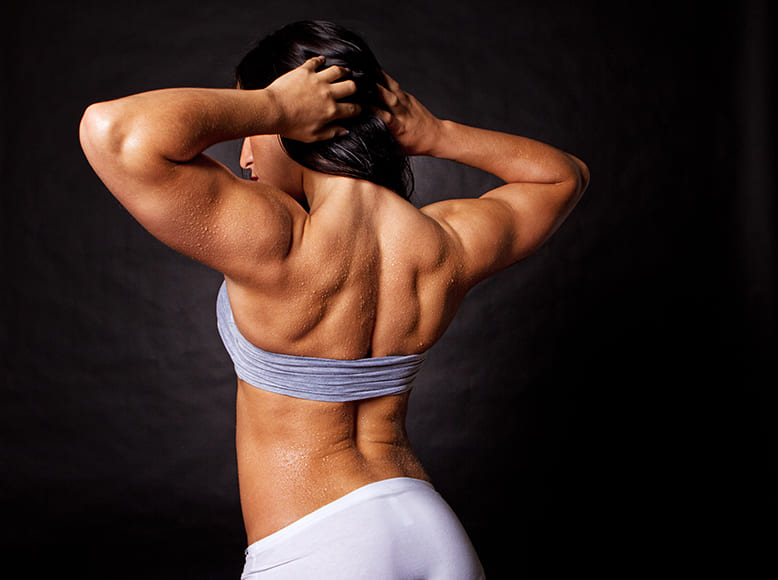
Take the “back double biceps” pose, for example, often seen in bodybuilding competitions. The conventional pose has the subject facing away from the judges (or, in this case, your camera) with their arms raised and flexed to display their biceps and back.
They usually have their knees slightly bent, and their glutes tensed, so all the muscles on the back of their body are on show. It can look very stiff and hard to maintain.
A more relaxed version of this involves getting your subject to turn only partly away from the camera. You should still be able to see part of their face in profile.
Have them lift their arms in a position that echoes a biceps curl, but in a more relaxed way, with their hand resting on the back of their head or their hair.
Rather than looking like they're tensing up, they’ll appear as if they’re simply stretching or pushing hair back from their face, in a relaxed, natural movement.
The position of the arms will highlight back muscles beautifully, and you can choose whether to include the glutes and legs or not, based on what your client wants.
4. Shadowy Determination
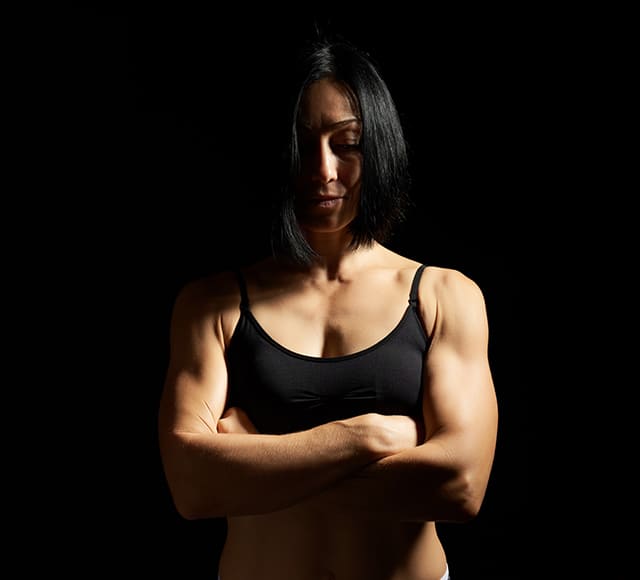
Shadows are used in all types of photography for dramatic poses. They add definition, mystery, and help you control color and light.
For an athlete’s portrait, you might want to engage in some split lighting techniques. These use lights set to one side of the subject, usually at 90 degrees, so that one side of the face is lit while the other remains in shadow.
You can experiment with the severity of this, bringing the light slightly around to the front to soften the effect while still offering a dramatic finish. The advantage is that bringing the light slightly forward can reveal more of the athlete’s features, which is ideal if they’re using these images to build brand recognition online.
Try a range of different, simple poses. The face should remain facing forward, but see what the difference is between eyes closed and eyes open, or take a few snaps of each.
Have them adopt a focused, determined expression with their arms folded. Alternatively, opt for a soft, confident smile and a bicep curl.
5. Ready to Train
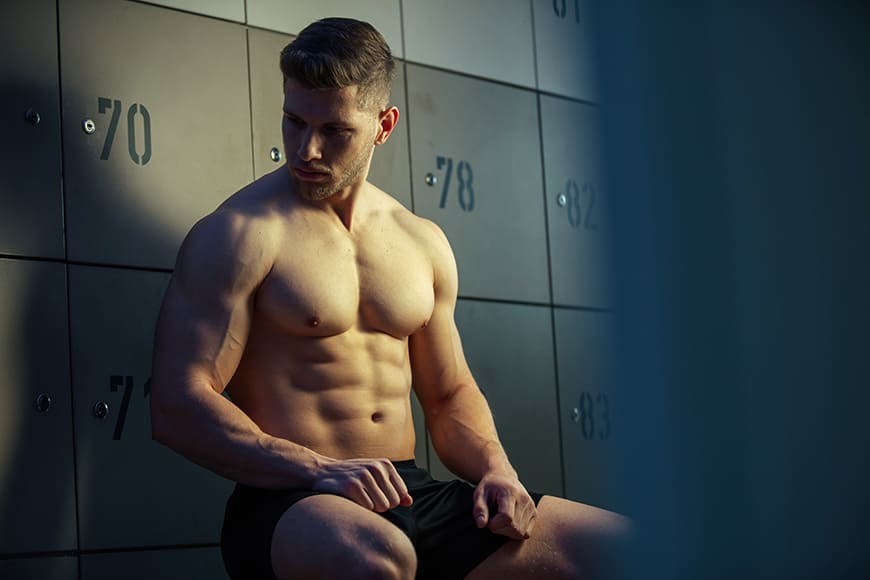
A professional or enthusiastic amateur athlete probably has hundreds of shots of them training or doing sports. They might want you to capture some quieter moments, such as just before they begin training.
Have them seated on a bench in the locker room or changing area, of course being mindful of other people who may be around. See if you can gain access to these areas at a time when other people aren’t present, and make sure you have permission to photograph there and to photograph anyone who appears in the images.
The idea of this shot is that you’re capturing a reflective moment, so I like to position the camera with a slight obstruction. Another row of lockers or a pillar that’s just barely in the shot can neatly frame the subject and create the impression that the viewer is seeing an intimate or candid moment.
If the focus of the shot is to highlight their muscles, ask them to tense slightly to emphasize the definition in their biceps and abs. They don’t need to strain like someone would for a conventional bodybuilding pose, but a little tension will look good on camera.
The ambient light is likely to be cold and non-flattering in a space like this, so bring your own lights and consider lighting your subject from the front, with a warm glow that creates enough shadow to make the shot look serious and imposing.
6. Focus on the Body
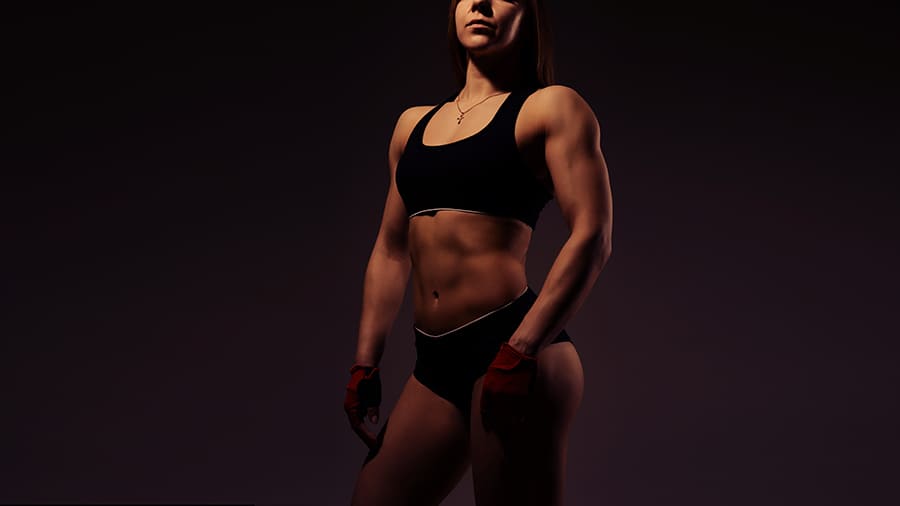
Some athletes aren’t interested in building recognition or a brand, and will be quite happy for you to not include their face in photos. This works well with this particular pose, which misses out either part or all of the face, to highlight the work the person has done on their body instead.
I like to frame the person so that their eyes are out of shot, but the rest of their face is visible. Otherwise, I think it’s possible for the results to look like headless bodybuilders, which can be visually distracting.
Have the subject wear their usual gym gear, and maybe add some accessories such as climbing gloves, a skipping rope, or some weights.
They don’t need to adopt a muscle-tensing pose, but they may want to stand in a confident way. You could have them hold the rope in one hand, or start to lift a weight.
Experiment with different positions, and snap the ones they look most comfortable with.
7. Cooling Down
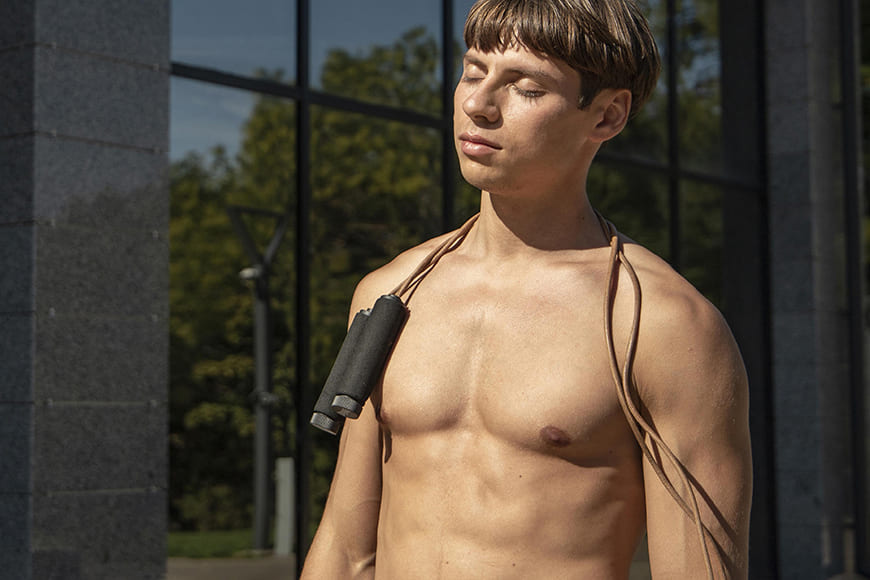
So many fitness shots focus on frenetic energy and action. The fact is that recovery and rest are just as important as the workout itself.
A key aspect of this is cooling down. Try to snap your subject in a peaceful moment, perhaps after skipping or jogging, or stretching out their muscles.
These shots can be impactful when your subject has their eyes closed and looks satisfied with the results of their session. They’re relaxed, in the moment, and clearly happy with how the workout has gone.
Consider adding props to make it clear what’s been happening, such as a skipping rope thrown over the shoulder. You could have gym equipment in the background, or a track if they’ve been training outdoors.
If you do take the photos outdoors, aim for a well-lit spot where the sunlight can illuminate the person’s face and highlight their features, but also accentuate that post-workout glow.
More Tips for Working With Muscular Athletes
If you get the chance to work with athletes, definitely take it. These opportunities allow you to capture genuine action shots, often in organic, natural moments.
With that in mind, ask your subject if you can come with them to training sessions or sports matches to snap some spontaneous shots to complement the collection of more posed images. Always get permission from anyone else who may be identifiable in those photos, particularly if the images will be published or used commercially.
If you can’t gain consent, avoid including identifiable people in the final image, either by changing your composition or, where appropriate, blurring or removing them in post-production.
Remember that many areas where you’ll photograph athletes have terrible lighting. Gyms often have flat, bright fluorescent lights, so consider bringing your own lighting equipment to give you more control over the look and feel of the shots, even if you don’t need to create dramatic shadows.
Final Thoughts
Whatever your ideas are about what makes a muscular person look good on camera, make sure you’re taking your client’s opinions into consideration. You may end up working with clients that absolutely want to lean into conventional tropes.
Some athletes may want a glossy, post-workout look, or may enjoy stepping into those classic bodybuilding poses, such as the aforementioned back double-biceps pose.
Don’t reject their ideas outright, but encourage them to try some more relaxed poses and see which they prefer. You might find that the more conventional shots suit them, and you may end up with a better variety of images for your portfolio.

Check out these 8 essential tools to help you succeed as a professional photographer.
Includes limited-time discounts.
Jeff Collier is an experienced film photographer who enjoys experimenting with modern digital photography equipment, software and apps. He’s also an ex-world champion triathlete and avid cyclist, clocking hundreds of km each week in the beautiful Tweed Valley of northern NSW, Australia.
👋 WELCOME TO SHOTKIT!
🔥 Popular NOW: