






From Safari to Street: Exploring South Australia Through Fujifilm Lenses
Can the right lens change the way you see a scene? We test Fujifilm’s X and GFX lens lineup across wildlife, architecture, food and landscape photography.
Camera Gear Guides | Lens Guides | By Mark Condon | Last Updated: July 29, 2026
Shotkit may earn a commission on affiliate links. Learn more.
Three days. Four photographic genres. One question:
How much does your choice of lens influence the way you see a scene?
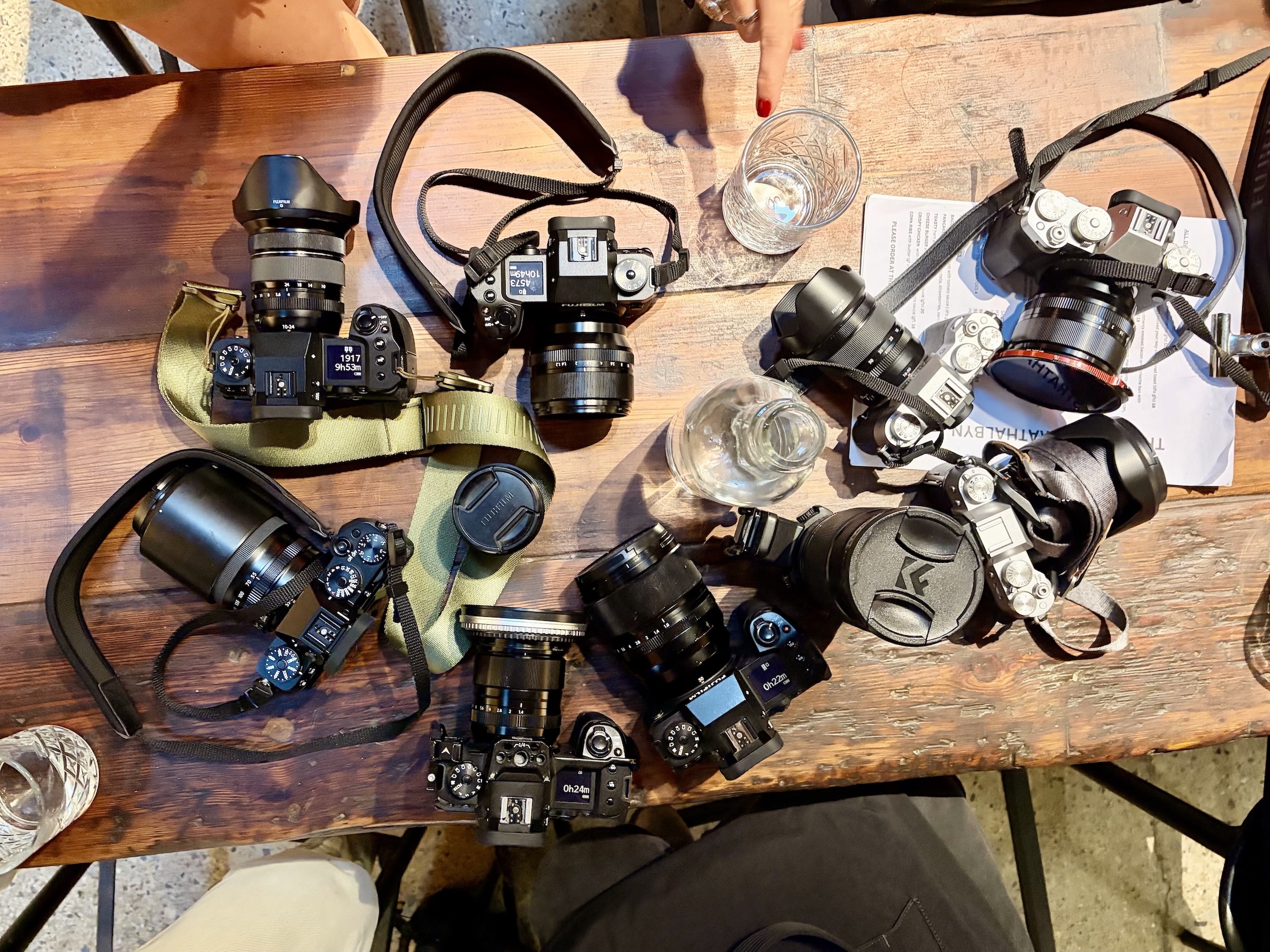
That was the idea behind Fujifilm’s invitation to South Australia, where I joined a small group of photographers with access to Fujifilm’s extensive FUJINON lens lineup across both the X Series and GFX systems.
Rather than simply showcasing new gear, the trip was designed to put every lens where it belonged, from food and travel photography to architecture, wildlife and astrophotography.
Over three days, we swapped lenses almost as often as locations, discovering not only the diverse landscapes of South Australia, but also how dramatically a change in focal length can transform the way you approach a scene.
Food, Wine & Fast Glass
Our first stop was Pike & Joyce Winery in the Adelaide Hills, where lunch provided the perfect excuse to start with Fujifilm’s flagship APS-C camera, the X-H2S.
Rather than carrying the larger GFX system, the compact X-H2S felt perfectly suited to food photography, especially paired with two lenses I’d happily take almost anywhere.
XF33mm f/1.4 R LM WR

Fujifilm X-H2S + XF 33mm f/1.4 LM WR

Fujifilm X-H2S + XF 33mm f/1.4 LM WR

Fujifilm X-H2S + XF 33mm f/1.4 LM WR
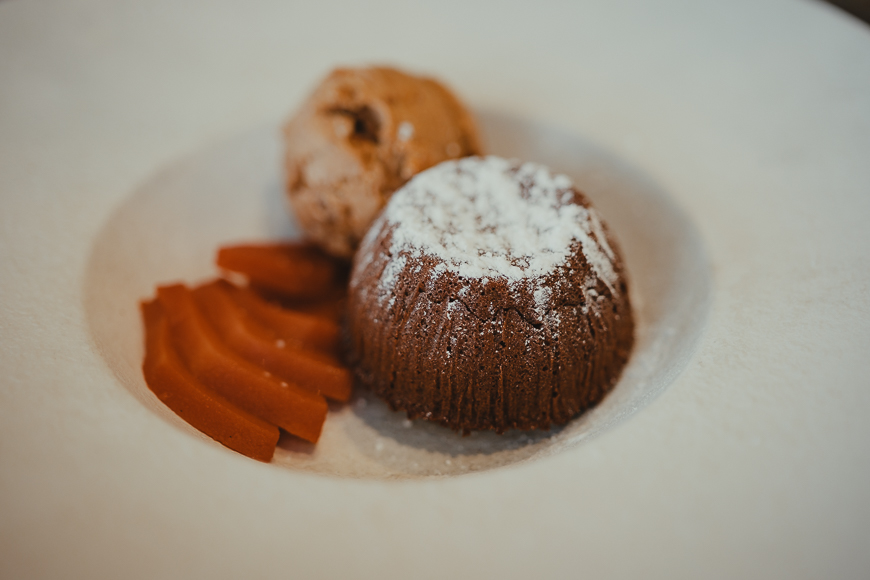
Fujifilm X-H2S + XF 33mm f/1.4 LM WR
Food photography is all about directing the viewer’s eye, and the XF33mm f/1.4 made that effortless.
Its fast aperture produced gorgeous background blur while keeping every detail of the dishes beautifully sharp.
From plated meals to wine glasses catching the afternoon light, the images had a polished, natural look without feeling over-styled.
Blue Hour in Adelaide
As the sun disappeared, we headed into Adelaide’s CBD to explore North Terrace and the beautiful Adelaide Arcade.
The pace couldn’t have been more different.
Instead of carefully composing vineyard scenes, we were now weaving through busy streets, photographing passing trams, illuminated shopfronts and the ornate sandstone buildings that give Adelaide’s city centre so much character.
The X-H2S felt completely at home here.
Compact, fast and discreet, it’s exactly the sort of camera you want around your neck when you’re walking for hours.
XF16-55mm f/2.8 R LM WR II
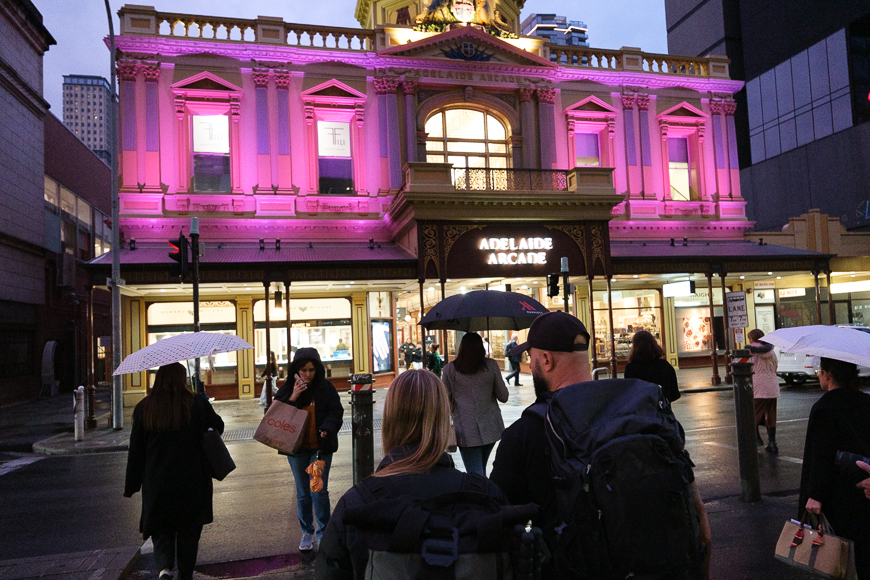
Fujifilm X-H2S + XF16-55mm f/2.8 R LM WR II
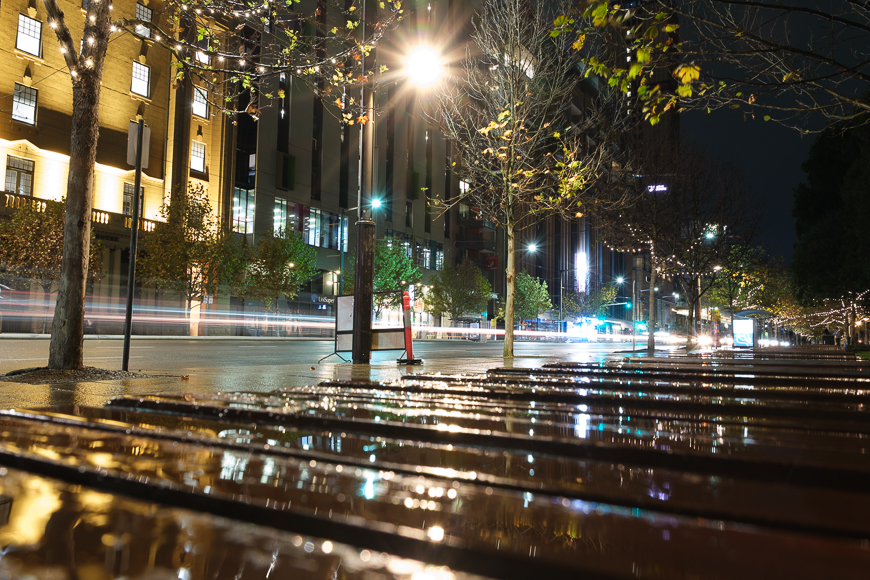
Fujifilm X-H2S + XF16-55mm f/2.8 R LM WR II

Fujifilm X-H2S + XF16-55mm f/2.8 R LM WR II
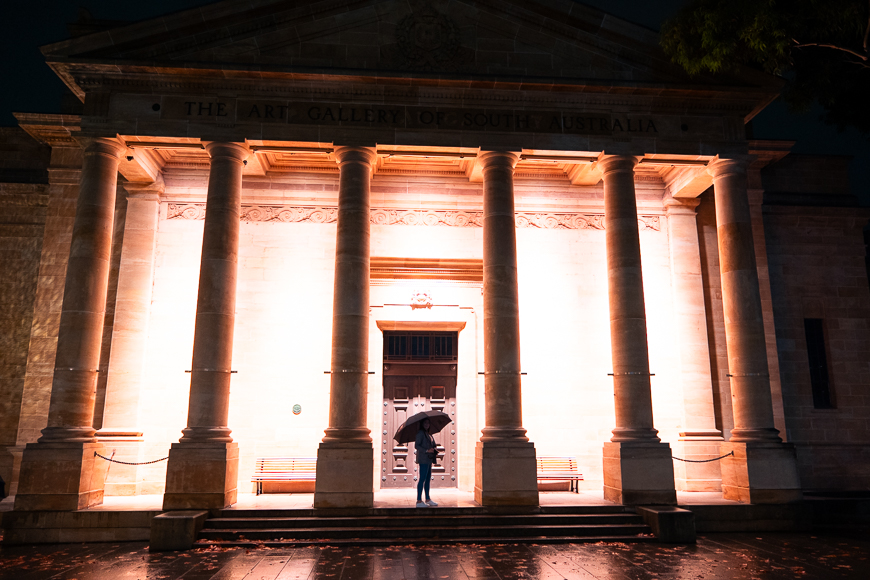
Fujifilm X-H2S + XF16-55mm f/2.8 R LM WR II
For much of the evening I used the popular XF16-55mm f/2.8 R LM WR II.
At 16mm it was ideal for photographing the grand heritage buildings along North Terrace and the intricate interiors of Adelaide Arcade, before quickly zooming tighter for details without changing lenses.
One feature that genuinely impressed me throughout the evening was the X-H2S’s in-body image stabilisation.
Shooting handheld in low light normally means making compromises, but the IBIS gave me the confidence to work at shutter speeds I’d usually reserve for a tripod.
Whether photographing softly lit arcades or the glow of city lights after sunset, it consistently delivered sharp images while letting me keep my kit light.
History Through a Wide Angle
The following day slowed the pace as we travelled through Langhorne Creek, one of Australia’s oldest wine regions.
Our first stop was Bleasdale Winery, where history is as much a part of the experience as the wine itself.
One of the highlights was seeing what is believed to be the world’s oldest recorded Cabernet Sauvignon vineyard, with vines dating back to the 1850s.
Inside the cellar door, warm timber, stone walls and shafts of natural light created a completely different mood.
The real star was the winery’s heritage-listed 1892 wood-and-iron grape press, still housed in its original press building.
XF16-55mm f/2.8 R LM WR II

Fujifilm X-H2S + XF16-55mm f/2.8 R LM WR II

Fujifilm X-H2S + XF16-55mm f/2.8 R LM WR II

Fujifilm X-H2S + XF16-55mm f/2.8 R LM WR II
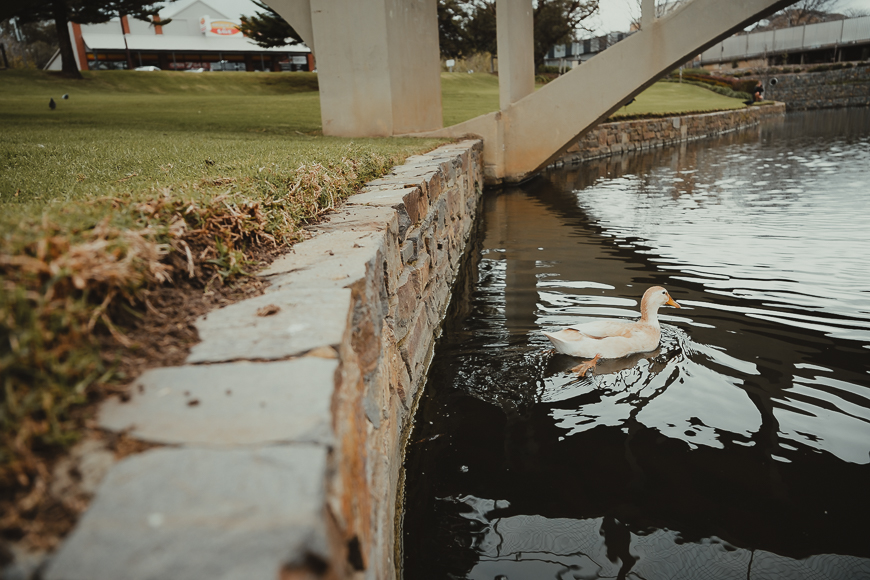
Fujifilm X-H2S + XF16-55mm f/2.8 R LM WR II
The new 16-55mm again proved why it’s such an exceptional travel lens.
At the wide end it captured the scale of the historic interiors, while a quick twist of the zoom ring isolated details in the machinery, timber beams and ageing stonework without ever needing to change lenses.
From Bleasdale we continued through Strathalbyn, showcasing an abundance of heritage buildings dating from 1839 and the Children's Bridge over the Angas River.
Waiting for the Stars
One of the most anticipated stops of the trip was the Murray River Dark Sky Reserve, Australia’s first designated Dark Sky Reserve and one of the darkest places on Earth.
After crossing the Murray River by ferry, we joined local astronomers for an evening under the stars, enjoying dinner while learning about the southern night sky.
Unfortunately, Mother Nature wasn’t on our side. A full moon and thick cloud meant the Milky Way never appeared, bringing the astrophotography session to an early end.
Had conditions been kinder, this would have been the perfect opportunity to reach for lenses like the XF8-16mm f/2.8, XF16mm F1.4 or GF20-35mm f/4 – all ideal for capturing vast skies above dramatic foregrounds.
Even without taking a single shot, it was easy to understand why photographers travel from around the world to experience this remarkable location.
Putting Fujifilm's Long Glass to the Test

Monarto Safari Park | GoPro frame grab | Image credit: Djuro Sen
The final morning began before sunrise at Monarto Safari Park, with exclusive access before the gates opened to the public.
If the first two days had been about travel and storytelling, this was all about speed, reach and autofocus.
I carried two very different setups: a Fujifilm GFX100S II fitted with the GF500mm f/5.6 R LM OIS WR (occasionally swapping to the GF100-200mm f/5.6) and an X-H2S paired with the XF150-600mm f/5.6-8 R LM OIS WR.
Photographing giraffes, zebras, emus and leopards from the back of a moving safari vehicle is about as far from traditional medium format photography as you can get, and that’s exactly what made it so much fun.
GF500mm f/5.6 R LM OIS WR
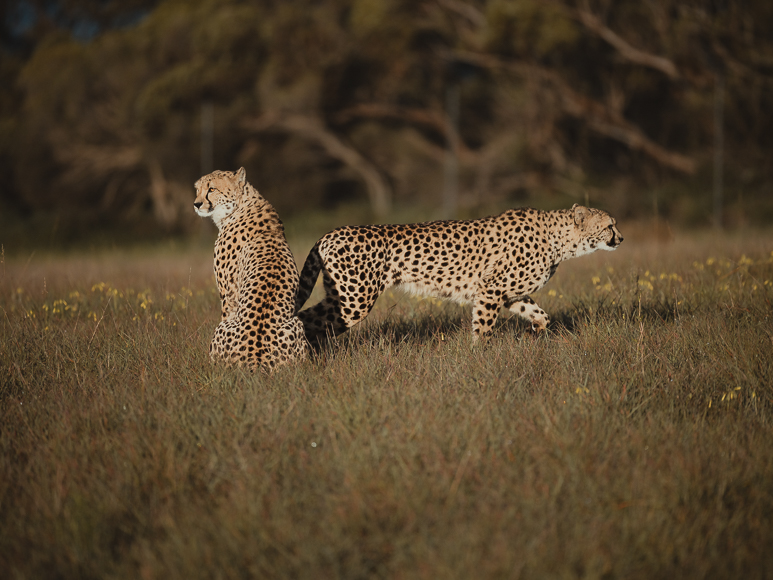
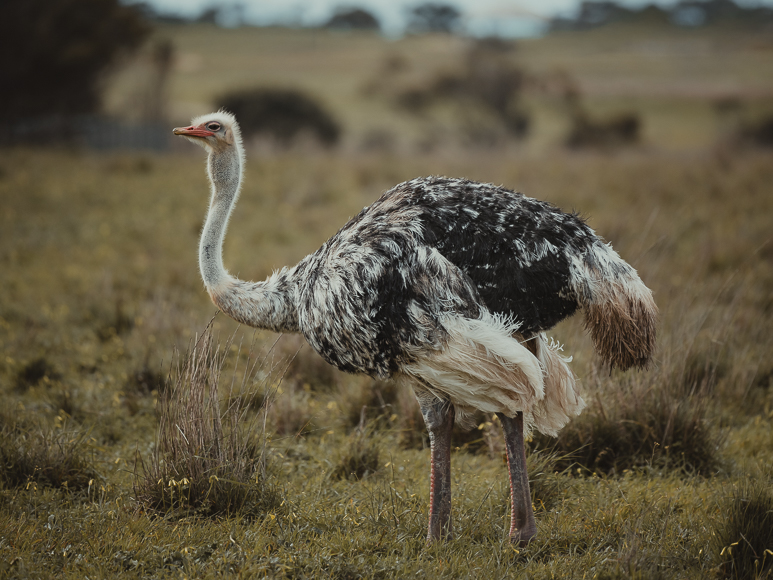
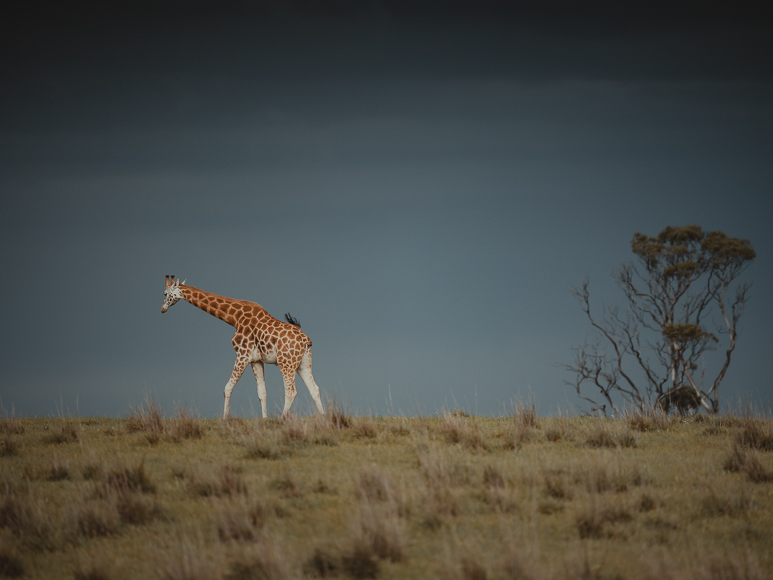
Fujifilm GFX100S II + GF500mm f/5.6 R LM OIS WR
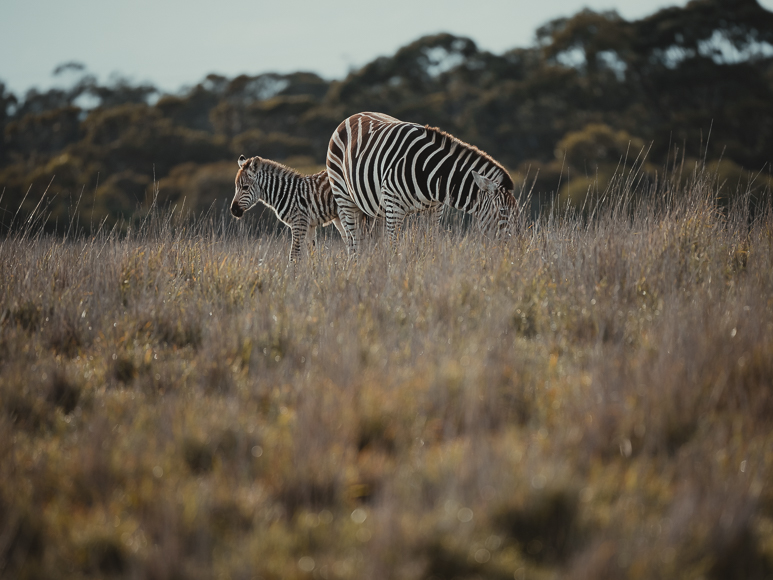
Fujifilm GFX100S II + GF500mm f/5.6 R LM OIS WR

Fujifilm GFX100S II + GF500mm f/5.6 R LM OIS WR

Fujifilm GFX100S II + GF500mm f/5.6 R LM OIS WR
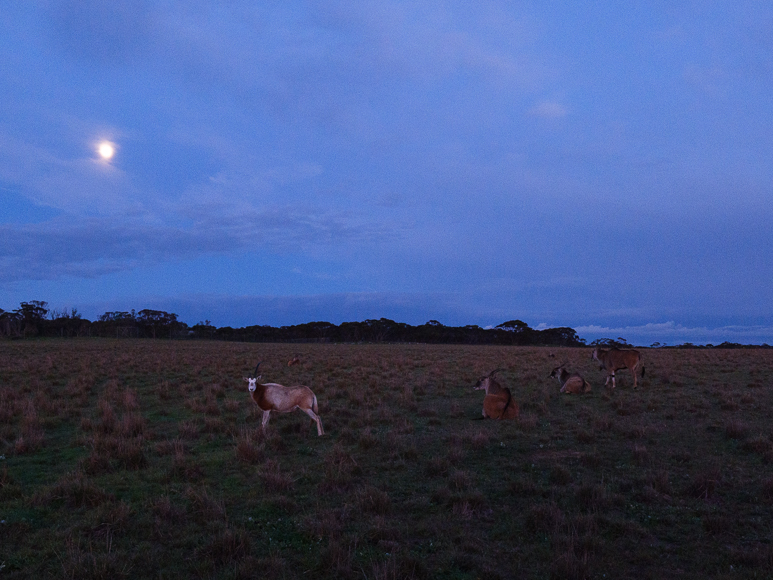
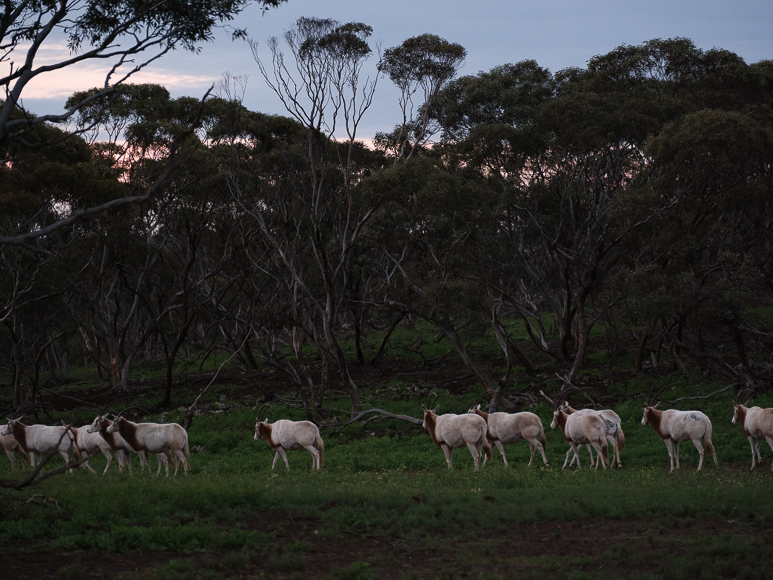
Fujifilm GFX100S II + GF500mm f/5.6 R LM OIS WR
Fujifilm GFX100S II + GF500mm f/5.6 R LM OIS WR
Without question, the GF500mm f/5.6 R LM OIS WR was the standout lens of the trip.
I’ve always associated medium format with slower, more deliberate portrait or product photography. However, the GF500mm completely challenged that assumption.
Mounted on the GFX100S II, it produced an incredible combination of speed, reach and image quality that I honestly wasn’t expecting.
Autofocus locked onto wildlife quickly and confidently, while the 102MP sensor captured an astonishing amount of detail. Even heavy crops left files with more than enough resolution for large prints or commercial work.
Being a 500mm lens, it’s obviously quite a monster, but paired with the substantially gripped GFX100S II, shooting handheld from a moving vehicle actually felt less demanding than I expected.
As a long prime lens, though, the 500mm requires a different mindset.
You have to commit to your composition before raising the camera. If a leopard suddenly rushes closer, there’s no zoom ring to save you, especially if you're stuck in a vehicle or can't move backwards yourself.
You simply have to wait patiently for the next opportunity.
That limitation quickly became part of the enjoyment. Instead of reacting, I found myself anticipating moments, which ultimately made me slow down and think more carefully about every frame.
GF100-200mm f/5.6
Fujifilm GFX100S II + GF100-200mm f/5.6
Fujifilm GFX100S II + GF100-200mm f/5.6
Where the 500mm rewarded patience, the 100-200mm offered flexibility.
Wildlife rarely stays at the perfect distance, and having the ability to zoom made it much easier to adapt as animals moved around the park.
Combined with the enormous resolution of the GFX100S II, I never felt limited by the shorter focal length.
Cropping into a 102MP file still leaves an extraordinary amount of detail, making this zoom a surprisingly versatile wildlife option.
XF150-600mm f/5.6-8 R LM OIS WR
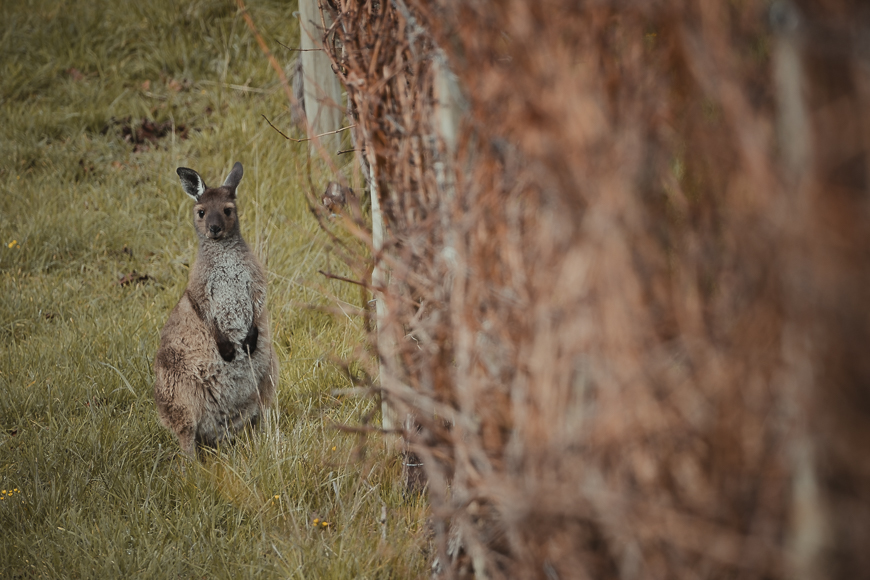
Fujifilm X-H2S + XF150-600mm f/5.6-8 R LM OIS WR

Fujifilm X-H2S + XF150-600mm f/5.6-8 R LM OIS WR
The X-H2S and 150-600mm combination felt purpose-built for safari photography.
The APS-C crop factor effectively extends the lens’s reach, making distant animals appear even closer while keeping the entire setup lighter and easier to handle.
Unlike the fixed 500mm, the zoom let me react instantly as subjects moved towards or away from the vehicle.
One moment I was filling the frame with a leopard resting in the grass, the next I was zooming out to capture an entire herd of giraffes.
If the GFX setup delivered the ultimate image quality, this was undoubtedly the most versatile wildlife kit of the trip.
GF55mm f/1.7 R WR

Fujifilm GFX100S II + GF55mm f/1.7 R WR
Not every favourite lens needs to be the biggest.
Whenever there wasn’t wildlife to photograph, I kept coming back to the GF55mm f/1.7.
Mounted on the GFX100S II, it transforms the camera into an incredibly capable everyday system. The focal length feels natural for travel, environmental portraits and general storytelling, while the wide f/1.7 aperture produces stunning subject separation.
More than anything, I loved the way this lens rendered a scene.
There’s a richness to the files, with a combination of detail, depth and beautifully smooth backgrounds that gives images a distinctly medium format look. It’s difficult to quantify, but immediately obvious when you see the results.
I regret that I didn't use the 55mm more on the Safari outing, since unfortunately, the allure of the 500mm was too strong…
Fujifilm GFX vs X Series
Using both systems side by side reinforced something I’d suspected for a while: they aren’t competitors, they’re complementary.
The X Series is the camera you could pack for almost any trip. It’s compact, fast, lightweight and capable of tackling virtually every photographic genre without weighing you down.
The GFX system is totally different. It encourages you to slow down. Every frame feels more deliberate, and the image quality is genuinely breathtaking.
However, unlike the cumbersome medium format cameras of the past, it doesn't feel confined to landscapes or studio work.
The autofocus is fast enough for wildlife, the burst shooting is surprisingly capable, and the handling feels far more familiar than many photographers would expect.
If I were travelling for a month, I’d probably choose the X Series, but if I were travelling to create archival quality prints or my very best work, I’d happily carry the extra weight of the GFX.
Other Standout Lenses
One of the benefits of having almost Fujifilm’s entire lens catalogue on hand was seeing how other photographers approached the same scenes.
Some gravitated towards the ultra-wide GF20-35mm f/4 for dramatic vineyard landscapes and architectural interiors, while others preferred the versatile GF45-100mm f/4 as an all-in-one medium format zoom.
On the X Series side, lenses like the XF8-16mm f/2.8 were popular for expansive landscapes, while the compact XF23mm F1.4 proved a favourite for street photography around Adelaide.
Portrait specialists naturally found themselves reaching for the beautifully sharp XF90mm f/2, while the XF50-140mm f/2.8 offered an excellent balance between reach and flexibility.
It was a reminder that there isn’t a single “best” lens – only the one that’s best suited to the story you’re trying to tell.
Final Thoughts

Fujifilm called the trip The Lens Behind Fujifilm and by the end of three days, I understood exactly why.
Cameras evolve every few years. Sensors gain more resolution. Autofocus gets faster. Video specs continue to improve… but lenses are different.
A great lens changes how you see a scene long before you press the shutter.
South Australia provided the wildlife, vineyards, heritage architecture and dark skies, but it was the selection of FUJINON lenses that determined how I chose to photograph them.
After three days of swapping focal lengths and cameras, one thing became abundantly clear: changing your lens doesn’t just change your composition – it changes the story you choose to tell.

Mark Condon is a British wedding photographer and editor of Shotkit. When he’s not taking photos or reviewing the latest camera gear and software, Mark can be found cycling around the northern rivers.
👋 WELCOME TO SHOTKIT!
🔥 Popular NOW: