






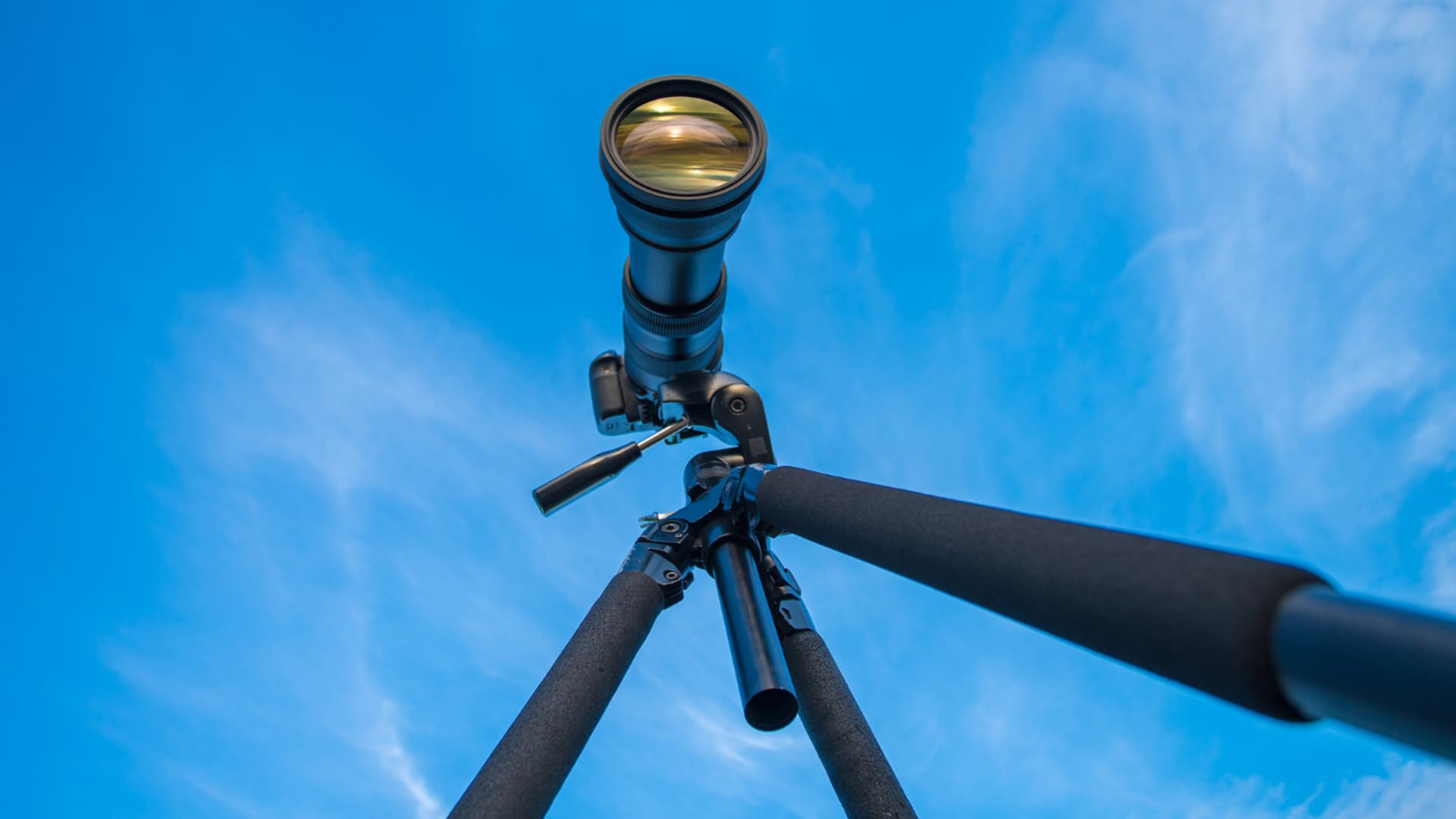
Best Monopods for 600mm+ Super‑Telephoto Lenses
Discover the best monopods to use when working with heavy-duty, 600mm or more super-telephoto lenses, including options for various budgets.
Photography Gear Reviews | Tripod & Monopod Reviews | By India Mantle | Last Updated: November 2, 2026
Shotkit may earn a commission on affiliate links. Learn more.
Super-telephoto lenses are excellent for capturing distant subjects in amazing detail, but they have one notable drawback: they’re often much larger and heavier than standard lenses. I’ve found that using one for extended periods can be physically demanding.
The size and weight of super-telephoto lenses can also make them difficult to support for long periods – even small movements can affect image sharpness. A monopod can help support the weight of your camera and lens and reduce fatigue during extended shooting sessions.
But you can’t expect an old monopod to support your 600mm or longer super-telephoto lens. It needs to be a strong and sturdy model, with sufficient durability and weight capacity to cope.
In this guide, I’ll list several of my personal recommendations for the best monopods for super-telephoto lenses.
Why Should You Use a Monopod With a Super-Telephoto Lens?
Before I take a look at which monopods to use with 600mm or longer lenses, it’s important to understand why you’d want to do this in the first place. If you’re experienced with these kinds of lenses, you probably already understand why monopods matter, but beginners may not be quite as aware.
Ultimately, it all boils down to size and weight. Unlike standard lenses, super-telephoto lenses tend to be particularly big and bulky. They often have huge barrels and large glass elements that allow them to take in enough light to capture distant images with sharp detail.
While there are some exceptions – newer mirrorless models and variable aperture lenses tend to be a little lighter and more compact than their predecessors – most of these kinds of lenses are also quite heavy, sometimes far above the 10-pound mark.
As a result, even if you’re only shooting for an hour or two, it can be quite awkward to work with a super-telephoto lens. They can put strain on your back, neck, and shoulders as you carry them around and line up your pictures.
What’s more, because these lenses are often used for zooming in on distant objects, even the slightest bit of movement can ruin a shot; you have to keep your lens incredibly steady if you want to be able to capture the cleanest and sharpest pictures.
That’s where monopods (and other supports, like gimbals and tripods) come into play. They can take the weight of a super-telephoto lens, easing the burden on you, the photographer, and keeping your camera steady as you work.
Advantages of the best super-telephoto monopods include:
- Less muscle fatigue: As stated, a single super-telephoto lens can easily weigh a dozen pounds or more, but a monopod can support that weight, so your muscles don’t have to. This is especially beneficial during extended shoots.
- Sharper pictures: Even if you have a steady hand, the tiniest of hand tremors can lead to the kind of camera shake that ruins super-telephoto images. With a steady monopod under your lens, you’ll be able to capture more detailed and intricate pictures with ease.
- Faster tracking: If you’re taking action shots, like wildlife images or sports pictures, for example, you’ll need to be able to move your lens to track a subject or object. This is much easier when you have a monopod bearing the brunt of the camera’s weight.
- Portable design: Compared to tripods, monopods are typically smaller, lighter, and simply easier to carry around. This makes them a good fit if you’re in the wilderness or only have limited room to maneuver when setting up your camera.
In order to enjoy all of these benefits, however, you have to select the right monopod to meet your needs. And if you want one that’s compatible with your super-telephoto lens, you’ll need to ensure that it can cope with the lens’ size and weight.
It’s worth checking how much your lens and camera weigh, exactly, and then finding a monopod with a weight capacity at least a few pounds higher to ensure it can cope; you certainly won’t want to use ultra-lightweight monopods for this kind of photography.
I also recommend considering the mounting options, with tilt and fluid heads being particularly well-suited for long-distance work, as well as other factors, such as price, build quality, etc.
The Best Monopods to Use With Super-Telephoto Lenses
Now that you know why monopods matter so much for super-telephoto lens work, let’s take a look at five of my personal favorites. I’ve included a mixture of options at different price points, so you should be able to find at least one product in the list below that meets your needs.
1. Gitzo GM4552L Series 4 Carbon Fiber Monopod (Best Overall)

- High weight capacity of nearly 80 pounds
- Excellent build quality
- Surprisingly compact and lightweight
- Quite a high price tag
Kicking off my list, I have the Gitzo GM4552L Series 4 Carbon Fiber Monopod. This is widely regarded as one of the very best monopods to use when you’re working with large and heavy lenses, like super-telephoto lenses, thanks to its immense load capacity and strong design.
This monopod can handle up to 77.2 pounds of weight in total. Because of that, you might assume that it’s also quite a heavy or bulky product, but it’s surprisingly lightweight, tipping the scales at a mere 1.6 pounds and easily folding down to just 22 inches for simple storage.
The six-layer carbon fiber design of this monopod ensures it can last for years of use, and it offers G-Lock ultra-twist locks to keep your camera secure and safe against dirt, dust, and moisture. It also comes with a pivoting rubber foot for smooth and easy movement while in use.
The only real downside of note is the price. This is one of the more expensive monopods on the market, and if you don’t do much long-distance photography, you may not want to spend quite that much on an accessory like this.
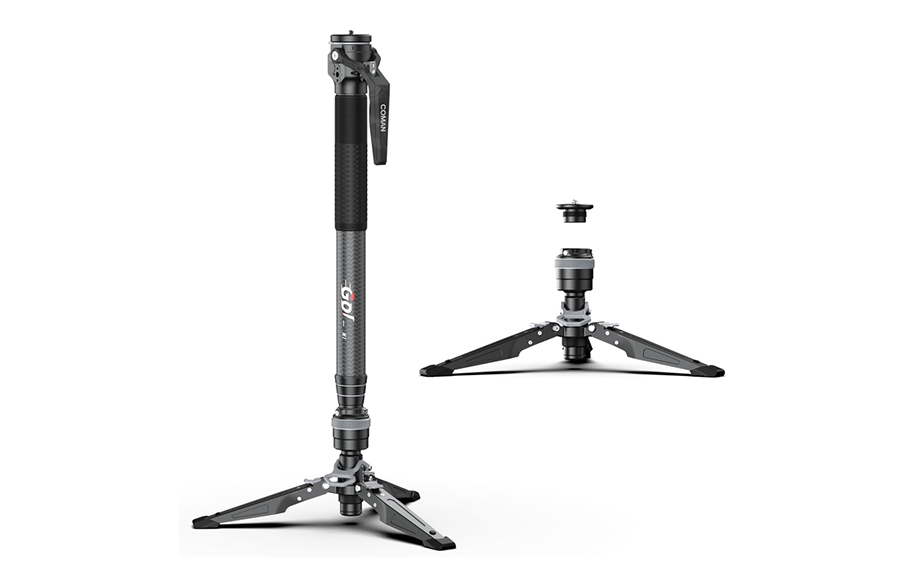
2. COMAN M1 Monopod (Best for Durability)
- Great build quality and durability
- Intuitive one-touch adjustments
- Easy to attach various accessories
- A little on the bulky side
Next up, meet the COMAN M1 Monopod, which is one of the toughest monopods I’ve had the pleasure of working with. From the moment you first handle this product, you can feel just how strong and sturdy it is, perfect for taking with you into the wilderness or busy, bustling places, like sports events.
The COMAN M1 has a rated load capacity of 44.1 pounds. It extends from approximately 23.8 inches when folded to 62.8 inches at maximum height, and it has a one-touch adjustment mechanism and accessory-mounting threads.
The M1’s design is also impressively flexible. It has three integrated mounting threads for attaching different accessories, a tiltable and removable base, and even the possibility to attach a wrist strap for more convenient carrying.
The big downside with this monopod, at least compared to some of the others on my list, is that it’s a bit bulky. It’s over three pounds in weight, which is significantly more than other monopods, and it’s not quite as easy to transport thanks to its chunky body.
3. Benro MSD46C SupaDupa Carbon Fiber Monopod (Best for Portability)

- Relatively low price tag
- Extremely lightweight and portable
- Intuitive design offers speedy setup
- Requires careful use
If you tend to move about a lot during and in between your long-range photoshoots, you’ll most likely want a compact and portable monopod that’s quick and easy to set up. The Benro MSD46C SupaDupa Carbon Fiber Monopod fits the bill perfectly.
Out of all the monopods on my list, this is arguably the most straightforward to work with. It has such an intuitive design that you can snap it into position, pop out the leg segments, and attach your camera in a matter of seconds, then break it all back down and move on to your next location just as fast.
It’s also incredibly lightweight and portable, weighing in at a mere 1.3 pounds and shrinking down to just 17.9 inches, allowing it to slot easily inside a backpack or carry case. Plus, despite being so portable, it’s remarkably strong and able to hold up to 88.2 pounds.
The Benro MSD46C is also a very affordable accessory for long-range photography, but that low price tag also means that it’s not quite as well-made as more expensive alternatives. As a result, you may need to treat this product with a little extra care and may have to tighten screws and apply lubricants on a regular basis.
4. Benro MBB34CT BadaBing Rapid Deploy Carbon Fiber Monopod (Best Quality)

- Well-suited to sports, wildlife, and action shots
- Flexible ball joint design offers versatile angling
- Tap to open base for rapid deployment
- The most expensive monopod on my list
Next, I have another entry from Benro, which is one of the better brands as far as high-quality monopods are concerned. But, unlike the budget-friendly MSD46C, the Benro MBB34CT BadaBing Rapid Deploy Carbon Fiber Monopod is a much more high-end option.
It’s also a feature-rich monopod designed for rapid deployment, coming equipped with new features and technologies that you won’t find on older models. It features a “tap to open” base, for example, which deploys incredibly quickly, letting you switch between mobile and stabilized positions on the fly.
The Benro MBB34CT also has a Dual-Twist RapidDeploy system, which basically lets you release and adjust multiple leg sections more quickly and easily than you would with a standard monopod. In general, everything moves faster and smoother with this product.
Thanks to that, it’s a great fit for action-style photography or taking pictures of wildlife, though the high price tag might be too much for some.
5. Oben CTM-2600 6-Section Carbon Fiber Monopod (Best Value for Money)

- One of the most affordable monopods on the market
- Relatively lightweight and portable
- Tilt head design provides excellent stability
- Build quality isn’t the best
Finally, I realize that most of the products listed up to this point have been relatively expensive, and you may not want to spend several hundred dollars on a monopod for your super-telephoto lens. If you’re working with a smaller budget, consider the Oben CTM-2600 6-Section Carbon Fiber Monopod.
It’s not only one of the more affordable monopods on the market, but it still manages to pack in a lot of features and advantages at this price point. It can support loads of up to 26 pounds, for example, and the tilt-head kit includes a QR-20 quick-release plate to easily attach and remove your camera.
When purchased with the VH-A30 tilt head, the kit includes a bubble level to help align the camera with the horizon and keep your shots level. Meanwhile, the 180-degree tilt head design allows you to easily adjust your camera’s angle on the fly, which is great for sports, wildlife, and action photography.
At the same time, since this is a cheaper monopod, it’s not perfect. The build quality isn’t quite on the same level as the Gitzo GM4552L, for example, and some users have complained about parts breaking or falling off, so you have to treat this accessory with a little extra care.
Quick Recommendations
If you want a reliable, sturdy, and flexible monopod, consider the Gitzo GM4552L Series 4.
For an affordable option, choose the Oben CTM-2600.
Or, if you want one that’s tough enough to cope in any conditions, opt for the COMAN M1.
FAQs
Which monopod is best for a heavy super-telephoto lens?
There’s no single “best” monopod for every situation, and the right option for you will depend on how much you’re willing to spend and what type of photography you intend to do. However, the Gitzo GM4552L Series 4 is my best overall pick for this particular list due to its great mixture of build quality, weight capacity, portability, and ergonomic design.
What should I look for when buying a monopod for long-distance photography?
I recommend first making sure that your monopod has the requisite weight capacity to cope with your super-telephoto lens, as these lenses can be too heavy for some supports to cope with. It’s also worth making sure the mounting hardware is compatible with your camera, and the product has good build quality, too.
Should I get a monopod or a tripod for my super-telephoto lens?
Both options have their benefits, and the right one for you will depend on personal taste and intentions. Monopods are great for more dynamic, action-oriented shots, and they also tend to be more portable and faster to set up. Tripods provide even more stability for precision photography, but take up more space and are more awkward to work with.
Final Thoughts
If you regularly work with super-telephoto lenses of 600mm or more, a monopod isn’t just a handy optional extra; it’s basically a must-have. It can provide the support and stability you need to take long-distance photos more comfortably, safely, and in greater detail.
With that in mind, I strongly recommend considering the monopods listed above and choosing one that fits your budget and requirements.

As the General Manager of Shotkit, India Mantle brings with her a lifelong love for photography that she developed during her childhood, watching her father document their family moments with his Nikon EM. In her free time, you find her enjoying the awe-inspiring natural beauty of her home, Northern Rivers, Australia.
👋 WELCOME TO SHOTKIT!

🔥 Popular NOW: