






22 Types of Camera Shots & Angles to Use in Film & Photography
Camera angles and shots in film and photography are key elements that can completely change the story that you're trying to tell. Here are 27 important ones.
Learn Filmmaking | Learn | By Ana Mireles
Shotkit may earn a commission on affiliate links. Learn more.
Camera angles and shots are fundamental tools in film and photography that can dramatically change the narrative and emotional impact of your visuals.
The camera's direction, movement, and framing help you convey your creative view – they become part of your unique style.
Also, the same scene, captured from different camera angles and shots, can tell a very different story. So, it's key to make the best decision to communicate effectively with the viewer.
In this article, you'll learn all the types of camera shots and camera angles with visual examples. This way, you can put them into practice and see which ones are best for you.
Remember that including them in your shot list will make the photoshoot or filming go smoothly.
There's a lot to cover, so let's get started!
What are the Types of Basic Camera Shots?
It's important to know which camera shots and angles you have at your disposal to tell a story.
Knowing how you can communicate your creative vision will help you organize your project, work more efficiently, and achieve better results.
1. Close-up Shot

Credit: Styves Exantus
In a close-up shot, the subject fills most of the frame. You can use this shot to showcase details and actions, such as someone grabbing an object that's important to the story.
They're also used to show emotions when they depict a person. This is because you're creating an intimate shot that lets you focus on the facial expression.
Technically speaking, there are two ways to do a close-up. One of them is to get physically close to the subject – you just have to be aware of lens distortions.
The most common way to achieve a close-up shot is by using a telephoto lens from afar. This will also create a shallow depth of field that will emphasize the detail you're focusing on.
2. Medium Shot

Credit: Steve Momot
A medium shot is still centered on the main subject, but it gives it more ‘breathing room', so to speak. Usually, the crop is from the waist up, although something tighter across the torso is still OK.
This type of camera shot is often used in profile pictures because it's still close enough to see the person, but it's not as intimate.
It's also common to use a medium shot when photographing a group or when you want to add more context. They're also a great way to transition between close-ups and wider shots.
3. Long Shot

Credit: Andrew Shelley
If you want to capture your entire subject, go with a long shot.
Also known as wide shots, this framing is great if you want to show a new location where your subject arrived or introduce a new ambient while keeping the subject's strong presence.
It's also ideal to give scale and perspective.
What are the Types of Advanced Camera Shots?
1. Extreme Close-up Shot

Credit: Larry Cross
I already introduced the close-up shot before; well, this is the same but more extreme. In this camera shot, you focus on a very specific detail.
Among other uses, they're a must in wedding photography as you can capture the wedding ring, or a tear of joy. This is why they're equally useful for highlighting objects or showcasing emotions.
2. Extreme Long Shot

Credit: Safiye Üstün
On the other side of the spectrum, there's the extreme long shot. This camera shot is so wide that the subject almost gets lost in the scene.
You can use this to show your character feeling isolated or vulnerable in a vast space. In film or videography, it's also common to use them without the scene, just to introduce the viewer to the context in which the story takes place. In this case, they're called establishing shots.
3. Cowboy Shot

Credit: Pixabay
Also known as American shot, it depicts the subject from the mid-thigh. This particular crop allowed film directors to show the cowboy guns in the frame to capture the quickdraw – hence the popular name of cowboy shot.
This camera shot lets the viewer appreciate the facial expression while giving enough room to see the body language. This is why it's very useful for storytelling purposes.
4. Over the Shoulder Shot

Credit: Sam Lion
This is one of the most common camera shot framing types when there's a conversation happening in the scene.
The camera is placed behind the character who is listening, showing part of their head and shoulder blurry in the foreground. Then, you see the other character in focus speaking or reacting.
It literally shows what you would see if you were peaking over the shoulder of the character.
Usually, in films and videos, this shot alternates continuously as the conversation goes on, creating a shot-reverse-shot sequence.
However, it's also used in still photography to provide context and capture nonverbal cues from the person speaking.
You can also change the camera angle to indicate a different relationship between the subjects. For example, if you shoot it from a high angle, you show your character looking down at the other, making them look ‘smaller.'
5. Tracking Shot
This shot is not based on framing but on camera movement. As the name suggests, a tracking shot follows the character using a dolly, steadicam, crane, or boom.
A tracking shot can also happen in any direction. A forward tracking shot follows the character as they move away, and a backward tracking shot pulls back as the character is coming towards the camera.
You can also move the camera sideways if the character is walking from left to right, or vice versa. In this case, it's called a lateral tracking shot.
6. Zoom Shot
Unlike in the previous shot, the camera doesn't move during a zoom shot. Here, you can see the character appear closer or farther away due to changes in focal length.
You can combine both, but then the shot is called a dolly-zoom, and it creates an unusual visual effect. This effect has been used by Alfred Hitchcock, Martin Scorsese, Steven Spielberg, and other great directors.
7. Master Shot
The master shot is the most important because it captures all the key characters, actions, and spatial relationships. It's often done with a wide frame and shot in a single cut.
While it can be used as an establishing shot, it's mostly used to provide material for film editors to insert between other shots and to maintain continuity for the viewer. This keeps the film dynamic but coherent.
8. POV Shot
A POV (point-of-view) shot is meant to show you something through the eyes of a character. Typically, a POV shot comes after a medium or close-up shot of that character looking at something as an introduction to what you're about to see.
This is an effective technique for pulling the viewer into the action by giving them a first-person perspective.
9. Establishing Shot
Typically, an establishing shot is a wide shot or an extreme wide-angle shot. This gives you enough context to establish the time and place where your story takes place.
However, this may vary depending on how much context you need to give to the viewer.
If you want to signal that you're in a specific city, an extreme wide shot from an aerial angle is often helpful.
Other times, you simply need to show the outside of a building to indicate where the characters are – think of the NY buildings made famous by Friends or Sex and the City.
What are the Main Camera Angles?
The camera angle, also known as perspective, refers to the camera's position relative to the subject. Here are some of the most popular.
1. Low Angle Shot

Credit: Seven Storm Photography
The low-angle shot is also known as a worm's eye view. This is because it can be as extreme as the camera being on the ground tilted up to capture the subject.
However, technically speaking, anything below eye level that requires a tilt is already a low-angle shot – the lower the angle, the more extreme the effect, though.
You can use this camera angle to show the subject big and powerful, but it can also work for practical reasons if you just need to include something tall behind your subject in the frame.
2. Ground Level Shot

Credit: Gaurav Kumar
For this camera angle, you need to be at ground level, shooting straight ahead.
It's not a very common shot, but it can be used to capture an object, such as a car tire, or an action like someone tying their shoes.
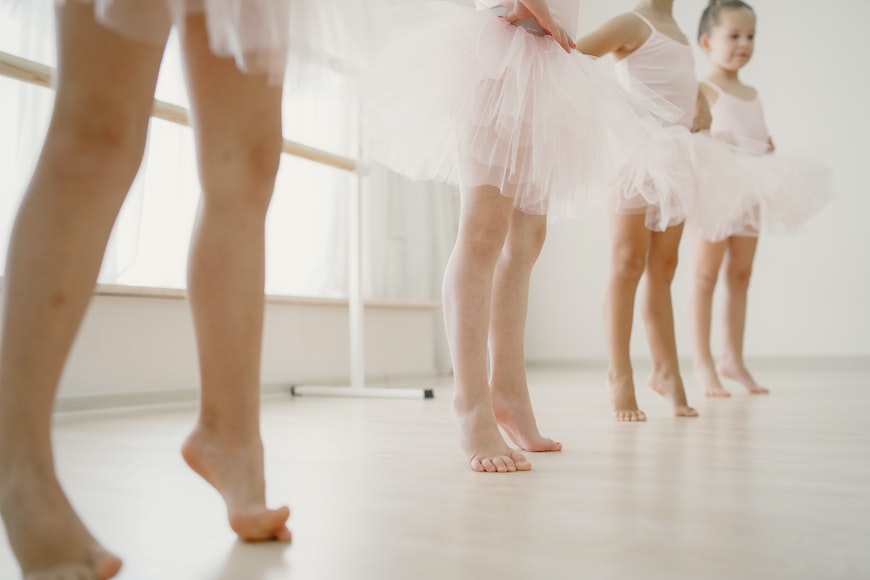
3. Knee Level Shot
Credit: Gustavo Fring
Continuing along the camera's axis, you can take a knee-level shot. Again, this camera angle is meant to capture something straight ahead – without tilting.
Usually, a knee-level shot is used to include another character's entire body because the other character is farther away.
4. Hip Level Shot
Hip-level shots are ideal for full-body portraits because they prevent distortion and allow you to achieve balanced proportions. As a result, you'll get natural-looking, flattering images regardless of your subject's body type.
Hip-level shots are very popular in street photography as they allow the photographer to blend into the crowd. Beware that not everywhere is it legal to photograph someone without their permission, and not every culture appreciates it, even if it's legal.
5. Shoulder Level Shot
The shoulder-level shot is one of the most common camera shot angles, especially in dialogues, walk-and-talks, and character interactions. As you can imagine, it's done with the camera at the same height as the subject's shoulders.
This camera angle fosters intimacy and realism. However, when it's overused, the film can feel too static.
6. Eye Level Shot

Credit: Ahmet Yuksek
The most commonly used camera angle is the eye-level shot. This is because it doesn't have a particular effect on the viewer; it offers a familiar perspective.
Using this neutral view allows you to emphasize any plot twists you want to communicate with visual cues.
7. High Angle Shot

Credit: Stesh Kacroes
A high-angle shot is when you tilt your camera to look down at your subject, regardless of how high or low on the axis it is. In short, it's the opposite of a low-angle shot.
A high-angle shot is used to emphasize the character's vulnerability or impotence. It's also used to highlight the eyes and foster tenderness in the viewer.
8. Bird's-eye View

Credit: Sydney Sang
The bird's-eye view lies between the high-angle shot and the aerial shot. It's also known as an overhead shot or crane shot.
It's usually done with a wide-angle lens when photographing people, but it depends on how far the camera is from the subject and how much context you want to include.
9. Aerial Shot

Credit: Leonardo Barreto
An aerial shot is the highest camera angle. Historically, these shots were made from a helicopter or a plane, which made them very expensive.
Now, thanks to the high quality of drone photography, it's much more common to see aerial shots in all sorts of projects – even those with a small budget. This was often called the helicopter shot because the camera operator was usually in a helicopter to capture this view.
10. Dutch Camera Angle

Credit: Christina Radevich
To achieve a Dutch camera angle, rotate the camera on its axis so the horizon is diagonal rather than horizontal.
This angle creates an unnatural view that makes the viewer feel uneasy and disoriented. In film and photography books, you might also find it labelled as a German, canted, or oblique angle.
Why Are Camera Shots Important in Films?
Camera angles and shots are part of the visual language creators use to communicate with viewers. They're key for storytelling purposes as well as they are for achieving a specific aesthetic.
You can use camera angles to show something that's not physically visible – like the Dutch angle is often used to imply the unbalanced mind of a character.
Camera shots and angles are also helpful for indicating relationships between characters, such as using a high angle to capture the point of view of a bully looking down on their vulnerable victim.
Another storytelling use for the camera shot is to direct the viewer's attention to a specific detail. Let's say you're recording an argument and one of the characters is about to get physical.
Then, you can make a close-up of the hands as they tighten the fist so the viewer knows what's coming even before the other character pulls them into the scene.
As for aesthetic use, you can think of the signature looks of famous creators. Wes Anderson, for example, often uses eye-level or slightly low angles with a symmetric composition.
Stanley Kubrick, on the other hand, is famous for using one-point perspective shots using deep focus and wide-angle lenses. This technique can create tension, like in The Shining, where the corridor looks like a hypnotic trap.
FAQs: Types of Shots
What is shot design in film?
Shot design involves planning how the scenes of a film will be shot. This helps the crew prepare the required equipment and is key to creating the shot list and organizing the filming calendar.
What camera angle is best?
There isn't a right or wrong answer to this question. The best camera angle is the one that allows you to capture and communicate your creative vision. In this article, you'll find some helpful hints, such as that the knee shot is best for full-body portraits if you want to maintain natural proportions.
How do you analyze film shots?
Learning from the masters is a great way to improve your own storytelling techniques. To do so, you can analyze scenes from a movie you like by identifying which camera angle and view shot they used. Then connect this to what was happening on the scene and the overall arc of the story. Make notes and compare how different authors use these technical aspects within their work.

Check out these 8 essential tools to help you succeed as a professional photographer.
Includes limited-time discounts.

Ana Mireles is a Mexican researcher that specializes in photography and communications for the arts and culture sector.
7 Comments
Leave a Comment
👋 WELCOME TO SHOTKIT!
🔥 Popular NOW:
WHAT IS A MID SHOT?!?!??!?!?!??!?!?!??!?!?!?!!??! PLEASE TELL MEEEEE
HFJKDSHFBJWRGWA
its where you can see the subject from the waist up
what is over shoulder shot
An over-the-shoulder (OTS) shot in photography and cinematography is a framing technique where the camera is positioned behind one character, often over their shoulder, to capture another character or a scene. This type of shot is commonly used to establish a sense of connection between characters, provide the audience with a character’s point of view, and add depth to the composition.
A shot over the shoulder, its in the name
WHAT IS
MONEY SHOT?
It simply refers to a visually striking or memorable moment in a film or video, often used to emphasize a key scene or climax.