






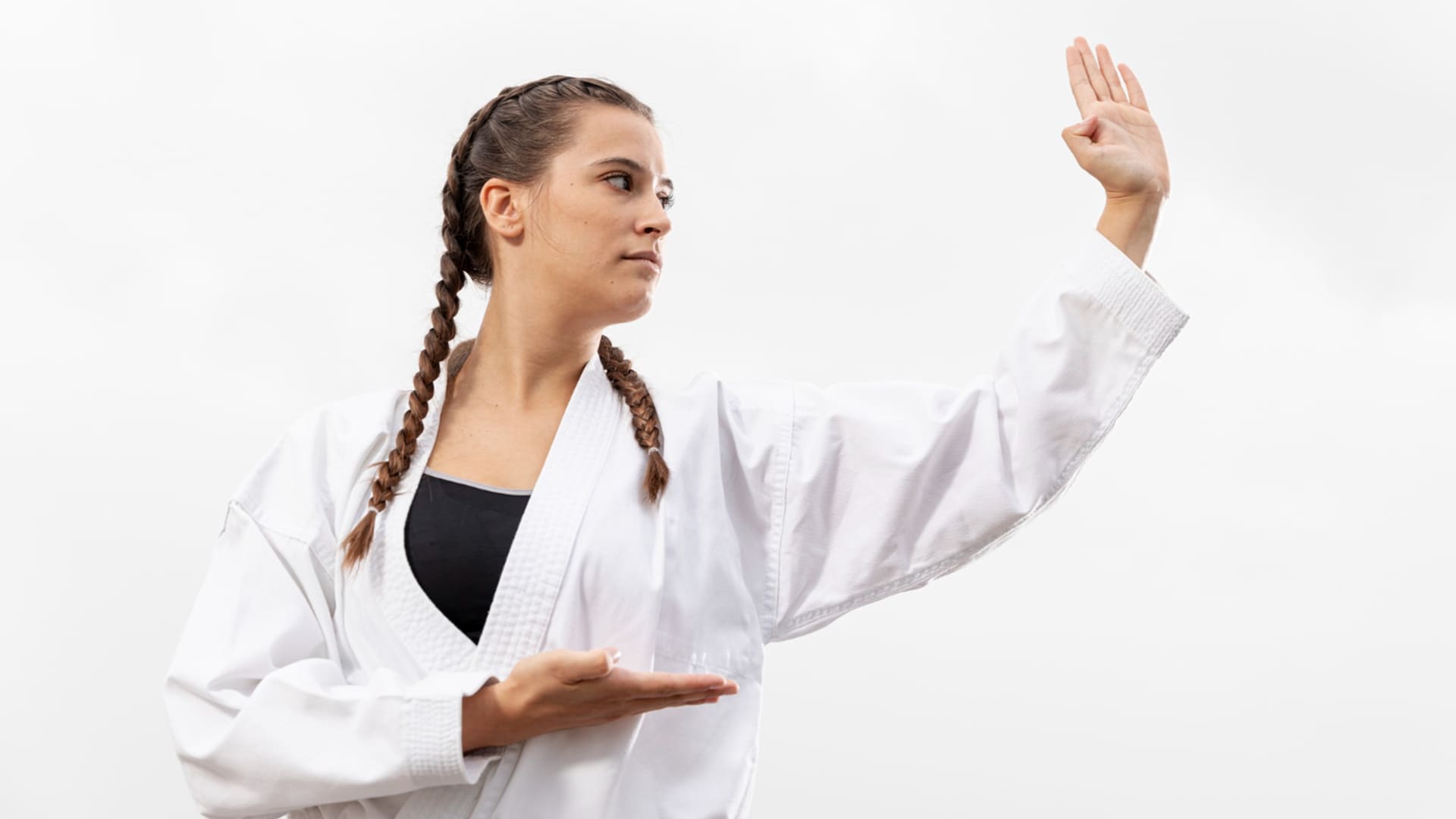
7 Dynamic Poses for Martial Artists
Follow tips and tricks to capture better martial arts images with these seven martial arts poses and photography hacks.
Learn | Posing | By Jeff Collier | Last Updated: November 12, 2026
Shotkit may earn a commission on affiliate links. Learn more.
I’ve always found that there is something almost hypnotic about the power and grace of an athlete performing martial arts, particularly when captured in a photograph.
From the calm restraint of tai chi to the explosive yet focused force of karate, the right martial arts poses can make absolutely stunning photos.
I’ve worked with so many people wanting martial arts photos for their socials, their business website, or even promoting a local dojo or training center. Over the years I’ve found that there are certain poses that work better than others to create images that combine poise, power, and, of course, the subject’s incredible skill.
Whether your clients practice karate or taekwondo, jujutsu or wrestling, this guide will help you capture the most dramatic and impactful poses. .
There are also tips for success on the day when you head out to your martial arts photography sessions.
The Power and Elegance of Martial Arts Photography
Why are photos of martial arts poses and techniques just so impressive? Possibly because these images convey a level of mastery or, at the very least, commitment to a skill and training regimen that’s impressive, even awe-inspiring, to most of us.
Martial artists who are dedicated to their craft tend to practice most days of the week.Some karate practitioners, for example, train as often as six days out of seven.
We can’t help but find that level of commitment inspiring. When you see the results in a carefully posed and framed photo, the sheer level of skill just emanates from the page.
With that in mind, there aren’t too many humorous or slapstick martial arts photos, especially in marketing images. Mentors and students tend to take their craft seriously, although there is room for a few fun shots, here and there, in the “outtakes” file.
Instead, images tend to be focused on the power of the human body, the shapes it can make, and the force a highly trained athlete can command, at will.
So, what do clients use these types of photos for? They might want them for personal reasons, to highlight their skills on social media, but they may also want to share their success in training or competitions, or encourage people to train with them.
Dojo instructors might want marketing materials shot in their training centers that showcase students hard at work, while professional athletes may opt for outdoor shots that blend human action with the peacefulness of nature.
If you do decide to head into the great outdoors with your camera, check out my guide to posing solo backpackers, which offers tips for all sorts of terrains and adventures.
1. A Kick in Motion
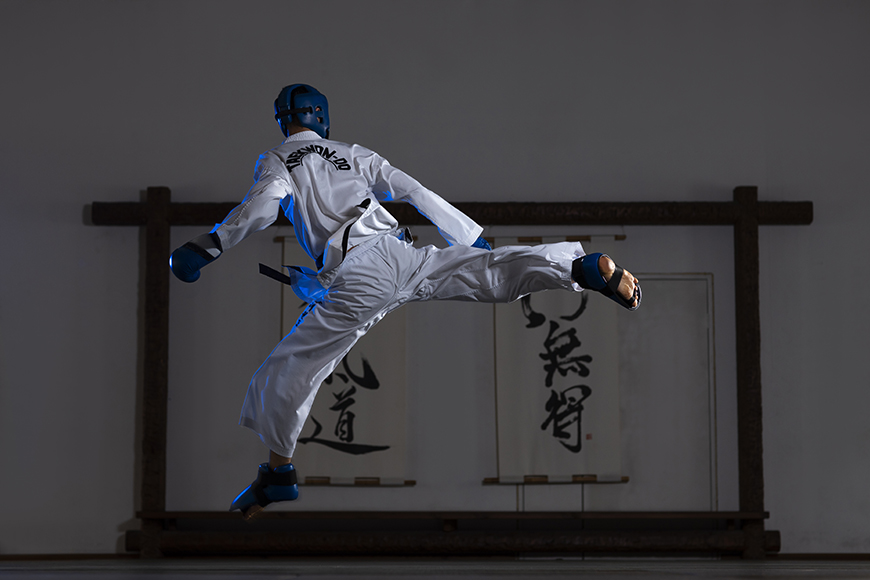
Kicking is one of the fundamentals of many martial art styles. On camera, kicks become some of the most dynamic poses, primarily because they use the whole body as well as the legs, creating striking shapes and, with the right lighting, shadows.
Take Taekwondo, for example, which uses so many different types of kicks. The Korean word chagi means “kick,” and is used throughout all forms of this discipline.
The more skilled your subject, the more creative they may be able to get with their kick poses. If they’re able to execute a 360-degree twist kick or tornado kick, challenge yourself to capture them in midair.
I recommend using a very fast shutter speed to avoid motion blur. Although some blur can be atmospheric and artistic, you’ll likely lose the sharpness that defines the shape of the kick.
Position your subject in the center of the frame; remember to use mats or another safe surface. Ask them to practice their kicks as they usually would, then take plenty of photos so you have options to choose from.
Shoot in quick bursts with the goal of capturing them at the highest point of their jump. If they’re still working toward flying or spinning kicks, you can, instead, snap kicks that extend high or far away from the body for the most dynamic results.
2. Ready to Spar
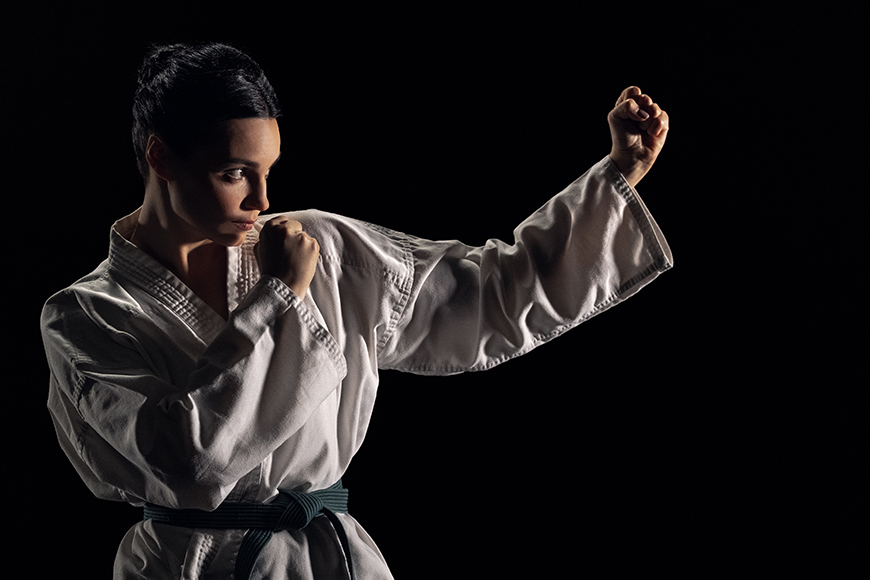
There are many fighting stances in martial arts, but one of the most recognized is the simple side-on, fists-raised pose; the ready to spar stance. You can take this shot from close up or further out, depending on whether you want a full-body shot or just the torso and head.
The subject should adopt their stance as if they’re about to spar with a partner. I’ve found that the easiest way to make this look realistic is by having a real-life partner there.
The two athletes will adopt the stances they’re used to, and you will get more natural poses and facial expressions. Muscle memory will hopefully take over and guide the well-trained martial artists into their defensive or offensive poses, helping them forget about the presence of the camera.
A dojo background is ideal for this pose, as it’s the natural environment for a friendly spar. But if you’re getting creative, you could take these shots outside for an urban street fighter vibe.
3. Tai Chi Movements
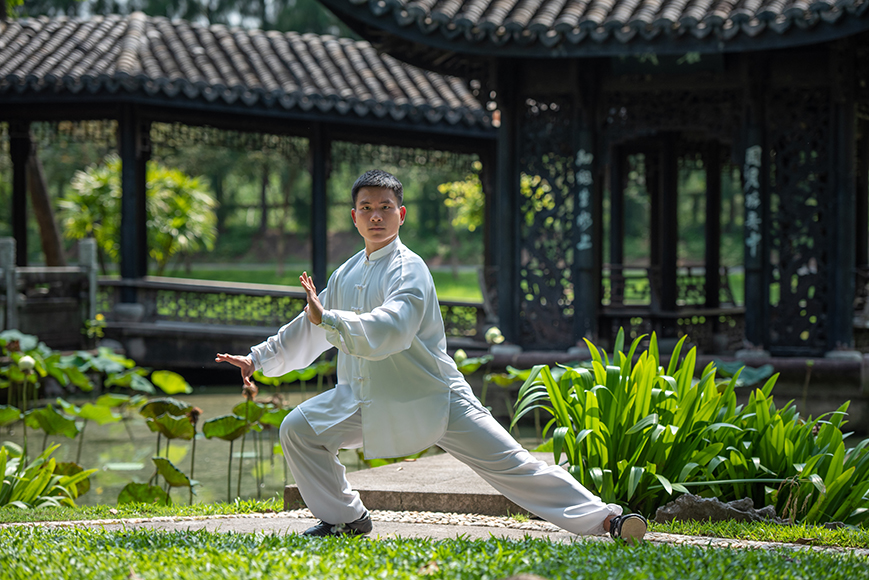
Did you know that tai chi is a martial art? Despite its dance-like moves, the stances are based on fighting poses, just slowed down compared to more aggressive martial arts.
Tai chi may help some martial arts practitioners develop focus, balance, and body control, which is why many athletes practice it alongside more explosive disciplines.
This is good news for martial arts photographers, as tai chi stances and movements can be particularly photogenic, with a grace and elegance that look striking on camera.
If you can, take your subjects outdoors, as it’s fairly common (and traditional) to practice tai chi in a park or other green space.
Make sure you think about the time of day you’re taking outdoor tai chi photos. Early morning or evening may result in some golden hour-style light and long, dramatic shadows, but the midday sun may result in a brighter, sharper image.
Allow your subject to choose what poses they want to do, as they’ll opt for ones they’re most comfortable with, which will be evident in the images.
Alternatively, you could ask them to run through a sequence of several stances and movements, and capture many different poses, comparing them after the shoot to find the best-looking ones.
4. Stretching Before a Workout
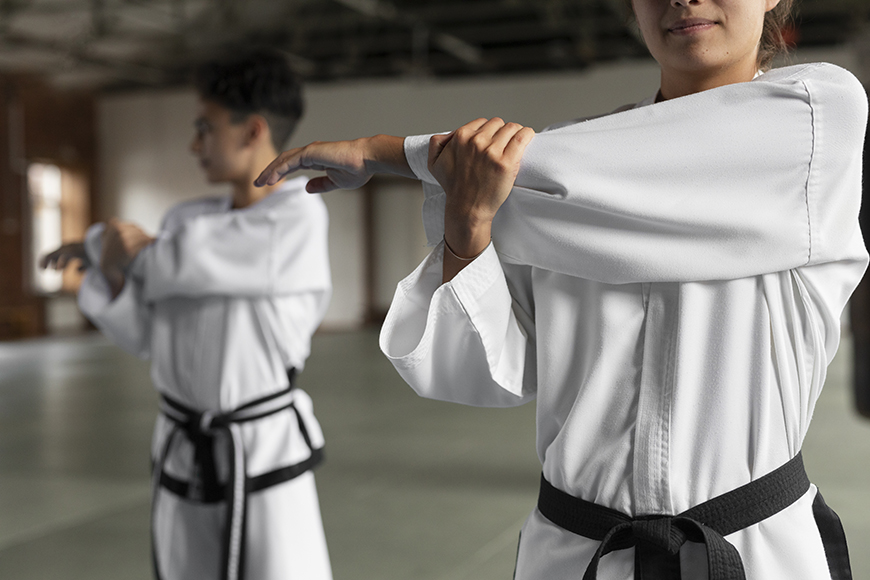
If your subject or client is an instructor, they may want shots of some of the other important aspects of martial arts, such as warming up or cooling down.
Try to capture a stretch that is easy for the person to do. They should look engaged in the movement, but not in pain or discomfort.
You may wish to take this shot in a dojo or practice room to create the impression that the hard work of training is about to begin. Consider the background and make sure it’s not too cluttered, as this will draw the eye away from your subjects.
Stretching shots works well with a single person, posed slightly to the left or right of center, pulling an arm over their head, across their body, or reaching down one side of their body so their face is still visible.
You could even ask if they can keep their head up to look at the camera and capture eye contact with the eventual viewer.
If you want a busier shot, take a photo of several martial artists in a warm up session, allowing those further back to slip into soft focus. I find that this creates a cleverly layered image where the primary subject really stands out from those behind.
5. Kendo Sword Poses
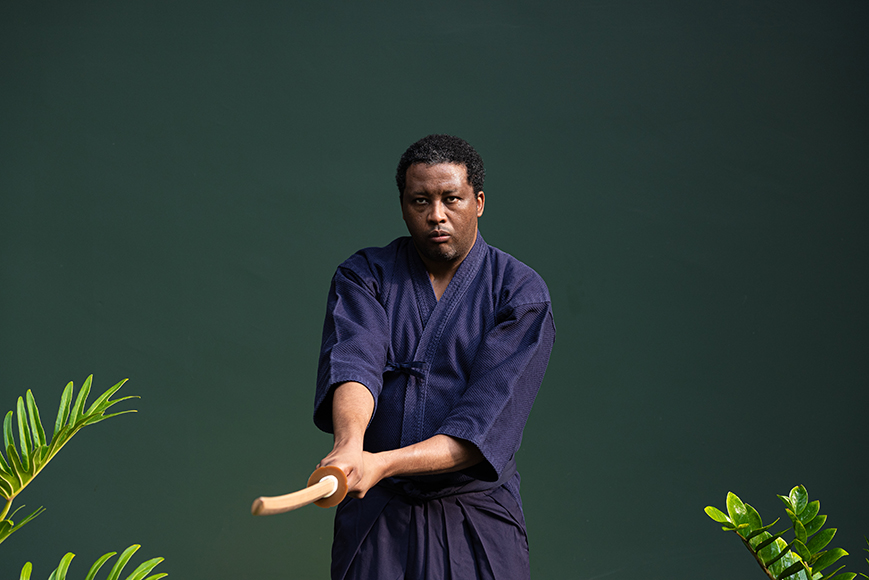
Not every martial art relies solely on the power of human arms, legs, and body slams. Some use weapons and tools.
Kendo, for example, developed from the traditional Japanese art of kenjutsu, or swordsmanship. Today, most kendo practitioners tend to use bamboo swords called shinai for both practice and competition.
Capturing your kendo fighter mid-swing with their shinai can result in a pleasing and dramatic shot. You may need to increase your shutter speed for this, to prevent too much motion blur which will lessen the definition of both the sword and the fighter.
The dojo or practice arena is the obvious location for this pose. However, you could get creative and use backdrops with greenery, or even urban areas, to create an interesting contrast between the ancient use of swords and modern life.
6. Ready to Grapple
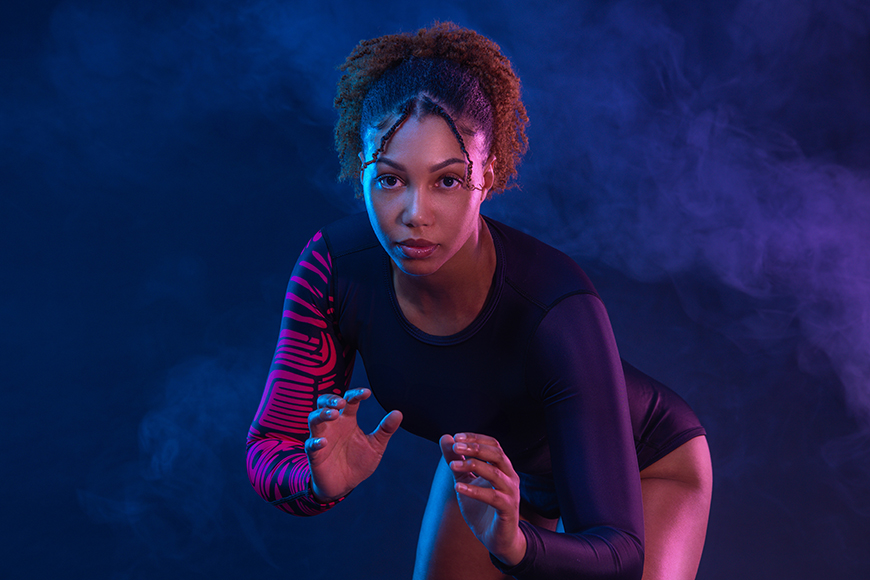
Sometimes, it’s not clear what a martial artist is going to do next. Other times, it’s extremely clear, and no less daunting.
A fighter with their arms poised and ready to grapple their opponent is a vision of strength, confidence, and courage. Martial arts like jujutsu use grapple stances, with fighters often moving their arms slowly toward their sparring partner, before bursting into action and grabbing or wrestling them.
Try to capture your subject head-on. I find that this shot is so much more powerful when the fighter is glaring into the camera, as if they’re about to lunge for the viewer.
You want to capture that power: the moment before the action where the fighter is weighing up their opponent.
Let your subject guide the details of the pose. If they want to hunker down into a lower position, frame them accordingly so you don’t leave too much space above them.
7. Taking a Meditative Moment
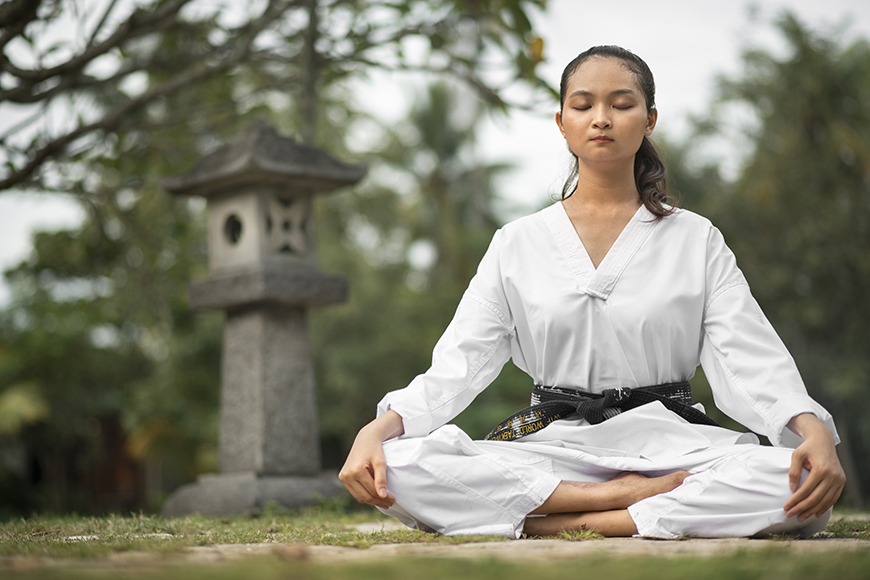
So many martial arts, from Shaolin kung fu to some forms of karate, are paired with meditative practices. The idea is often that a clear, relaxed, and focused mind can make physical progress easier, allowing training to proceed more quickly or even with more success.
Taking some shots of your subject while they’re meditating creates a wonderful contrast between the frenetic action of fighting and the peaceful moments of trying to achieve a settled mind.
Allow your subject to choose the pose for meditation. Some may sit cross-legged, others may adopt yoga-like poses, while others may simply sit on a chair.
A calm, bright room is the ideal setting for meditative poses, in pale or neutral colors, with, perhaps, some natural additions like houseplants. Too brash, and the background will distract from the reflective moment of meditation.
Additional Tips for Martial Arts Photography
Lighting isn’t always the best at dojos and other training venues. Some training rooms may be brightly lit with fluorescent lights, which can produce an unflattering tone in your photos.
That’s why I always take some additional lighting equipment with me, in case there’s a need to add warmth or reduce brightness. Without the option to manually adjust the color and tone of the lights, you may find the end result has a lack of definition and insufficient contrast between the athletes and the background.
Some dojos may be more dimly lit, which has the opposite problem of not illuminating your subjects enough. Take a varied selection of lights, if practical, to give your shots the best chance of crisp color and definition.
Don’t forget to check your shutter speed. Shutter speeds that are slower than 1/800s may result in motion blur, depending on the speed of the fighter’s movements.
You can experiment with blur for creative effects, but for sharply defined shots, aim for 1/800s or faster, possibly up to 1/1,250s for flying kicks and other highly dynamic spins and leaps.
Final Thoughts
I think one of the most exciting things about photographing martial artists is that there are literally thousands of poses to choose from, and they’re so different from discipline to discipline. I’ve highlighted some of the most impactful in the guide above, but you’ll find more as you work with clients who love to fight or train others.
Remember to ask your clients’ advice on what they think the best poses are to snap. They may have favorites, and could be disappointed if you missed them.
If you’re not sure what moves are associated with the martial art and would make a good pose, just ask. Most people passionate about a sport or practice will be happy to explain, so you know what to look out for when you’re taking shots.
You’ll end up with a range of beautiful shots, and might even learn a little about an incredible new discipline along the way.

Check out these 8 essential tools to help you succeed as a professional photographer.
Includes limited-time discounts.
Jeff Collier is an experienced film photographer who enjoys experimenting with modern digital photography equipment, software and apps. He’s also an ex-world champion triathlete and avid cyclist, clocking hundreds of km each week in the beautiful Tweed Valley of northern NSW, Australia.
👋 WELCOME TO SHOTKIT!
🔥 Popular NOW: