







21 Free Photography & Camera Settings Cheat Sheets
Access 21 free photography and camera settings cheat sheets, perfect for quick reference and improving your shooting techniques effectively.
Learn | Photography Guides | By Andrew Dilks
Shotkit may earn a commission on affiliate links. Learn more.
Photography cheat sheets can help you navigate the complexities of learning how to take photos.
Photography is one of the most powerful art forms in existence.
For newbies, however, the long list of photography settings may seem intimidating – so I dug around for some quick, digestible tips!
In this article, I'll cover the best photography cheat sheets and camera setting cheat sheets to help you become an expert in no time.
Let's dive in.
21 Photography and Camera Setting Cheat Sheets

Having a go-to photography cheat sheet will make your life so much easier whether you're a hobbyist or even a professional.
This selection of cheat sheets explores a broad range of photography tips, beginning with a complete overview of the basic terms and settings.
Once I've covered each setting every beginner photographer needs to know, I'll help you expand your photographic interests with more creative free cheat sheets.
Photography Terms Cheat Sheets
Before we get into specific cheat sheets for creative photography and shooting styles, it's important to know all the photography and camera setting terms!
That's why I'm going to start this guide off with a photography cheat sheet covering all the core basics and how you can create different effects using these settings.
1. Basic Photography Cheat Sheet
Credit: FixThePhoto
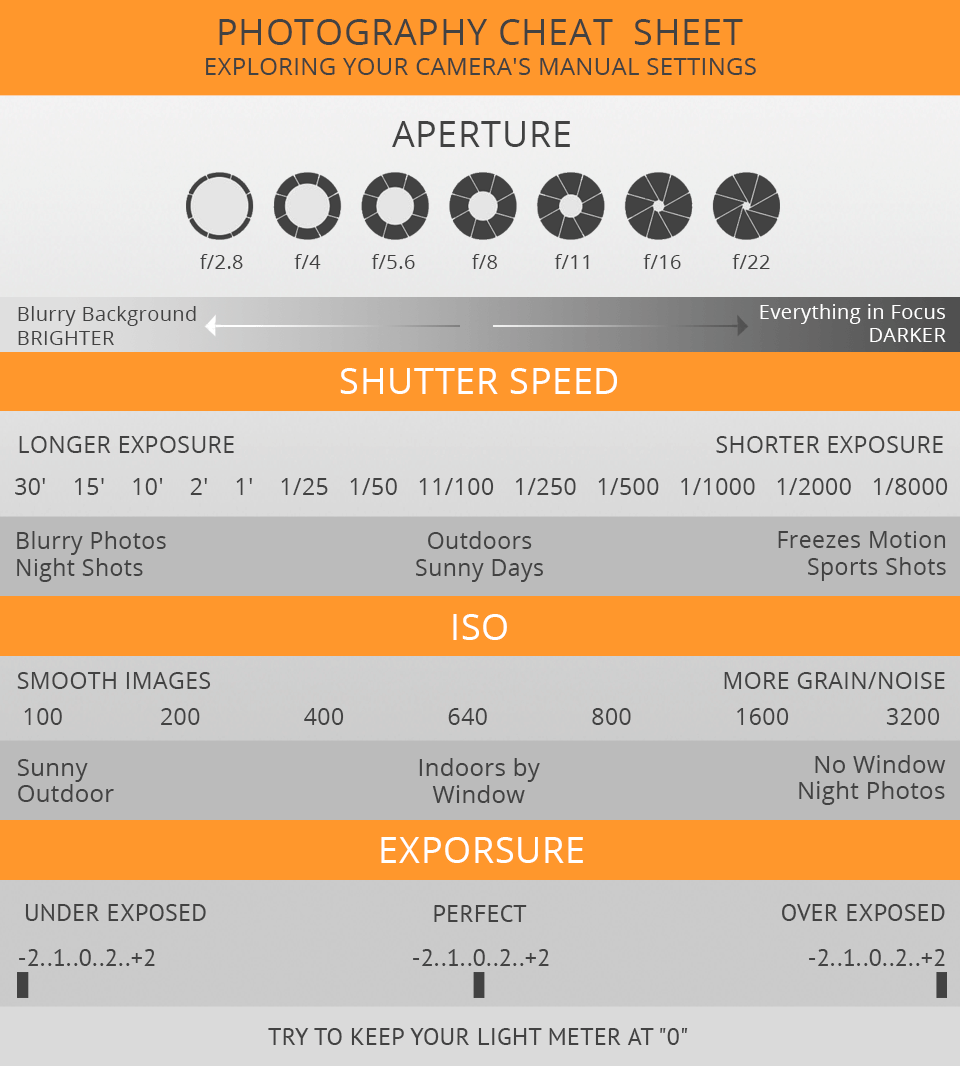
Let's start with a quick cheat sheet for photography terms that I found super helpful when I was still learning the ropes.
It covers the main manual camera settings at a glance to help you move beyond point-and-shoot cameras and camera basics.
If you're completely new to manual mode, this cheat sheet is a must for getting the basics down.
2. Shutter Speed Cheat Sheet
Credit: Shotkit.com
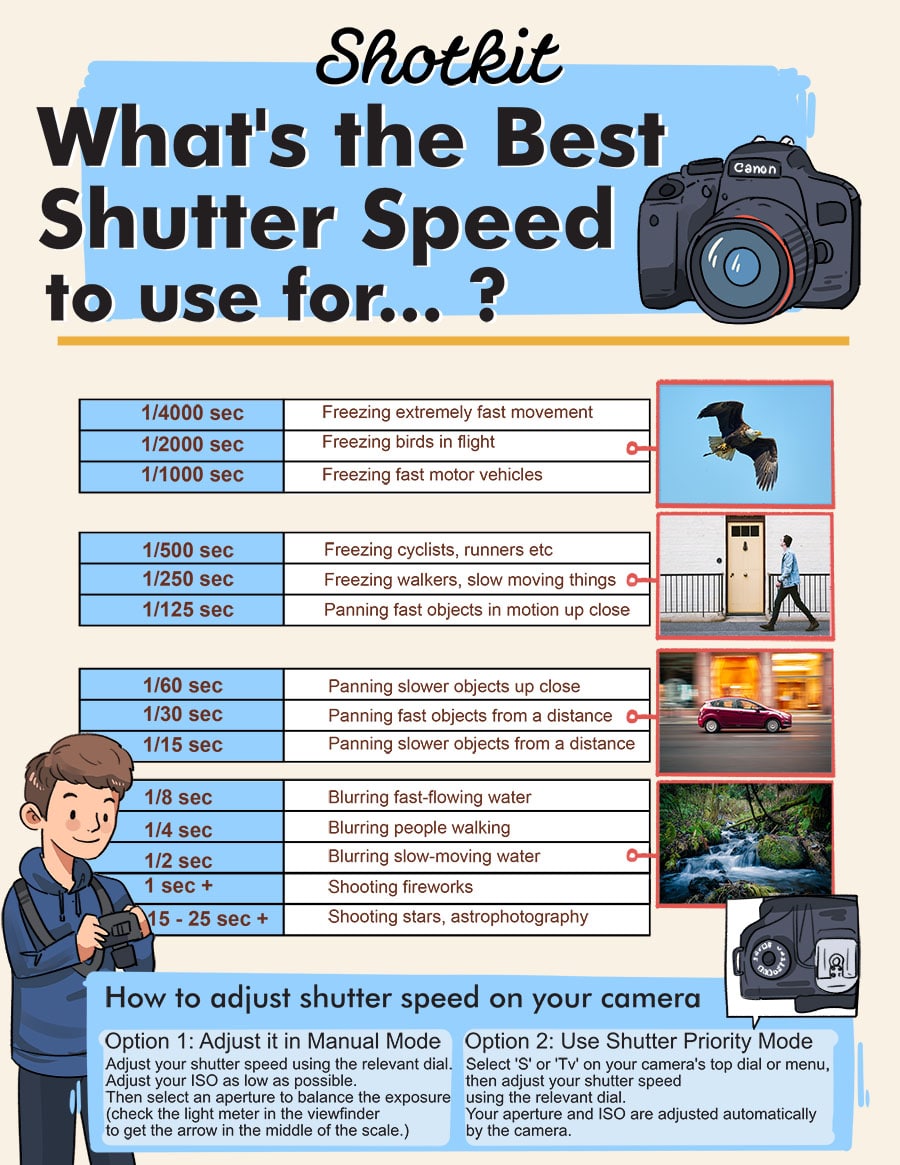
Choosing the right shutter speed is a critical part of any shoot – which is why this photography cheat sheet is so handy.
Shutter speed refers to how long your camera's shutter is open to expose the sensor to light.
Shutter speed quick facts:
- Measured in seconds or fractions of a second (e.g., 1/1000s).
- Slow shutter speed, or long shutter speed, exposes your sensor to light for a decent period to get motion blur.
- Fast shutter speed means your lens isn't exposed to light for very long when taking photos, allowing you to freeze motion.
3. ISO
Credit: FixThePhoto
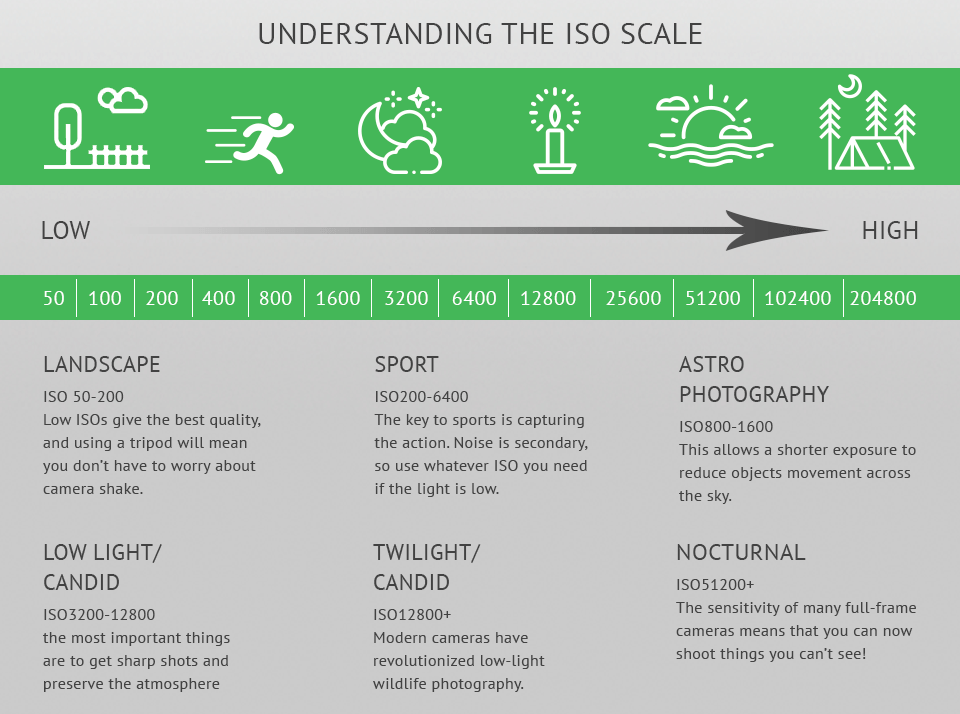
Learning ISO is another important part of mastering manual mode.
Your camera's ISO is essentially the adjustable feature you can alter to brighten or darken your image.
The textbook definition is the sensitivity of your sensor to light, so it's no surprise you'll find it on cheat sheets for photography terms.
The ISO scale usually starts at a low of 100 and goes up to a very high figure of 6400.
4. Aperture & F-Stops
Credit: Shotkit.com
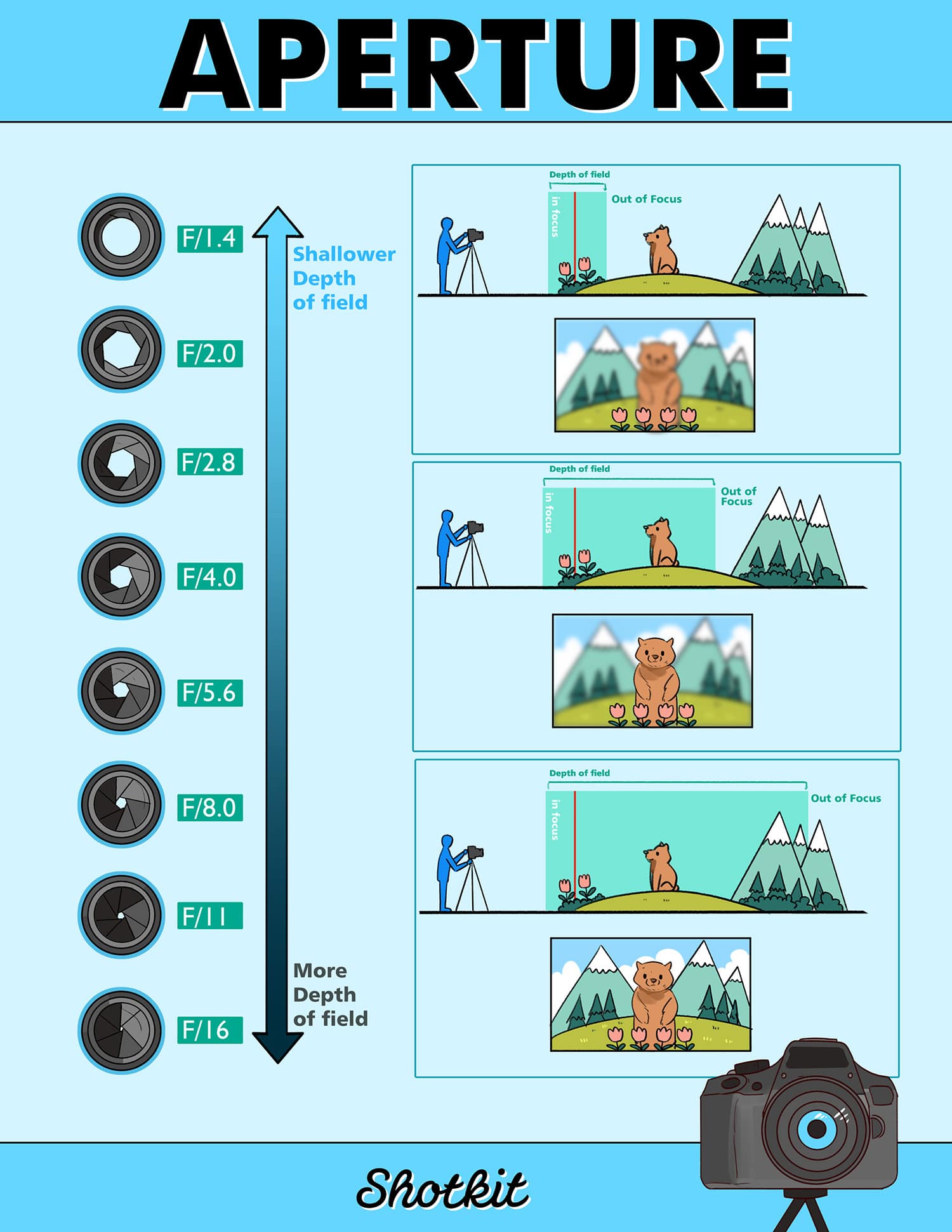
The aperture is wisely nicknamed the pupil but is formally defined on photography cheat sheets as the opening in your camera lens through which light passes.
Apertures are measured in f-stops, which can be thought of in the following way:
Low f-number (e.g., f/1.4)
- Wider aperture.
- Allows in more light.
- Shallow depth of field (background blur).
High f-number (e.g., f/16)
- Narrower aperture.
- Allows in less light.
- Deeper depth of field (more in focus).
5. Exposure Triangle
Credit: Expert Photography
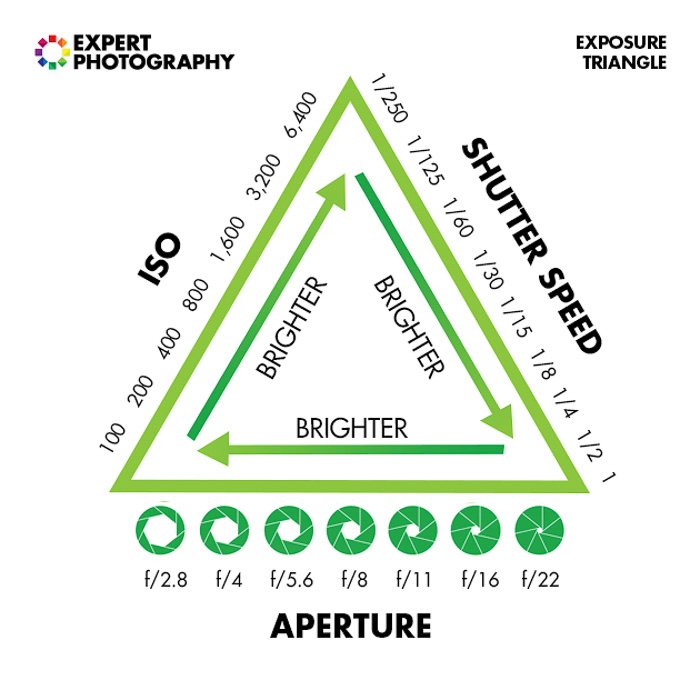
The exposure triangle is another must-have on your photography cheat sheet as it refers to the relationship between the three terms above: aperture, shutter speed, and ISO.
The exposure triangle is maintained by a careful balance between the three settings, so if you adjust one setting, the other two are affected and should likely be tweaked as well.
Maintaining the appropriate balance within your exposure triangle will help you achieve optimal exposure regardless of lighting conditions.
6. Depth of Field
Credit: FixThePhoto
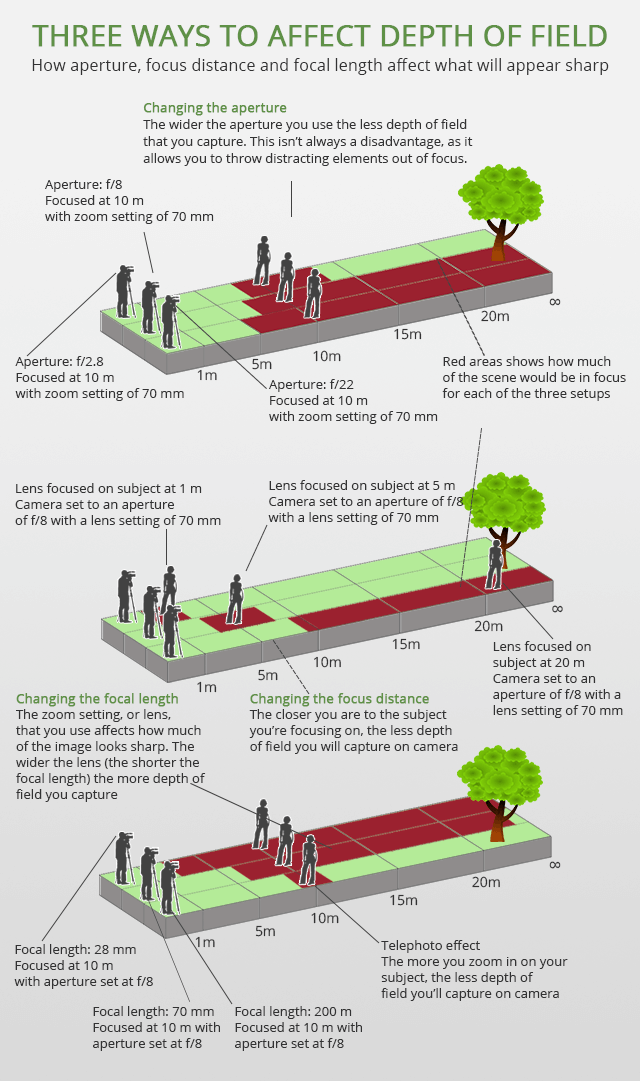
Your depth of field is the degree of image sharpness, which is controlled by your aperture.
-
- Wider aperture = Shallower depth of field.
- Narrow apeture= Deeper depth of field.
You can use this to help separate the subject from the background, adding a blurring effect referred to as bokeh, to create more aesthetically pleasing images.
7. Rule of Thirds
Credit: ThePhoblographer
You'll see this term thrown around all the time when you're first starting out and trying to create visually interesting shots.
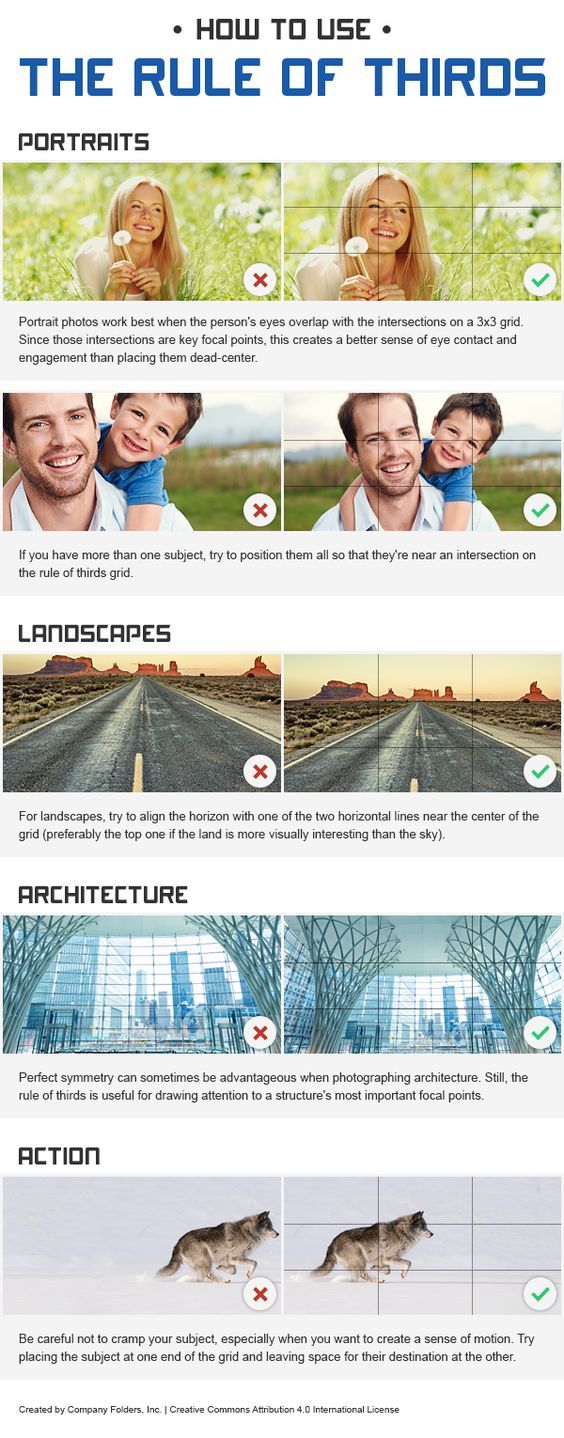
The rule of thirds is a must-include on photography cheat sheets since it offers a general guideline for sectioning up your shot into thirds vertically and horizontally.
Doing so allows you to set up key elements along the lines to guide the viewer's eye appropriately.
8. White Balance
Credit: FixThePhoto
Another massively important component of your photography cheat sheet is white balance.
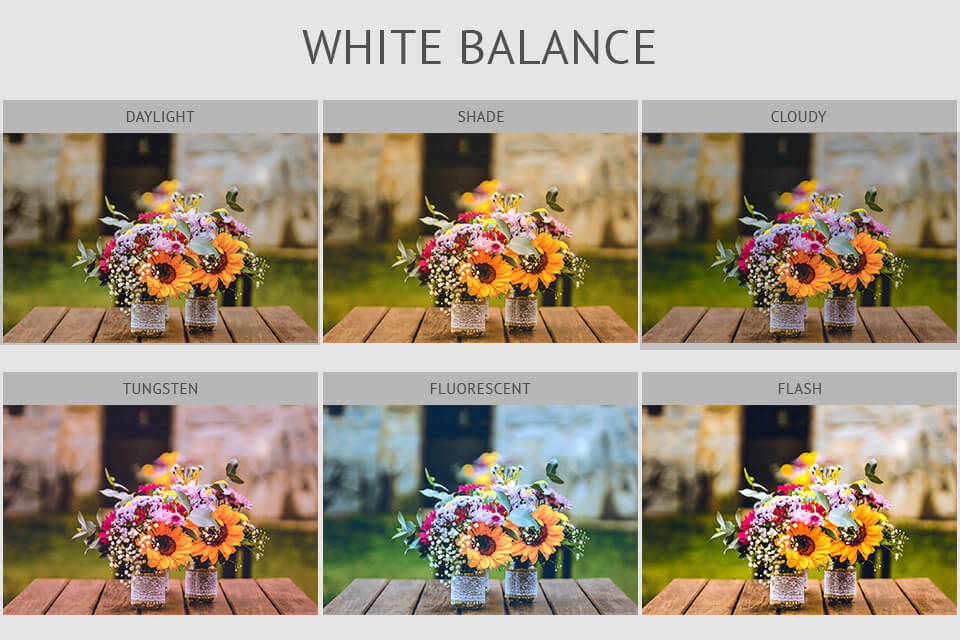
This can be defined as color alterations that are intended to replicate natural tones in different kinds of lighting.
To maintain accurate colors in your photos, you'll want to ensure you consider white balance when thinking about camera settings.
The white balance camera settings are an important part of this photography cheat sheet because this setting is ideal in situations when time is tight and light conditions can frequently change, but be aware that auto white balance shouldn't be fully relied upon since accuracy can come into question.
9. Metering Modes
Credit: FixThePhoto
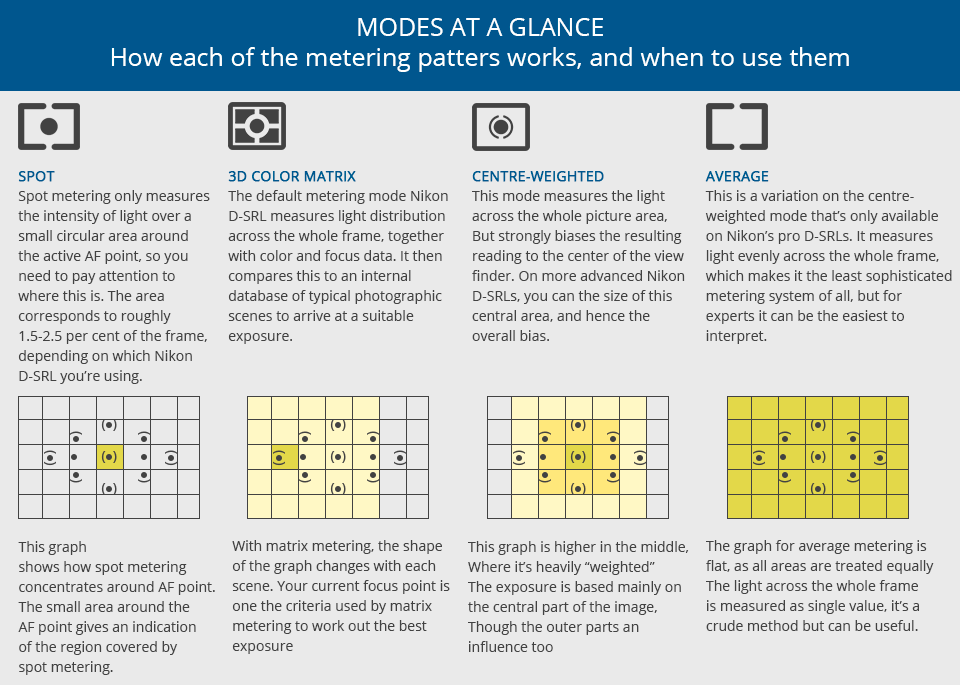
Another handy cheat sheet for those venturing away from auto mode and into manual photography is this one covering metering modes.
Metering patterns dictate the area of the picture that the light meter will use to decide how much light is measured in the selected area.
This helps the camera sensor focus on the area of the image you consider to be the priority and is a crucial element of your exposure settings.
10. Focal Length
Credit: Digital Camera World
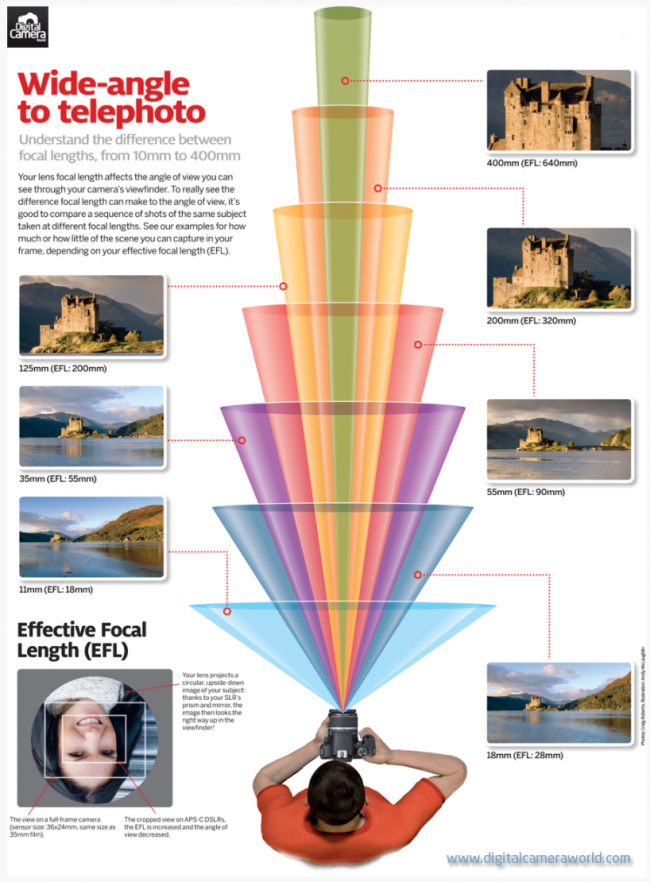
The focal length you choose makes a huge difference to both your style of shooting and the compositions you can achieve.
From shooting landscapes with wide-angle lenses to using telephoto lenses to hone in on a distant subject, this cheat sheet has focal lengths covered.
There's also a handy guide to effective focal length to bring more depth to the subject as you learn more about lenses.
11. Histogram
Credit: FixThePhoto
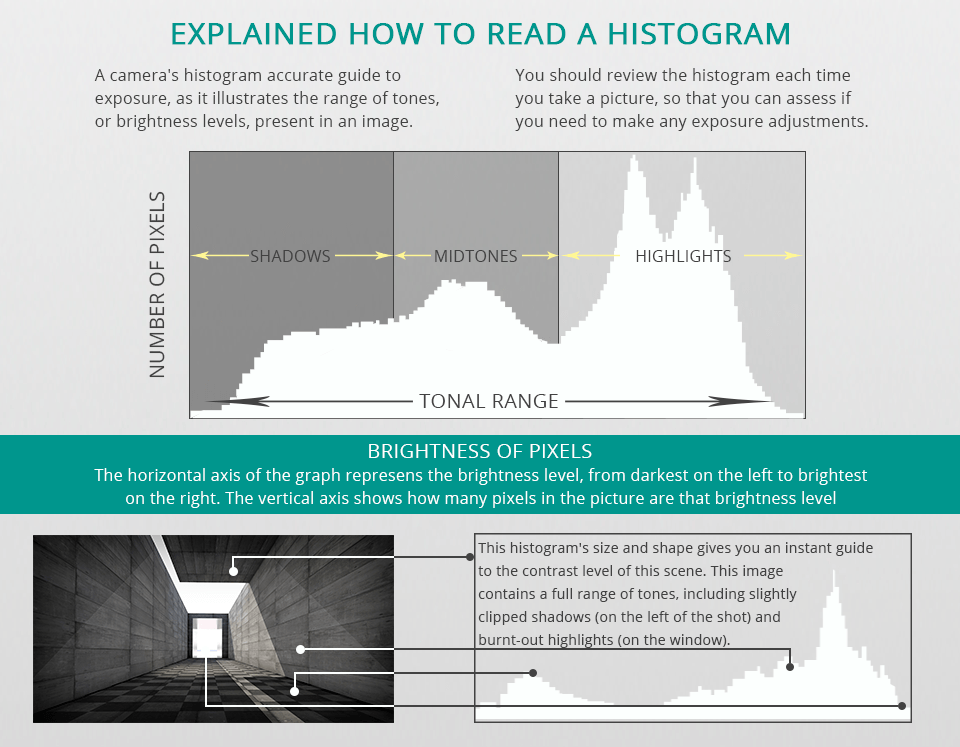
You may not see this term as much as you see aperture or shutter speed, but a histogram is still an important part of any photography cheat sheet.
A histogram is a visual representation of your image's tone: the left side illustrates shadows, while the right side shows highlights.
You can use it to fine-tune your exposure across the image by using these parameters as a gauge of tone and brightness.
12. Colour Temperature
Credit: FixThePhoto
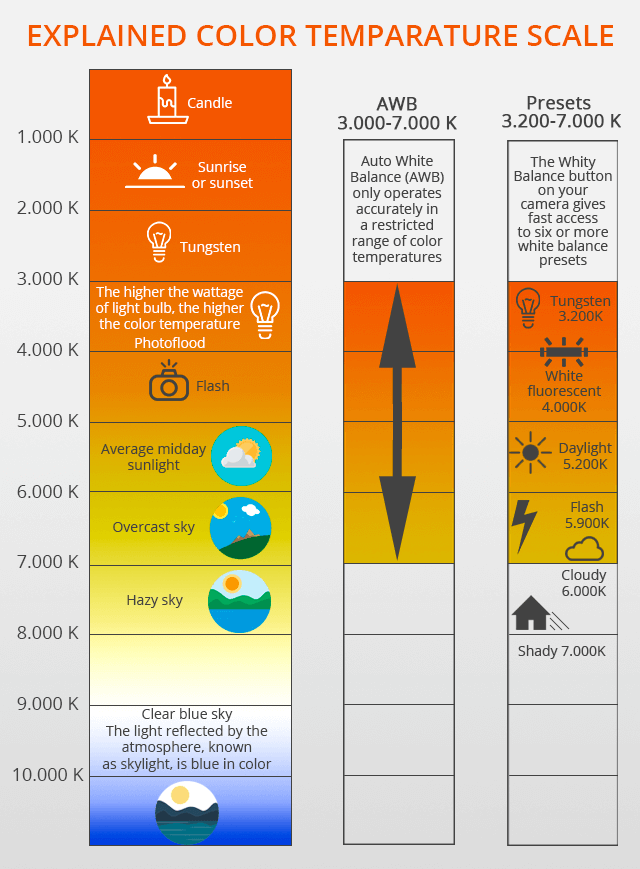
Different light sources emit light rays at different temperatures, and this photography cheat sheet breaks down the various categories.
It's a handy way to alter your manual mode camera settings to create a balanced image that captures the right tone and colour.
If you're considering using LED lights for portraits or other photography, you can refer to this cheat sheet to emulate different looks.
You can also check out this guide to the Kelvin scale to understand more about how color temperature is measured.
13. Focus Stacking
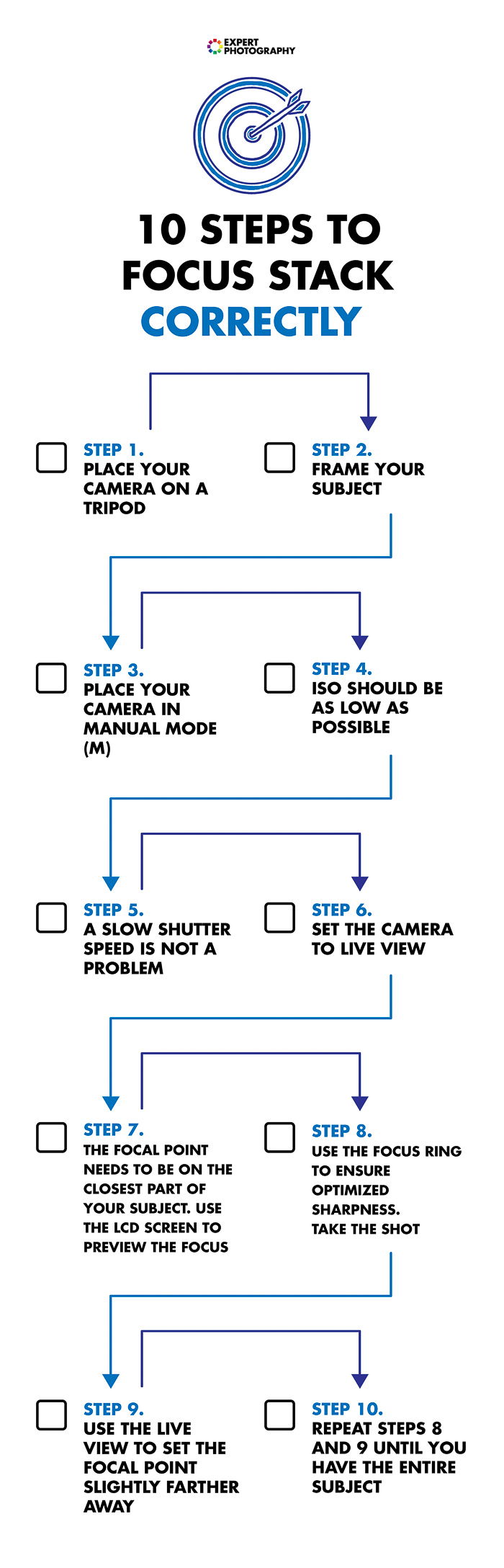
Credit: Expert Photography
The focus stacking technique has many applications, and helps you capture images of exceptional sharpness throughout the depth.
This quick reference cheat sheet takes you through the process step-by-step to adjust focus incrementally until you achieve the desired results.
Creative Photography Cheat Sheets
Now that you're familiar with some of the fundamental camera settings and terms, let's explore a selection of creative photography cheat sheets that can help you apply them for stunning results.
1. Lens Selection

Credit: FixThePhoto
Understanding the full range of available lenses, and which shooting styles they're commonly associated with, helps you spend your money wisely.
Sports, weddings, portraits, landscapes, and macro lenses are all included here to help you select the lenses that will help you take better photos.
2. Composition
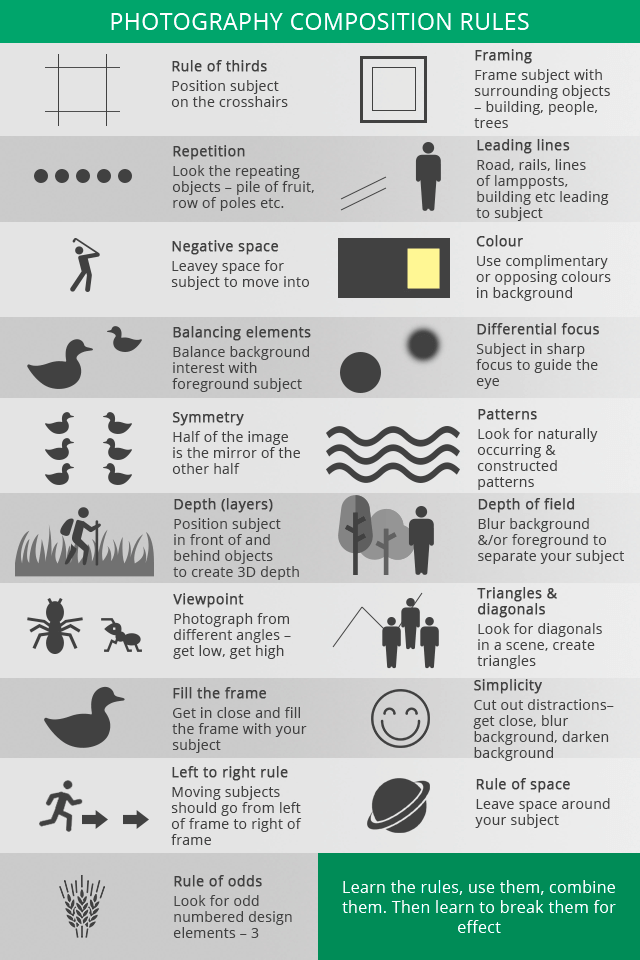
Credit: FixThePhoto
I've touched briefly on compositional techniques in the cheat sheet exploring the rule of thirds, which kicks off this cheat sheet.
Additional composition rules outlined here cover everything from using negative space and considering viewpoints to keeping things simple.
It has plenty of great concepts you can employ in your framing and use to experiment with the creative potential of photography.
3. iPhone Photography
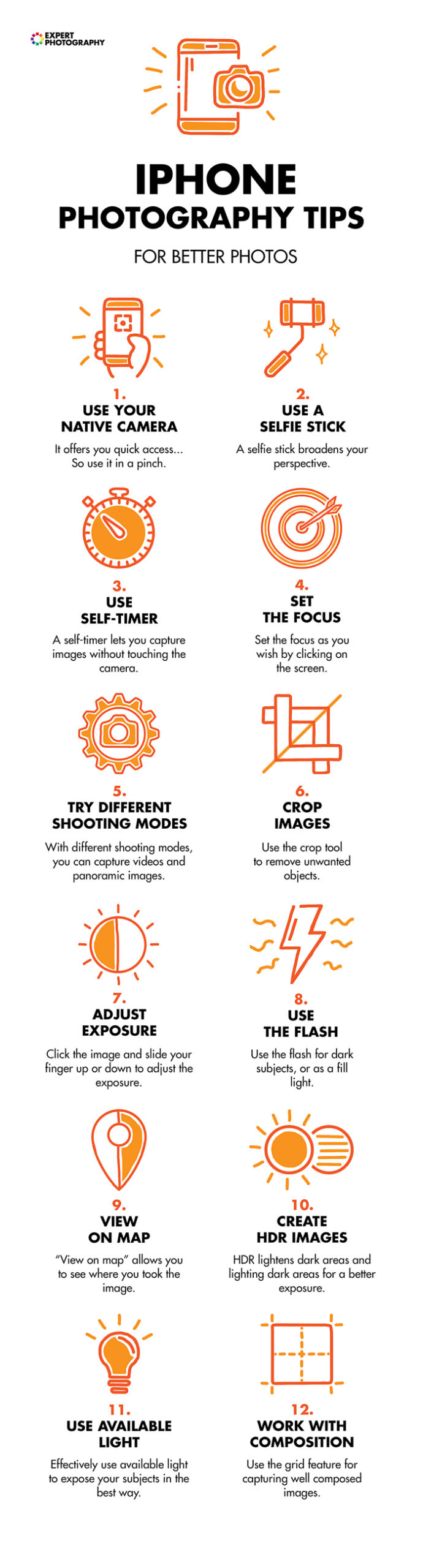
Credit: Expert Photography
Sometimes, you don't have time to set up your camera, or you spot a great shot when you're not prepared to use a professional camera.
This iPhone photography cheat sheet means you can still get the shot on your smartphone and use light and composition for pleasing results.
Read more about nailing your iPhone camera settings here.
4. Portrait Photography
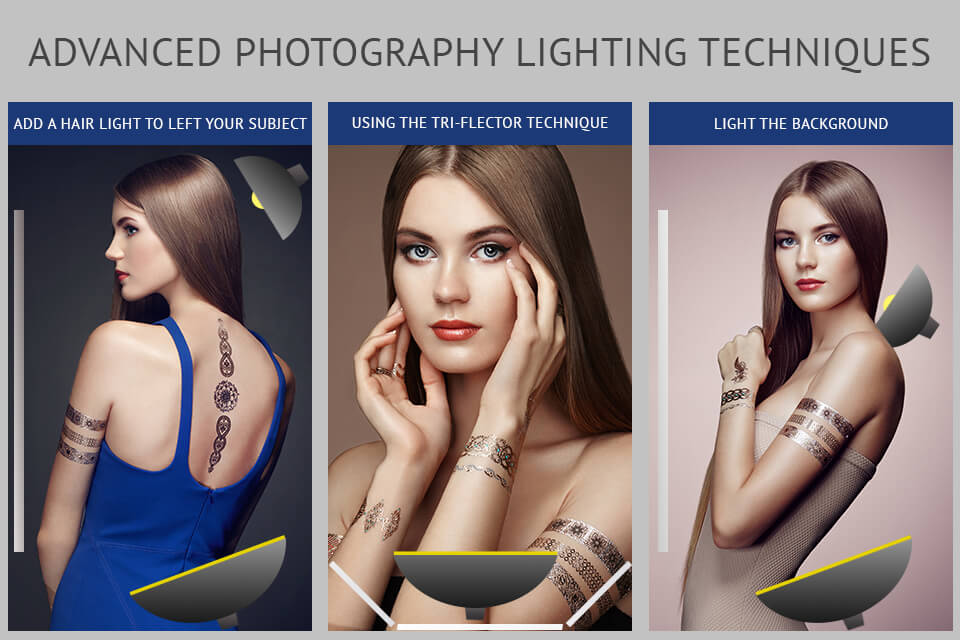
Credit: FixThePhoto
One of the most important considerations when taking portrait photographs is where to position lights for dramatic images.
This cheat sheet explains at a glance how you can reposition your lighting to switch up the subject's appearance and take a great picture.
If you want to go deeper, check out this post: 7 Best Portrait Lighting Setups & Techniques.
5. Environmental Portrait Photography
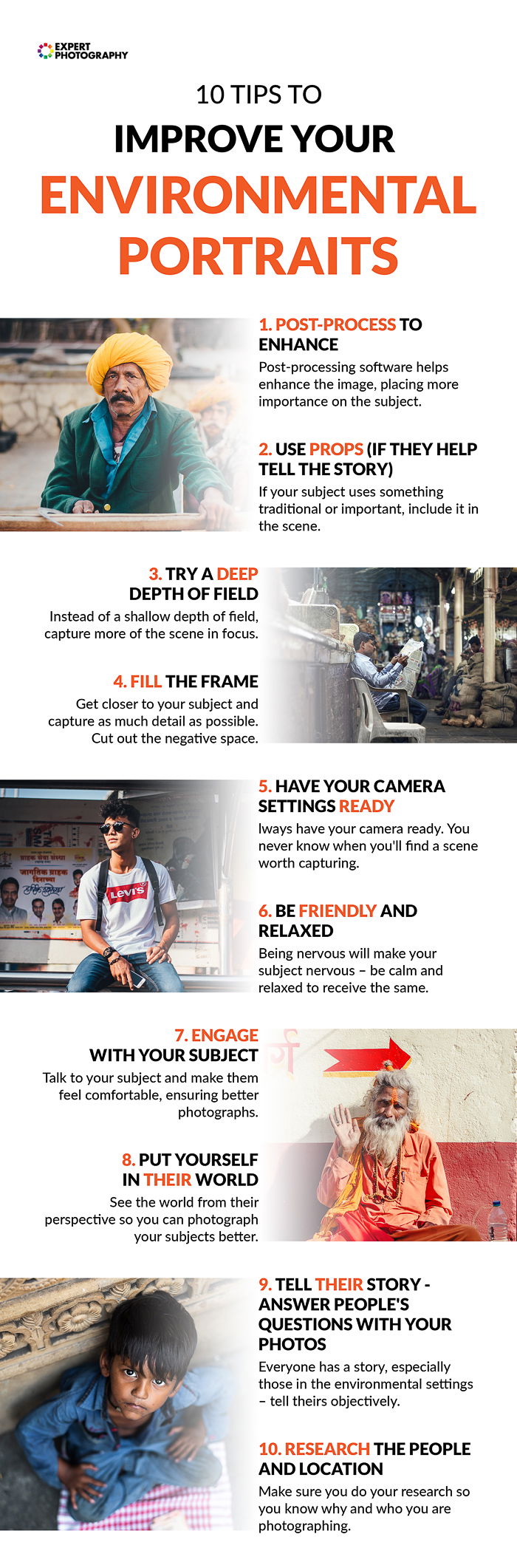
Credit: Expert Photography
Another impressive photography cheat sheet exploring portraits in more depth, this one takes the style outdoors and contextualizes the subject in the environment.
It's a handy cheat sheet to help you capture people in more interesting locations, using the backdrop as part of the overall image.
Street photographers looking to up their game can use this cheat sheet to get more value from their time and engage with their subjects.
6. Low-light Photography

Credit: FixThePhoto
You don't have to be dedicated to astrophotography to have struggled with shooting in low-light conditions and getting poor results.
This photography cheat sheet is an impressive overview of the many tips you can use to overcome low-light image degradation and keep your images sharp.
It also includes a step-by-step guide to setting up your camera gear correctly, saving time correcting issues in post-production.
7. Nature Photography
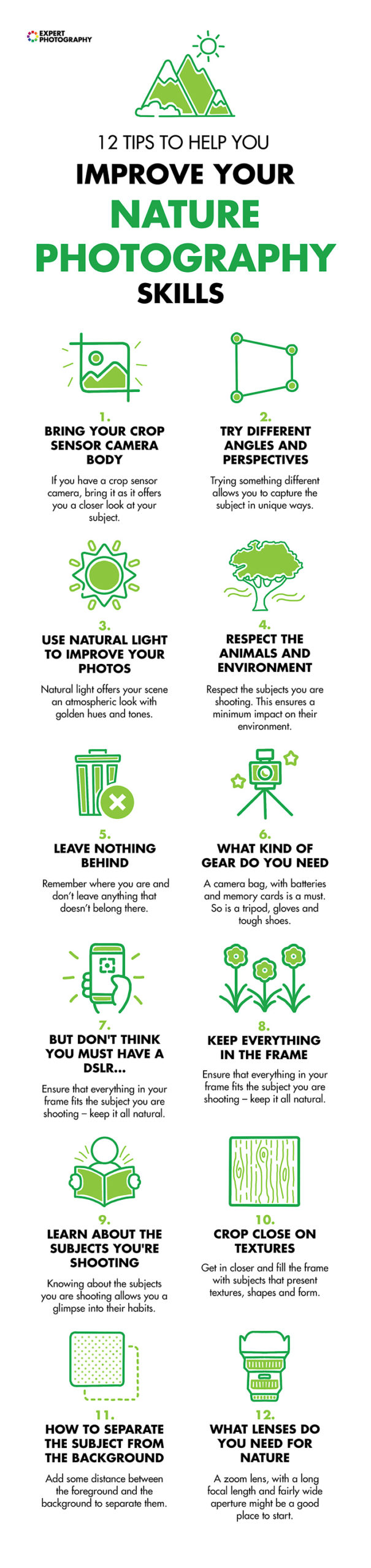
Credit: Expert Photography
Just as portrait photography has its own set of rules to bear in mind, so too does nature photography require different considerations.
This cheat sheet is a solid primer on the best ways to shoot nature in different lighting conditions and environments.
It covers several technical considerations while also dedicating space to respecting the landscape and leaving no trace.
8. Wedding Photography
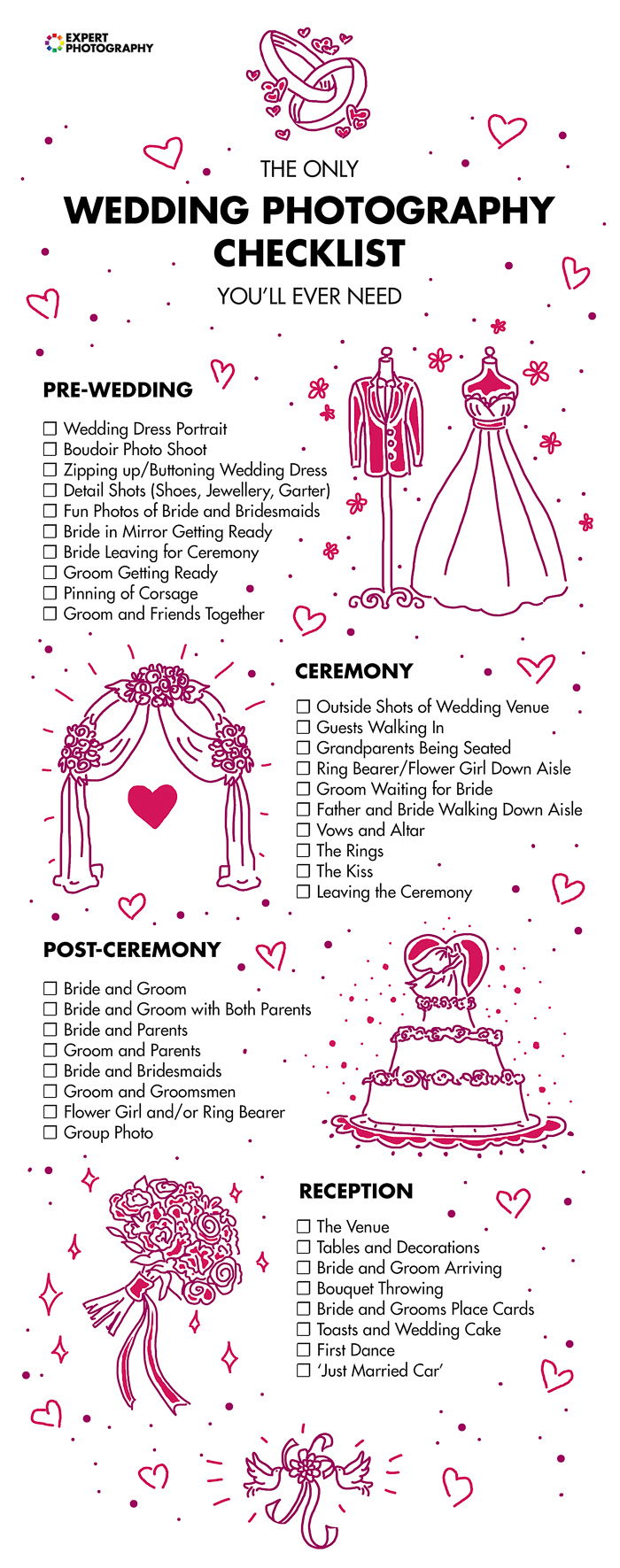
Credit: Expert Photography
One of the most popular ways amateur photographers make the transition to a professional career is through wedding photography.
Wedding shoots can be notoriously stressful, so having this cheat sheet to hand is a good idea if you're new to the experience.
It provides a detailed wedding day shot list, which you can use to help manage and schedule the shoot and create a successful workflow.

Check out these 8 essential tools to help you succeed as a professional photographer.
Includes limited-time discounts.

Andy Dilks is an experienced landscape photographer and former games industry veteran. When he isn’t taking photos or reviewing the latest tech gadgets, you can find him hiking and wild camping in the Peak District.
9 Comments
Leave a Comment
👋 WELCOME TO SHOTKIT!
🔥 Popular NOW:

Great starter cheat sheets! How can I get them? Email?
How do I get the cheat sheets?
Hi Elaine one of the easiest ways is to screen shot what you need, adjust image and print as required.
you have summarized a great guide. If available in a pdf format or other, let me know. Thanks
Wow! Great info and great visuals! Thank you!
Hi is this available to download please.
Sorry will email directly.
Some good and understandable help for us beginners.
Hi – good stuff here – thank you,
I did notice you say to use lens image stabilization with the camera on a tripod- is that right??